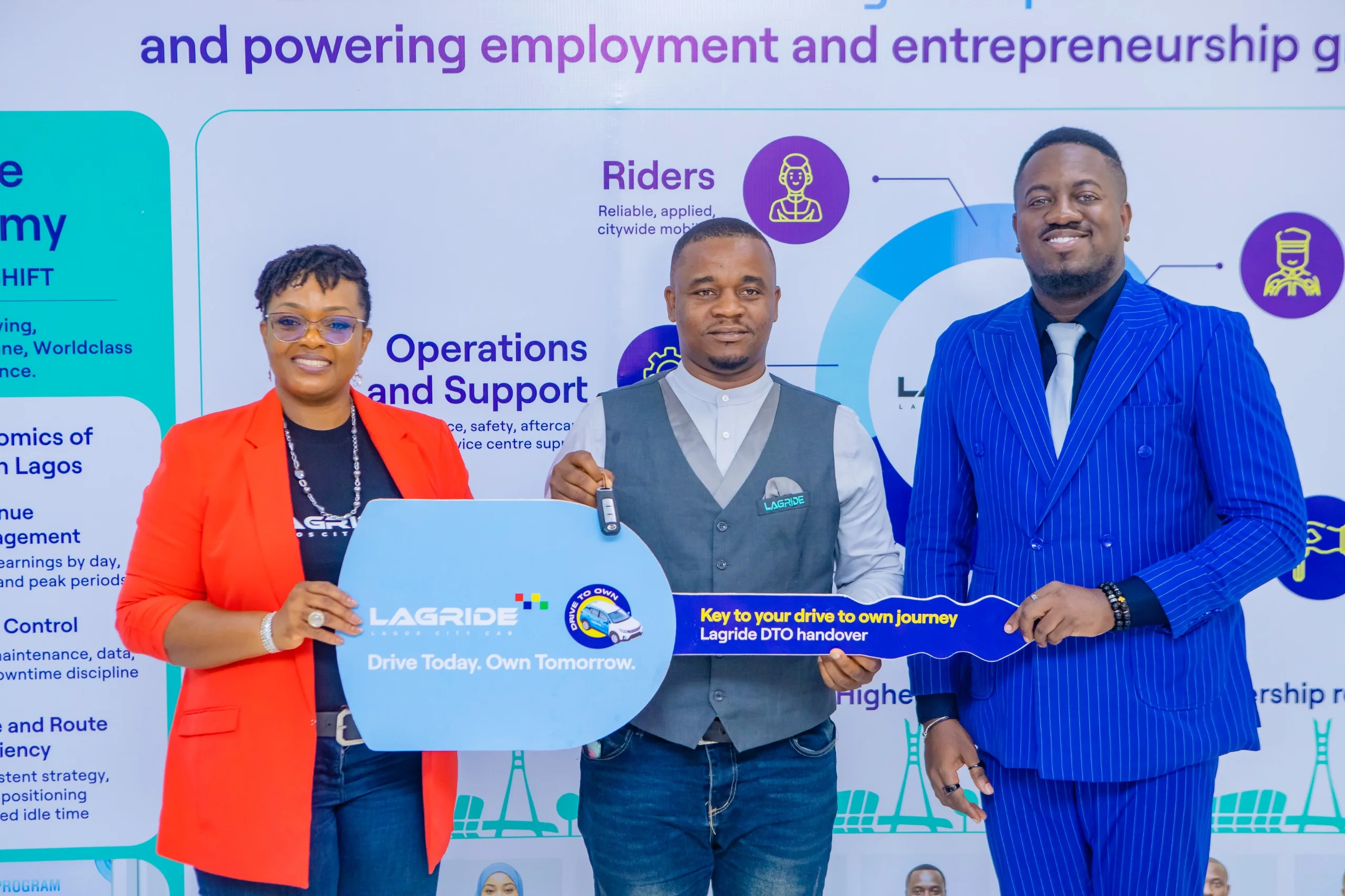
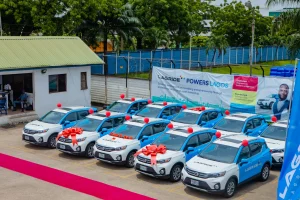
Lagride has handed over another batch of vehicles to participating drivers under its Drive-to-Own programme, an initiative designed to help ride-hailing drivers transition from service providers to vehicle owners while creating sustainable income opportunities within Lagos’ transportation ecosystem.
At the company’s Drive-to-Own Graduation 2.0 ceremony held at its Alausa Hub in Lagos, six Lagride Captains shared stories of increased earnings, improved financial stability, and a clearer pathway to asset ownership. According to the drivers, some participants are now earning as much as ₦1 million weekly through the platform.
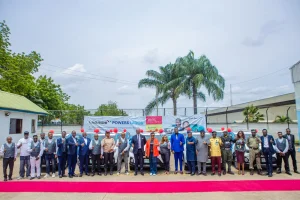
The event drew government officials, industry stakeholders, and mobility sector executives, reflecting growing interest in transportation models that combine technology, entrepreneurship, and structured vehicle ownership.
While the headline figure of ₦1 million in weekly earnings is likely to attract attention, the larger story may be what it reveals about the changing nature of work and wealth creation within Nigeria’s rapidly evolving mobility sector.
The Rise of Driver Ownership Models
Across Africa’s ride-hailing industry, vehicle ownership remains one of the biggest barriers to long-term financial growth for drivers.
Many drivers operate rented vehicles or participate in daily remittance arrangements that often leave them with limited opportunities to build assets despite years of work. While ride-hailing platforms have created income opportunities for thousands of Nigerians, concerns around driver welfare and long-term financial security continue to shape discussions across the industry.
Lagride’s Drive-to-Own programme aims to address this challenge by providing qualified Captains with access to vehicles through a structured ownership pathway supported by training, operational standards, and performance requirements.
Speaking during the event on behalf of Lagride Chairman Diana Chen, Executive Director Mildred Ekanem said the programme is designed to use mobility as a tool for empowerment, economic advancement, and asset creation.
According to Ekanem, the experiences shared by participating Captains highlight how structured ownership opportunities can influence not only income levels but also confidence, family welfare, and long-term financial planning.
The model reflects a broader trend across emerging markets where mobility platforms are increasingly exploring ways to support drivers as entrepreneurs rather than temporary gig workers.
What ₦1 Million Weekly Earnings Suggest About Lagos Mobility
Lagos remains one of Africa’s most complex transportation markets.
With a population estimated at over 20 million people, daily commuting challenges continue to create demand for reliable mobility solutions. Traffic congestion, limited public transport capacity, and growing urbanisation have opened opportunities for technology-enabled transportation services.
Against this backdrop, reports from Lagride Captains that some drivers are earning up to ₦1 million weekly suggest that significant revenue opportunities exist within the city’s transportation economy for operators who can maximise demand and maintain consistent service delivery.
Industry experts note that earnings figures should be viewed alongside operational expenses such as fuel, vehicle maintenance, insurance, and other associated costs. Nevertheless, ownership programmes can significantly improve a driver’s financial position by converting years of driving activity into a pathway toward asset accumulation.
For many drivers, owning a vehicle represents more than transportation. It represents business ownership, financial security, and the ability to generate income independently.
Training, Safety, and Professional Standards
One distinguishing feature of the Lagride model is its emphasis on structured training.
Unlike informal transportation arrangements, participants are expected to meet professional standards supported through the company’s training ecosystem.
The company’s leadership says this approach is essential for building trust and ensuring service quality as the platform expands.
During the event, Lagride’s PR Director, Ifeanyi Abraham, emphasised the importance of maintaining safety, trust, and operational discipline across the platform.
According to Abraham, protecting the Lagride brand requires protecting drivers, riders, vehicles, and the public trust that supports the platform’s growth.
His comments highlight a growing challenge facing ride-hailing operators globally. As competition intensifies, success is increasingly tied not only to technology but also to service quality, customer experience, and safety standards.
The company’s focus on training and accountability could prove important in a market where consumers are becoming more selective about transportation options.
Economic Inclusion Through Mobility
Beyond transportation, programmes such as Drive-to-Own have implications for financial inclusion and economic development.
Access to productive assets remains one of the biggest obstacles facing many aspiring entrepreneurs across Africa. Vehicle ownership programmes create opportunities for individuals to build wealth through assets that generate recurring income.
For policymakers and development stakeholders, such models offer an example of how technology platforms can contribute to job creation and economic empowerment.
The presence of representatives from the Lagos State Employment Trust Fund, Lagos State Vehicle Inspection Service, Federal Road Safety Corps, and other stakeholders at the event underscores the increasing intersection between mobility innovation and public policy.
As governments explore ways to create employment opportunities while improving transportation services, programmes that combine technology, training, and ownership pathways are likely to attract greater attention.
Building the Future of Urban Transportation
The event also featured vehicle handovers, presentation of car keys, cash rewards, and appreciation gifts for graduating Captains, highlighting the programme’s effort to recognise and retain high-performing participants.
At the same time, Lagride announced continued expansion efforts through its Refer a Captain initiative, which offers incentives for successful driver referrals as the company seeks to grow its network of professionally trained operators.
Looking ahead, the future of Lagos transportation will likely depend on a mix of public infrastructure, private mobility platforms, digital innovation, and new ownership models.
For Lagride, the Drive-to-Own programme represents an attempt to position mobility as more than a transportation service. It is a strategy built around economic participation, professional development, and asset ownership.
Whether similar programmes become a wider industry standard remains to be seen. However, as more drivers seek sustainable pathways to financial independence, ownership-focused mobility models may become an increasingly important part of Africa’s transportation future.
In a city where transportation challenges continue to evolve alongside economic opportunities, initiatives that combine technology, entrepreneurship, and ownership could help redefine what success looks like in the ride-hailing economy.