


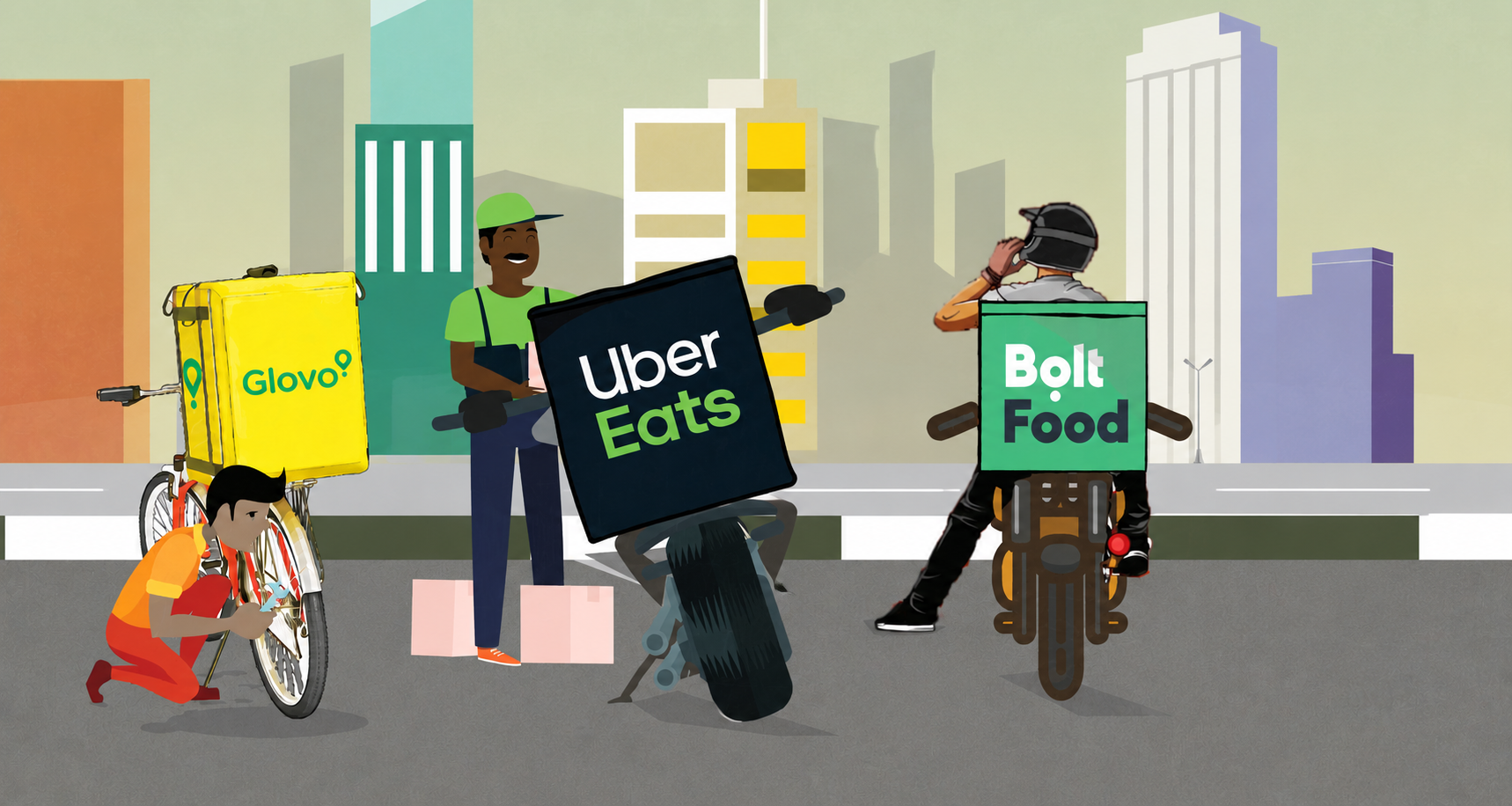
Kenya just changed the rules for app-based delivery companies. The Communications Authority of Kenya created a new licence category for platforms like Uber, Bolt, and Glovo. This new development has significantly increased their operating costs. But it also does something more important. It gives these companies a formal place in the country’s delivery economy.
The new licence takes effect on 29 July 2026. Companies must now pay a KSh100,000 initial licence fee, up from KSh30,000. They also face an annual operating fee of KSh100,000 or 0.4% of their gross annual turnover, whichever is higher. On top of that, they will pay a 0.5% universal service levy on their annual gross turnover. The licence lasts for 10 years.
The Old Courier Rules Did Not Fit Digital Delivery
Before this change, app-based delivery companies operated under the National Courier Operator licence. That licence cost KSh30,000 initially and KSh30,000 annually. Traditional courier companies used the same category. But digital platforms do not work like traditional couriers.
Ride-hailing companies now deliver much more than passengers. They bring restaurant meals, groceries, pharmacy orders, and retail purchases. Glovo has expanded its merchant partnerships across Kenya. Bolt Food now delivers from Quickmart supermarkets. Uber has applied for a courier licence to expand into parcel logistics. These platforms have become part of the country’s retail distribution system.
The regulator recognised this reality. Rather than forcing digital platforms into an outdated framework, the CA created a category that better reflects how these businesses actually operate. The new licence acknowledges that app-based delivery is not just a transport service. It is a digital marketplace that connects consumers, merchants, and riders.
Higher Fees Solve a Problem the Industry Ignored
The government argues that the current rules have not kept pace with technology. Delivery platforms now coordinate millions of transactions without falling under traditional postal licensing. The new framework brings them under proper oversight.
This matters for several reasons.
The delivery sector has grown rapidly. More consumers and businesses now rely on online shopping and digital commerce. Supermarkets, restaurants, pharmacies, and small businesses use digital platforms to reach customers beyond physical stores. The regulator’s own statistics show that courier and parcel services continue to grow as consumer behaviour moves toward online commerce.
The new licence creates a level playing field. All digital delivery platforms now operate under the same rules. This prevents some companies from gaining an unfair advantage by avoiding proper licensing.
The government can collect additional revenue from one of Kenya’s fastest-growing digital sectors. The 0.5% universal service levy contributes to broader industry development.
The Platforms Can Afford This Change
The higher fees will increase operating costs for these platforms. Large multinational companies like Uber, Bolt, and Glovo can absorb these costs more easily. They have the financial resources to comply with new regulations.
Smaller and emerging operators face a different reality. The higher fees and compliance requirements could create challenges for local delivery startups. They may struggle to meet the new financial obligations.
The platforms will likely review their pricing models or commission structures. They may pass some of the costs to merchants or consumers. But the immediate impact on consumers is likely to be limited.
Kenya Is Regulating Its Digital Economy More Strictly
In recent months, they have introduced new regulations for ride-hailing operators, online taxi services, and digital commerce platforms.
The goal is to strengthen consumer protection. Better tax compliance is another priority. The government also wants to create sustainable regulatory frameworks for technology-driven businesses.
Other African regulators are watching closely. Kenya’s approach could serve as a model for other countries adapting postal and courier rules to platform-based business models as e-commerce and on-demand delivery services become a larger part of the digital economy.
The New Licence Gives Digital Platforms a Clear Identity
The new licence gives delivery platforms something they did not have before. It provides certainty. Companies now know exactly what rules apply to them. They have a 10-year licence that allows for long-term planning.
This clarity benefits everyone. The platforms can invest with confidence. The regulator can enforce standards effectively. Consumers get better protection. And the government collects revenue from a growing sector.
The higher fees are not a punishment. They are the cost of operating in a properly regulated market. For Uber, Bolt, and Glovo, this is a price worth paying for a clear path to grow in Kenya’s delivery economy.
The Techsoma Briefing
Stay with the story.
Keep up with the companies, ideas and people shaping African tech. Get the briefing in your inbox.
Free to subscribe. Unsubscribe anytime. Privacy policy