

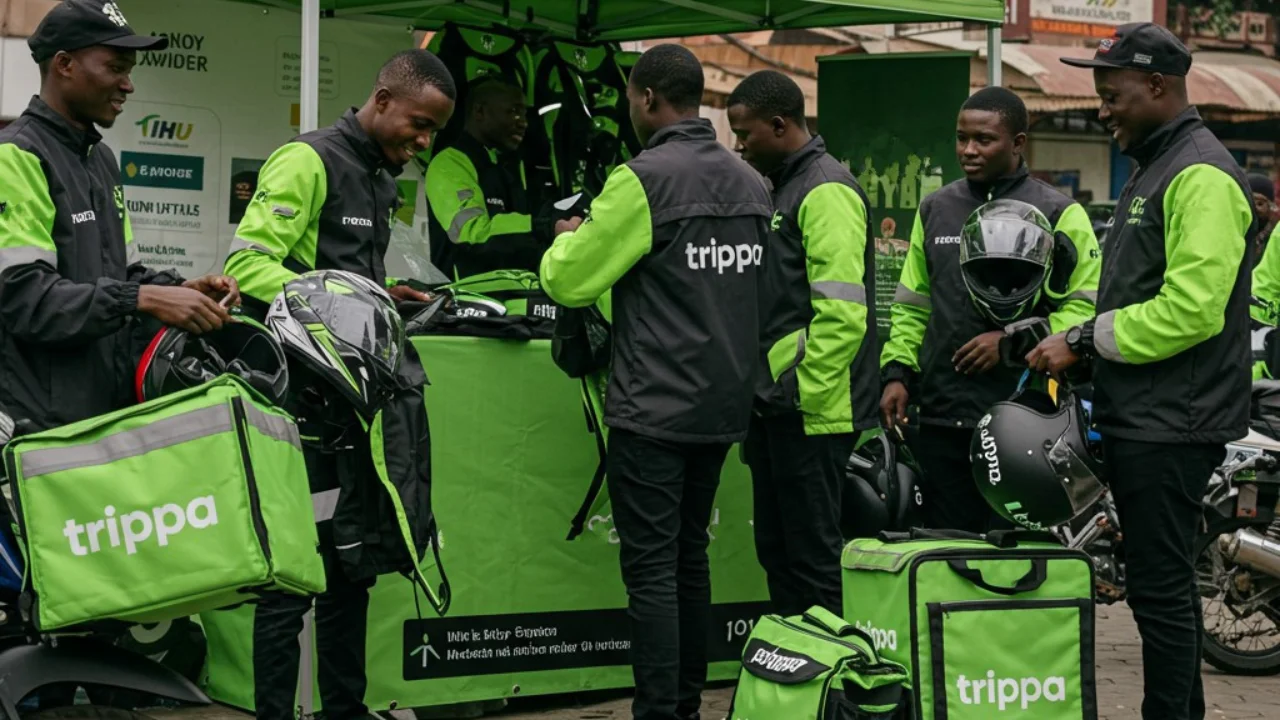
Ask most people why delivery is so expensive in Nigeria, and they’ll blame the courier. Femi Kehinde, Head of Marketing at logistics platform Trippa, says that’s rarely the real story.
“Those costs are driven by traffic, fuel, failed deliveries, poor route planning, low delivery density, and manual operations,”
Not, in other words, a delivery company simply charging more than it should. That distinction shaped everything Trippa was built to do, and everything it’s decided not to try fixing.
The Problem Wasn’t the Package. It Was Everything Around It
Trippa’s starting point wasn’t a spreadsheet of logistics costs. It was conversations with merchants who were losing far more than the price of a failed delivery. According to Kehinde, a single delayed order could mean an unhappy customer, a bad review, a cancelled sale, and a lost repeat customer, all from one delivery gone wrong. Business owners were spending their days personally calling riders, chasing updates, and apologising for problems entirely outside their control.
“That convinced us that the problem wasn’t simply moving packages,” Kehinde says. “It was the lack of reliability, visibility, and accountability.”
That reframing matters, because it points Trippa’s entire product toward a specific, narrower target: not cheaper delivery in the abstract, but a system merchants can actually see into and trust, even when something goes wrong.
Why the Last Mile Costs So Much in the First Place
The scale of the problem Trippa is working against is real. Globally, the last mile, the final leg of a delivery from a local hub to a customer’s door, eats up roughly 28% of total shipping cost. In many African markets, that climbs to somewhere between 35% and 55%. The shortest part of a parcel’s journey is, by a wide margin, the most expensive one.
Several forces stack on top of each other to push that number up. Large parts of urban and peri-urban Nigeria lack the standardised addresses that GPS-based routing depends on elsewhere, which means drivers frequently fall back on verbal directions and phone calls just to find a location. Cash-on-delivery still accounts for somewhere between 60% and 85% of e-commerce transactions across much of Sub-Saharan Africa, and every cash transaction carries its own handling risk, reconciliation burden, and higher chance of a failed delivery if the customer isn’t home to pay. And cities like Lagos rank among the most congested on earth, which wrecks the route-planning assumptions most logistics software is built on, since a trip that takes 45 minutes at 8am can take three hours by mid-morning.
What Trippa Actually Built to Attack This
Kehinde is direct about which parts of that list Trippa can touch and which it can’t.
“Where Trippa makes a real difference is by attacking the inefficiencies we can control,” he says.
That means electric vehicles to lower operating costs, automated dispatching and order management, optimised delivery routing, and real-time visibility for merchants into where every order actually is. The aim isn’t to reinvent delivery. It’s to squeeze out the failed trips, wasted fuel, and manual back-and-forth that come from running deliveries the old way, then pass some of that efficiency back to merchants as fewer complaints and lower operating costs over time.
On cash-on-delivery specifically, Trippa didn’t try to make the existing model less painful. It removed it. The platform requires orders to be paid for before a rider is ever dispatched, which eliminates the cash-handling risk and cuts into one of the biggest drivers of failed delivery attempts industry-wide. Kehinde is candid that this cuts off a real segment of the market that still depends on paying in person.
“We recognize that COD is still important for some businesses,” he says, “but our model is built around merchants who value operational efficiency.”
It’s a bet that Nigerian e-commerce is moving toward digital payments fast enough to make that trade worth it.
What Actually Changed for One Merchant
Asked for a concrete example, Kehinde described a retail merchant that had previously managed deliveries manually through a different logistics provider, with no visibility into where orders were, inconsistent pickup communication, and a steady stream of customer complaints as a result. After switching to Trippa, the merchant got a booking platform, real-time tracking for both the business and its customers, and a dedicated account manager resolving issues within 30 minutes.
Kehinde reports the merchant saw significantly fewer delivery-related complaints, faster order fulfillment, and far less time spent personally managing logistics. He stopped short of putting a number on the improvement, which is worth flagging rather than smoothing over. A specific before-and-after percentage would make this case considerably stronger, and it’s the natural next question for any merchant considering the switch.
Where Trippa Openly Admits It Can’t Help
The more revealing part of talking to Kehinde is what he doesn’t claim. Asked directly where the platform hits a wall, he didn’t dodge it.
“No logistics platform can completely eliminate challenges like traffic, poor road infrastructure, or customers being unavailable at the point of delivery,” he says. “Those are realities of operating in many African markets.”
Trippa’s focus, in his framing, is minimising the impact of those problems through technology and process, not pretending they don’t exist.
That’s a meaningfully different pitch than the ones that promise to solve delivery outright. Nigeria’s road infrastructure, its patchy addressing systems, and its customers’ availability at the point of delivery aren’t problems any single company can engineer its way around, however good its routing algorithm is. What a platform like Trippa can do is make sure the inefficiencies it does control, dispatching delays, failed cash transactions, poor route planning, don’t compound on top of the structural ones that are simply part of operating in the market.
A Narrow Fix for a Wide Problem
Trippa isn’t claiming to have solved African e-commerce logistics, and to its credit, it isn’t pretending to try. What it’s built is a bet on the controllable slice of a much bigger cost problem: better routing, honest visibility, and a hard line against the cash-handling risk that comes with COD. Whether that’s enough to meaningfully move the 35 to 55% last-mile cost figure at scale is still an open question, one that would benefit from harder numbers than the qualitative improvement Kehinde described for its retail merchant.
What’s clear is the direction of the bet. As digital payments spread further across Nigeria and merchants grow more willing to trade a slice of the cash-paying customer base for a lower failed-delivery rate, platforms built around Trippa’s specific assumptions, no COD, full visibility, automated dispatch, stand to look increasingly prescient. Whether that’s a genuine dent in Africa’s most expensive delivery leg, or simply a better way to operate within a cost structure that’s still fundamentally shaped by infrastructure no single company controls, is the question worth revisiting once more merchants have made the switch and the numbers get harder to argue with.