
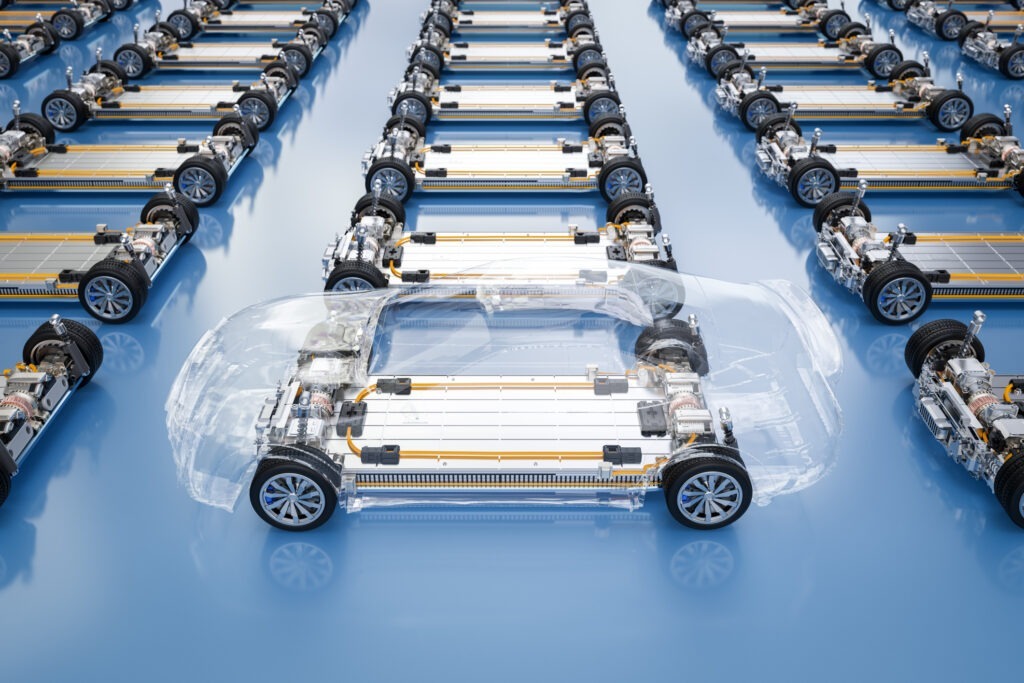
The new proposal to add battery minerals to South Africa’s auto incentive programme aims to keep more value inside the region, protect export factories, and give local suppliers a bigger role in the next era of vehicle production. That approach is practical and timely.
A factory plan before a car plan
South Africa is not chasing EV hype for its own sake. It is trying to protect one of its most important manufacturing sectors while the global car business shifts away from petrol and diesel models. In 2023, the automotive sector accounted for 5.3 per cent of GDP, contributed 21.9 per cent of domestic manufacturing value addition, and drove vehicle and component exports to a record R270.8 billion. That makes this policy fight about jobs, exports, and factory survival long before it becomes a consumer trend story.
The long-term target also shows how serious this is. The South African Automotive Master Plan 2035 aims to lift annual vehicle production to about 1.4 million units, raise local content to 60 percent, and double employment in the value chain. Those goals do not work if local factories stay tied to old engine systems while key export markets move on.
The government has begun building a policy stack around that reality. The EV White Paper set the direction in late 2023. The Treasury then set aside R1 billion over the medium term to support new energy vehicle and battery production, with an expected R30 billion in private investment. On top of that, South Africa introduced a 150 percent tax deduction for qualifying investments in electric and hydrogen vehicle production from March 2026. This is not a single policy move. It is a staged attempt to keep South Africa in the global auto supply chain.
Export pressure is already here
The pressure is not theoretical. South Africa’s EV push now comes from its export book. The EV White Paper says the EU and the UK take 46 percent of South Africa’s vehicle exports. It also warns that 67 percent of component exports in 2022 were tied to internal combustion technology. If those markets keep tightening emissions rules, South Africa risks losing high-value demand unless its plants build products that still fit future rules.
That risk has only grown clearer. The EU’s rules keep the 2035 zero CO2 target for new cars and vans, even with short-term compliance flexibility between 2025 and 2027. South African officials have repeated the same concern in public. Minister Parks Tau said in 2025 that the UK and EU account for almost half of South Africa’s vehicle exports and that failure to adapt would put those markets at risk.
The global market has already moved far ahead of South Africa’s local demand. The IEA says electric car sales topped 17 million in 2024 and made up more than 20 percent of new car sales worldwide. Growth also spread well beyond China, Europe, and the US. Emerging markets in Asia, Latin America, and Africa grew by more than 60 percent year on year. That matters because export manufacturing countries no longer compete only on labour and plant quality. They now compete on how well they can fit into localised EV supply chains.
The battery value chain matters most
The latest proposal on minerals gets to the heart of that problem. South Africa wants to add materials such as rare earths, iron, lithium, graphite, copper, and cobalt to the list of standard materials covered by its automotive incentive programme. If those inputs come from the Southern African Customs Union or the Southern African Development Community, producers will be able to count half of their value as local value added. That sounds like a technical change, but it changes the economics of sourcing, processing, and supplier development around EV batteries.
This is the stronger business angle in the story. South Africa has exported minerals for decades. Now it wants more of the battery chain to happen closer to home. The EV White Paper says batteries are the single biggest contributor to value addition in an EV. The country’s Critical Minerals and Metals Strategy also argues that the next industrial step should focus on beneficiation, battery materials, assembly, recycling, and local research capacity instead of raw exports alone.
South Africa does have real advantages here. The country is the world’s largest producer of manganese and also has platinum group metals, vanadium, nickel, iron, and other minerals tied to battery and fuel cell supply chains. That gives policymakers a stronger base than many countries that want an EV industry but need to import most of the raw inputs.
Still, mineral strength alone does not create a battery industry. A TIPS study on battery manufacturing found that South Africa currently refines only manganese and aluminium to battery grade. Nickel and lithium projects remain in the pipeline. The same study says the country has no commercial battery cell production today, even though it already has a lively battery pack assembly base and useful local expertise in battery management systems. That is an important reality check. South Africa has a path into the market, but that path starts lower in the stack than many politicians would like to admit.
The gap sits in execution
The biggest risk now is not policy intent. It is a delivery. South Africa’s own EV White Paper says the transition needs energy reform, better freight rail, stronger ports, and lower system friction across industry. Reuters has also reported that Transnet still struggles with equipment shortages, maintenance backlogs, theft, and under-investment, even as the government tries to bring in private capital to repair rail and port capacity. A minerals-led EV strategy depends on moving bulk materials and high-value components on time. If logistics fail, the industrial logic weakens fast.
The local market still needs work, too. Minister Tau said South Africa sold 15,611 new energy vehicles in 2024, which was only 3 percent of the market. President Cyril Ramaphosa has said the government is considering consumer tax rebates or subsidies to speed up local EV uptake. Without stronger domestic demand, South Africa will keep leaning on export logic while trying to build a new supply base. That can work, but it leaves less room for mistakes.
Founders should look past the car badge
Founders should read this shift as a supply chain opening, not as a race to launch another electric car brand. South Africa already hosts global vehicle makers and has local capability in pack assembly, battery electronics, and industrial energy systems. TIPS found that local firms and research partners have built expertise in battery management systems and battery pack assembly, even without a domestic cell industry. That creates more realistic openings in software, testing, thermal systems, pack integration, recycling, fleet charging, traceability, and factory support tools.
The best startup opportunities will sit where policy and factory pain meet. Carmakers need compliant local supply, better energy control, and cleaner logistics. Mineral processors need ways to hit battery-grade standards. Industrial users need storage and smarter charging that works around grid instability. The Critical Minerals Strategy also points to hubs for assembly, recycling, and research, which means smaller firms do not need to own the full value chain to build a strong business. They need to solve one hard part well.
The next step should stay grounded
A realistic future for South Africa does not start with a giant cell plant and a flood of cheap local EVs. It starts with a policy that rewards regional minerals, battery-grade processing, pack assembly, hybrid and plug-in hybrid production, supplier training, and better export readiness. Reuters reported in 2023 that the country’s first locally produced EVs would likely arrive in 2026 and start at a limited scale. That fits the facts far better than any overnight success story.
If South Africa gets this right, it will not just sell more cars. It will keep more of the battery chain, more supplier income, and more industrial knowledge inside the region. That is the deeper promise in this policy shift. South Africa does not need to beat China at scale. It needs to turn mineral strength, factory depth, and regional trade links into a durable place in the next auto economy. Right now, that looks like a smart and necessary bet.