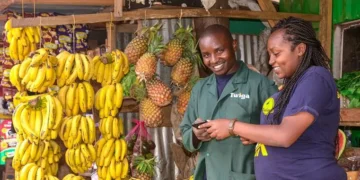

The story of food delivery in Nigeria is not a simple tale of failure. It is a story of experimentation, adaptation, and the harsh realities of building a business in one of the world’s most challenging markets. Over the past three years, several well-funded players have exited the scene. Jumia Food and Bolt Food both announced their departure from Nigeria in December 2023. FoodCourt suspended operations in March 2026 after kitchen workers went on strike over unpaid salaries. GoLemon, the Lagos grocery delivery startup founded by former Paystack senior managers, stopped accepting orders and began winding down its operations on July 29, 2026.
Yet amid these departures, Chowdeck has continued to grow. Founded in October 2021, Chowdeck spent 2025 consolidating the operational discipline that made it one of the few enduring winners in Nigeria’s food delivery market. In 2025, Chowdeck crossed into profitability, raised a $9 million Series A round led by Novastar Ventures, expanded into Ghana, and deepened its footprint across Nigeria. It now serves 2 million registered users across 11 cities with a network of more than 20,000 riders. It fulfilled over one million orders in October 2025 and ended that month with a positive gross margin of 26 percent. In June 2026, Chowdeck delivered more than ₦1.5 billion worth of groceries in a single month, with the grocery category now contributing 11 percent of its overall business.
Why did some startups struggle? What did the successful ones understand that others did not?
A Market That Looks Different on Paper
Nigeria’s online food delivery market reached $1.14 billion in 2025 and is projected to grow to $2.73 billion by 2034, expanding at a compound annual growth rate of 9.86 percent. Rapid urbanisation, rising smartphone penetration, digital payments and a young population comfortable with online services continue to fuel expectations that ordering meals with a few taps on a smartphone will become an everyday habit. For investors, the logic appears irresistible. People eat every day. Cities are becoming more congested. Young professionals are spending longer hours at work. Digital payments are becoming commonplace. Food delivery, on the surface, seems like a business with almost limitless demand.
Nigeria’s modern food delivery business gathered momentum during the COVID-19 pandemic, when lockdowns accelerated demand for contactless shopping and home deliveries. International operators saw opportunity. Jumia Food, originally launched as HelloFood around 2012, spent years building one of the country’s largest restaurant delivery networks. Bolt Food entered the market in 2021, hoping to leverage its ride-hailing ecosystem to capture urban consumers looking for speed and convenience. Neither remained.
By late 2023, Jumia shut down its food delivery operations across several African markets, including Nigeria, saying the business no longer aligned with its long-term strategy. Bolt Food also exited Nigeria, choosing to refocus on its ride-hailing business after struggling to achieve the scale and profitability investors had hoped for.
Jumia Food constituted 11 percent of Jumia’s Gross Merchandise Value in the first nine months of 2023, amounting to $64 million in food sales. But the company had not been profitable since inception. Bolt Food’s departure, despite its expansion efforts in major Nigerian cities like Lagos, was attributed to economic downturns, high inflation, and stiff competition from well-entrenched rivals such as Jumia Food, Gokada, and Uber Eats.
Both companies operated with a broad, pan-African mindset that assumed uniformity across markets. That approach struggled in cities with unreliable traffic flow, inconsistent restaurant readiness, and fragmented logistics.
The Cost of Owning Everything
FoodCourt and GoLemon both pursued what the industry calls a “full-stack” model. They tried to control every part of the value chain.
FoodCourt operated a technology-enabled cloud kitchen model that prepares meals from centralised kitchens for delivery. Unlike traditional restaurants that require expensive dine-in locations, cloud kitchens operate centralised cooking facilities dedicated primarily to online food orders. The model promises lower overhead costs, faster expansion and the ability to operate multiple virtual restaurant brands from a single kitchen.
However, the economics have become difficult because of high inflation, rising food prices, increasing energy costs, foreign exchange volatility and expensive last-mile logistics which have significantly raised operating expenses for food-tech businesses. Similarly, consumers have become more price-sensitive, making it harder for startups to pass rising costs on to customers without affecting demand.
FoodCourt’s suspension stemmed from a mix of operational, organisational, and working-capital pressures rather than any single failure. The company’s challenges became public in March when employees reportedly embarked on a strike over unpaid wages, affecting service delivery. By April, FoodCourt had shut its remaining kitchen as it struggled to meet its financial commitments. FoodCourt’s chief executive, Henry Nneji, acknowledged that the decision to pause operations was not caused by a single issue but by a combination of operational, organisational, and working-capital challenges.
GoLemon faced a similar structural challenge. The startup was founded by four former senior Paystack executives and operated for 28 months, serving 40,000 registered customers and delivering more than ₦2 billion worth of groceries across Lagos. Rather than reselling from supermarkets, it managed its own inventory and fulfilment centres, sourcing in bulk directly from farmers and fast-moving consumer goods manufacturers. This gave it control over quality and margin. But owning inventory and fulfilment is expensive. It ties up cash in stock, storage, and staff long before order volumes are large enough to carry those costs.
GoLemon’s shutdown offers a window into one of African e-commerce’s hardest business models. While the startup says individual grocery orders were profitable, it never generated enough volume to cover the fixed costs of running its own supply chain. The company said: “We saw clear demand for planned, large-basket grocery shopping. What we didn’t reach, within the capital and time available, was making the wider business self-sustaining without further outside capital”. Despite efforts to raise additional funding, GoLemon could not find a sustainable path forward within the time available.
The Scale Trap
Jumia Food and Bolt Food faced a different set of challenges. They had scale, but scale without profitability is not a strategy. It is a gamble.
Jumia Food depended on discounts to drive volume. When funding tightened, the model collapsed under its own weight. Bolt Food, which had expanded into multiple Lagos neighbourhoods, cited economic downturns, high inflation, and stiff competition as reasons for its exit.
The venture capital environment has changed dramatically. Between 2021 and 2022, many startups raised capital during a period of abundant global liquidity and aggressive investor appetite for African technology companies. Since then, higher global interest rates and declining venture investment have made fundraising considerably more difficult. The funding squeeze has left many startups with fewer options when revenues fail to keep pace with operating expenses. Companies that previously relied on successive funding rounds to finance growth are being forced to cut costs, lay off staff, restructure operations or, in some cases, suspend services altogether.
FoodCourt had previously made nearly 100 employees redundant in September 2024 after redesigning its kitchen processes. The company framed this as an efficiency push. Looking back, it was an early warning sign that the business was struggling.
GoLemon’s founders had the pedigree and the connections. But pedigree does not guarantee survival when the unit economics do not work. The company raised backing from Byld Ventures, Uncovered Fund, and HoaQ, but could not convince investors to fund another round.
What Chowdeck Understood
Chowdeck took a different approach. Rather than owning kitchens or warehouses, it operates as a technology marketplace that connects customers with existing restaurants, supermarkets and riders. This asset-light structure allows it to scale without carrying the heavy operational burden associated with maintaining physical infrastructure, making it more resilient in an environment of rising inflation and slowing investment.
The company also went narrow and deep. It focused on select neighbourhoods, optimised delivery routes, and built dense rider clusters. Speed became a core product feature, not a marketing promise. Chowdeck invested heavily in delivery rider coordination, batching systems, and restaurant preparation timing. The result was a consistent promise: food arrives fast and warm.
Chowdeck also built a tighter financial system. It scaled at a pace that matched its operational capability. It prioritised unit economics, efficient logistics, and sustainable rider incentives. Discounts existed but were not a crutch. Chowdeck ended October 2025 with a positive gross margin of 26 percent. Management argues this demonstrates the platform can grow volumes while preserving discipline on costs and incentives. In 2024, the value of meals delivered grew more than six times that of 2023, and the 2024 total was surpassed before mid-2025.
Chowdeck also understood something that Jumia Food never fully grasped: Nigerian consumers respond more to reliability than to endless promotions. The brand felt human and relatable. Riders became part of the story. Restaurants viewed Chowdeck as a partner rather than an extractive platform.
In June 2025, Chowdeck acquired Mira, a point-of-sale startup founded by former Flutterwave and Paystack staff. The transaction brought payment processing, inventory management, and merchant financing tools into Chowdeck’s ecosystem. By the end of 2025, it had outgrown the chow. It had become a cultural utility: sustaining livelihoods for riders, selling everything from groceries to airtime and event tickets, and quietly reshaping how people across the region are eating, shopping, and living.
The Partnership Question
In December 2025, GoLemon signed a supply partnership with Chowdeck that placed a selection of its products inside the faster delivery app. Both companies framed it as a way to serve two shopping modes, the planned monthly shop and the urgent top-up, without either giving up what it did well.
GoLemon stood to become a supplier inside someone else’s ecosystem rather than a destination in its own right, surrendering the habit that keeps a consumer brand alive.
Seven months later, the company is closing. Partnerships are not inherently dangerous. In fact, they can be powerful growth levers when structured correctly. Chowdeck itself has built successful partnerships with restaurants and vendors that have strengthened its ecosystem without eroding its brand.
The risk with GoLemon’s partnership was not the partnership itself. It was the imbalance of power. By making its products available on a platform customers already opened several times a week, GoLemon became a supplier inside someone else’s ecosystem rather than a destination in its own right. It lost direct access to its customers. When GoLemon needed to raise funding, it could not point to a strong, loyal customer base because those customers were now engaging with Chowdeck, not GoLemon.
The lesson is not to avoid partnerships. The lesson is to ensure partnerships strengthen your position rather than weaken it. A partnership that gives away your customer relationship without giving you something equally valuable in return is not a partnership. It is a slow exit.
The Funding Environment
FoodCourt’s difficulties also come amid a venture capital slowdown that has forced startups across Africa to shift from rapid expansion to profitability. FoodCourt’s operational pause carries broader implications beyond one startup as it demonstrates that growth alone is no longer enough. Investors are now placing greater emphasis on sustainable unit economics, cash flow management and profitability rather than customer acquisition at any cost.
This development may make investors more cautious about food-tech startups, thereby leading to greater scrutiny of business models, operational efficiency and financial discipline before committing new capital. For founders, it reinforces the importance of managing burn rates, maintaining adequate cash reserves and building businesses capable of surviving longer fundraising cycles.
GoLemon’s closure reflects the shrinking investments in African startups as investors cut back funding. The company completed tens of thousands of deliveries across Lagos over the past two years while building its software from the ground up. But without additional capital, the model could not sustain itself.
The Nigerian Reality
Any analysis of food delivery in Nigeria that does not start with the country’s macroeconomic conditions is incomplete. Food inflation in Nigeria has remained elevated, representing a significant cost burden for any business dealing in food. Persistent food inflation, foreign exchange volatility, high energy costs and weaker household purchasing power have squeezed both consumers and businesses.
Rising energy costs have been particularly devastating for delivery logistics. Diesel prices have remained elevated, directly impacting the cost of every trip a rider makes. Logistics startups have been forced to increase delivery fees by 20 to 50 percent just to stay operational. For a business model that already operates on razor-thin margins, these increases are existential.
The naira’s depreciation against major currencies has increased the cost of imported packaging, equipment, and technology. Every component of the delivery chain, from the phone a rider uses to the packaging that keeps food warm, has become more expensive in local currency terms.
Foreign exchange volatility has made financial planning nearly impossible. Startups that priced their services in naira found their costs, particularly for imported goods and services, rising faster than they could adjust prices. Consumers, already feeling the pinch of inflation, became more price-sensitive, making it harder for startups to pass rising costs on to customers without affecting demand.
Infrastructure challenges compound these economic pressures. Nigeria’s road networks are unpredictable. Traffic congestion in Lagos is legendary. Despite the visibility of delivery platforms in major cities, food delivery penetration in Nigeria remains relatively low compared with more mature markets, largely due to affordability concerns and high delivery costs. For many Nigerians battling rising food prices and inflation, convenience often comes second to cost.
Restaurants struggle with rising food costs and may be reluctant to partner with delivery platforms that take a cut of already thin margins. Riders face rising fuel costs and may demand higher pay. Customers face higher prices and may reduce their frequency of orders.
The companies that survived understood something their competitors did not. Building in Nigeria means building for Nigeria. It means accepting constraints and designing solutions around them rather than pretending they do not exist. It means understanding that a food delivery business in Lagos is not the same as one in London or Nairobi.
The Human Cost
GoLemon employed 37 people at its peak. Around 20 percent of its workforce has already secured new roles, the company said. FoodCourt had previously made nearly 100 employees redundant in September 2024 after redesigning its kitchen processes.
These are not just statistics. They are founders, engineers, riders, and kitchen staff whose livelihoods were tied to these ventures. GoLemon appealed to organisations hiring across fulfilment operations, engineering, product, growth, customer support, finance and other startup roles to consider members of its team.
Lessons for Founders
The food delivery sector in Nigeria offers clear lessons for any startup operating in a challenging market.
Asset-light beats asset-heavy. Chowdeck operates as a technology marketplace that connects customers with existing restaurants, supermarkets and riders. This asset-light structure allows it to scale without carrying the heavy operational burden associated with maintaining physical infrastructure. Rather than owning kitchens or warehouses, platforms such as Chowdeck and Glovo largely operate as technology marketplaces. Their structures allow them to scale without carrying the heavy operational burden associated with maintaining physical infrastructure, making them more resilient in an environment of rising inflation and slowing investment.
Unit economics matter more than growth. Investors are now placing greater emphasis on sustainable unit economics, cash flow management and profitability rather than customer acquisition at any cost. Chowdeck ended October 2025 with a positive gross margin of 26 percent. That is the kind of discipline that separates survivors from the rest.
Going deep beats going wide. Chowdeck focused on select neighbourhoods and built density before expanding. This approach reduced delivery times and improved reliability. The companies that expanded too quickly discovered that scale without operational excellence is not an asset. It is a liability.
Partnerships must strengthen your position. Partnerships are not inherently dangerous. But they must be structured to benefit both parties equally. A partnership that gives away your customer relationship without giving you something equally valuable in return is a slow exit.
Funding is not guaranteed. The venture capital environment has shifted dramatically. Startups must build businesses that can survive without continuous external capital. The companies that raised large rounds during the boom years of 2021 and 2022 are now discovering that the next round is not coming. Build a business that works without VC. If you can do that, you will be in a position of strength when you do raise.
Build for the market you are in. Unlike software companies that can scale with relatively little additional cost, food delivery is a logistics business disguised as a technology company. Every order requires a rider, fuel, packaging, customer support, payment processing and real-time coordination between restaurants and customers. Each additional order generates additional costs, making profitability far more complicated than simply increasing the number of users. Nigeria is not Silicon Valley. It is not London. It is not Nairobi. It is Nigeria. Global brands often assume capital, tech and reputation will carry them, but Nigeria rewards only those who respect its cultural codes. Chowdeck won because they aligned with the lived realities of Nigerians, late-night demand, instant vendor liquidity and zero tolerance for poor service.
What the Future Holds
Food delivery in Nigeria is not impossible. Chowdeck proves that. But the model requires extreme discipline. You cannot own everything and expect to survive on thin margins. You cannot scale before you have figured out unit economics. You cannot treat discounts as a growth strategy and expect profitability to magically appear.
The companies that exited tried to do too much, too fast, with too little capital. They expanded before they had fixed the fundamentals. They chased revenue instead of sustainable margins.
Chowdeck did the opposite. It went deep before going wide. It built a system that works in real life, not just in a spreadsheet. It understood that African markets reward companies that understand daily realities.
Yet, even as some of the industry’s biggest names retreated, new investors are still betting that Nigeria’s food delivery market has room to grow. One of the newest entrants is Swoop, an Eswatini-born startup that launched operations in Lagos in 2026 after raising $7.3 million in seed funding from international investors. The company is taking a different approach from earlier entrants, focusing first on major cities before expanding across Nigeria and eventually the continent.
The food delivery sector in Nigeria is still evolving. More companies will likely enter. Some will succeed. Others will not. But the ones that survive will be the ones that build for Nigeria and learn from the mistakes of others.