
Kenya’s best-funded agritech startup, Twiga Foods, has run out of room.
GT Flow Limited, the operating entity formerly registered as Twiga Foods One Limited, entered statutory administration on 17 August, confirmed by Gazette Notice No. 14595 published in the Kenya Gazette on 11 September. Mohamed Mohamed has been appointed administrator with control of the company’s business, assets and affairs. Twiga’s directors can no longer touch company assets without his permission.
Creditors have 30 days from publication, so until 11 October, to submit claims.
What Administration Actually Means
Administration is not liquidation, and the distinction matters for anyone owed money.
It’s a legally recognised rescue process. An independent administrator takes over, directors step aside, and creditors are temporarily blocked from enforcement action while the administrator works out whether the business can be saved, sold, restructured or wound down. It buys time and stops the scramble.
The notable detail is who triggered it. The board itself initiated the process under Section 541(2) of Kenya’s Insolvency Act, rather than a creditor forcing the company into it through court. That’s a company choosing a controlled process over a disorderly one.
The Money That Went In
Twiga raised about $185.4 million in disclosed funding across its life, from investors including Goldman Sachs, Creadev and the International Finance Corporation.
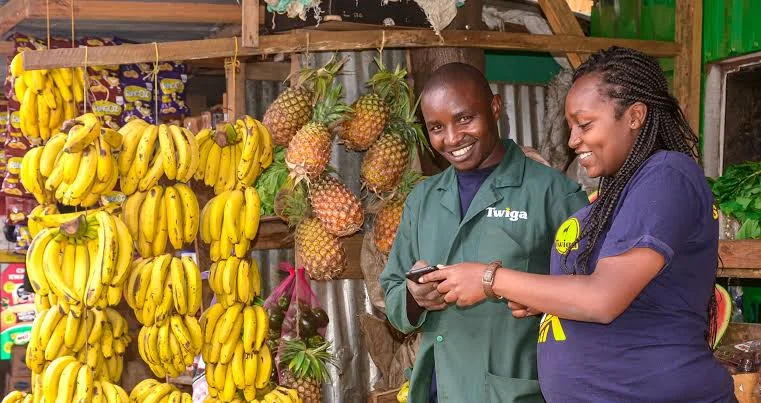
Founded in 2014 by Peter Njonjo and Grant Brooke, it was built around a problem anyone who has bought vegetables in Nairobi understands: too many middlemen sitting between the farm and the duka. Twiga’s pitch was to connect smallholder farmers directly to urban micro-retailers, using technology to strip out the layers. For most of a decade it was the company people pointed to when they wanted to argue that African agritech could work at scale.
This Was Not Sudden
The signals have been public for three years.
In September 2023, Incentro Africa, a Google Cloud reseller, went to the High Court seeking Twiga’s liquidation over unpaid cloud bills of $261,878.75. Twiga won an injunction and disputed the amount, saying it owed $94,000 while Incentro claimed $450,000. The same year, the company cut 283 jobs.
In December 2023 it closed a $35 million convertible bond backed by Creadev and Juven, the Goldman Sachs spinout, and used part of it to clear supplier arrears. Njonjo resigned as chief executive that same month and left the board in early 2024. Charles Ballard, previously of Jumia Kenya, took over on 1 May 2024.
Restructuring continued. In May 2024 Twiga acquired controlling stakes in three Kenyan FMCG distributors, Jumra, Sojpar and Raisons, to get established customers and eight distribution centres across Central, Coast and Western Kenya. It described the approach as a hybrid, franchise-inspired model.
Then in March 2026, creditors filed a winding-up petition at the High Court seeking liquidation of Twiga Tatu SEZ Limited, another entity in the group.
Layoffs, a liquidation attempt, a founder exit, a bond raised partly to pay suppliers, a pivot into acquisitions, and a second winding-up petition. That’s not a company that collapsed. It’s one that spent three years visibly running out of options while the ecosystem kept describing it as a success story.
Why This Model Is So Hard
The uncomfortable lesson isn’t about Twiga’s management. It’s about what the business actually required.
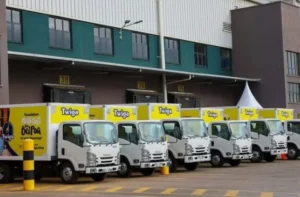
Distribution is capital-intensive in a way software isn’t. Trucks, warehouses, fuel, drivers, inventory, cold chain. Every extra customer costs real money to serve, and margins on food are thin by definition. The technology layer that made Twiga a startup rather than a distributor sat on top of a business whose economics were set by physical logistics, not by code.
Venture capital is built for businesses where growth gets cheaper as you scale. Distribution frequently doesn’t work that way, and when funding tightened across African tech, companies with heavy fixed costs and thin margins were the first to feel it.
What Happens Now
The administrator has to assess assets and liabilities, verify creditor claims, and decide whether the business can be rescued or should be wound down.
Twiga has not shut down entirely, and it’s worth being precise about that. The administration covers GT Flow Limited, and it remains unclear from the notice exactly which assets and operations across the broader Twiga structure fall inside it. What’s certain is that the people owed money have until 11 October to make their case, and that the decision about what survives now belongs to someone other than the company that spent twelve years building it.