South Africa has one of the world’s largest private security industries. Yet for years, getting help in an emergency was often slower. That contradiction birthed AURA, a Johannesburg-based emergency response platform that has quietly built one of the largest private emergency response networks on the continent.
Today, the company serves over one million monthly active users across South Africa, connects more than 11,000 vetted medical and security responders, and has expanded to Kenya, Ghana, the United Kingdom, and the United States. The story of AURA is not just about one startup’s success. It is about what happens when public infrastructure fails and private technology steps in to fill the gap.
The Problem That Built AURA
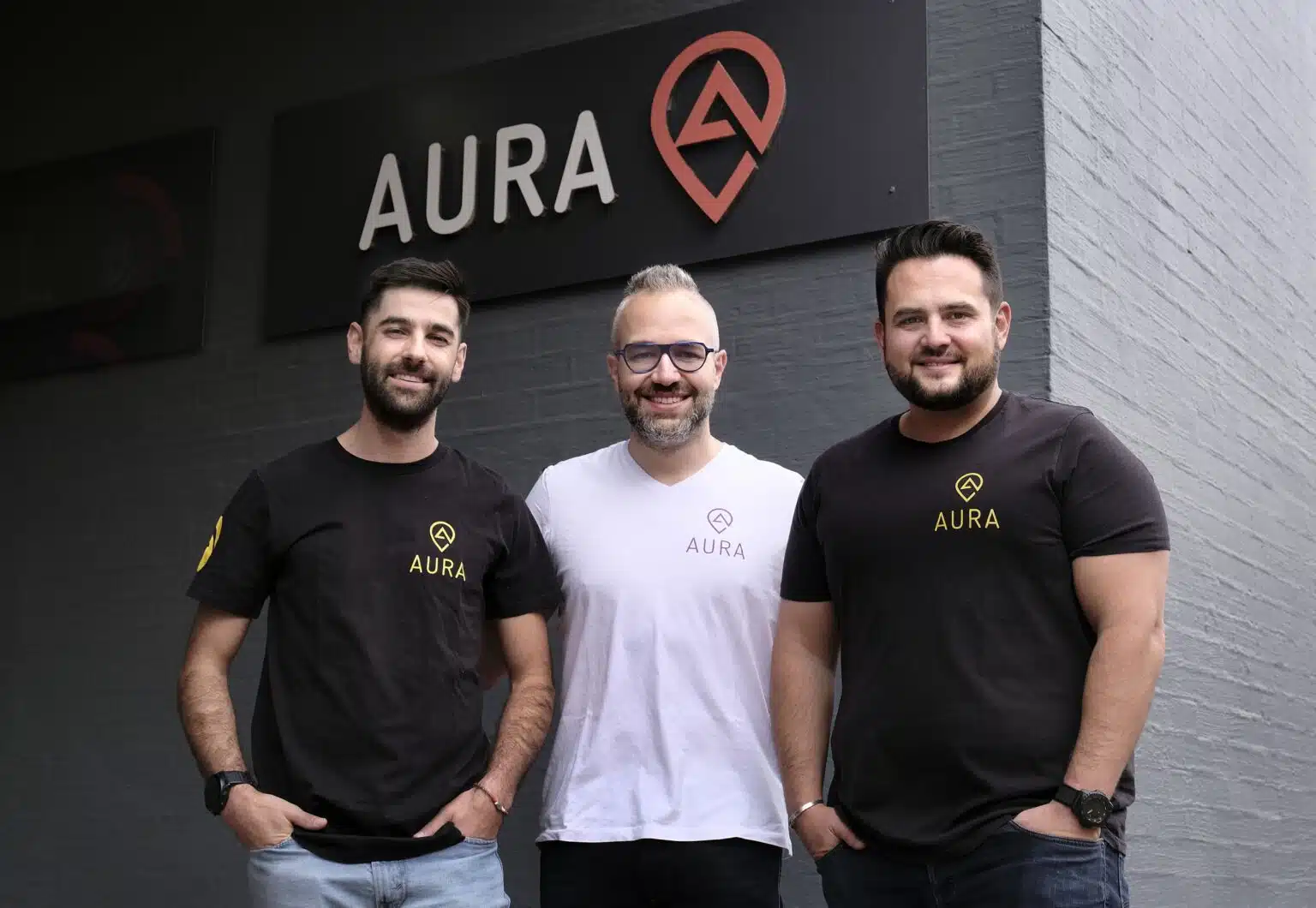
In 2017, when Ryan Green, Warren Myers, and Adam Pantanowitz began working on what would become AURA, they noticed something deeply wrong. Getting armed response required making a phone call, providing details, and waiting for a control room operator to determine which security officer was closest. The process was slow, manual, and inefficient.
Justin Suttner, AURA’s Head of Sub-Saharan Africa, explains the founding insight: “In an emergency, accessing help was often far more difficult than it should be. Gaps in public infrastructure meant it was easier and quicker to order a pizza in South Africa than to get emergency assistance when someone’s life was at risk.”
AURA was built to change that. The platform uses GPS-enabled smartphones to pinpoint a user’s location instantly. When a user taps a panic button on an Aura-supported platform, an alert with the location is sent to a control room. The control room can see the user’s precise location and the locations of all nearby security officers, paramedics, or other service providers. The nearest appropriate responder is dispatched in real time.

The B2B2C Model
AURA does not operate its own consumer app. Instead, the company works on a business-to-business-to-consumer model, embedding its technology into platforms people already use every day.
Partners include Uber, FNB, Samsung, Discovery, and others. When a user triggers an alert through any of these services, AURA’s system locates and dispatches the nearest vetted responder.
The company also powers many well-known panic button apps. In 2025, AURA acquired Namola, the popular panic button app previously owned by MultiChoice, DStv’s parent company. Other platforms using AURA’s technology include Discovery Bank Panic Code, FNB GuardMe, the Gauteng Crime Prevention Panic button, Tracker CareGuard, and ProtectENS.
AURA has also developed white-label solutions, including an app for The Courier Guy’s drivers, who are among the many couriers increasingly targeted by hijackers and robbers.
The Scale of the Problem
In South Africa, about 84 percent of the population relies on public healthcare services, with access deeply unequal across provinces and settlement types. Police response times have deteriorated. The result is a privatisation moment. South Africans are increasingly turning to private emergency options, with tech platforms like AURA leading the charge.
Private insurers are rapidly integrating these life-saving services into their product offerings. In 2025, the platform teamed up with Samsung to launch Samsung SOS+, a free 12-month emergency response subscription bundled with new Galaxy A-series devices. The pilot was so successful that customers of higher-end devices felt left out.
The Trust Question
Before responders can join AURA’s network, they are assessed against metrics including capability, experience, legal requirements, reputational assessment, and readiness to respond. “AURA is not simply aggregating a large number of responders but building a trusted network where users know that the person arriving has been properly verified”, Suttner notes.
The company is not directly available to the public. Instead, its solution is integrated into various free mobile apps in South Africa. This approach allows AURA to scale without the cost of acquiring individual consumers.
READ ALSO:
Cape Town Startup, AI Diagnostics, Raises $5.2M to Scale AI-Powered TB Screening Across Africa
The US Expansion and Latest Developments
The most significant development for AURA is its expansion into the United States. The company has already launched in Dallas-Fort Worth as its first active American market, with plans to expand to Houston, Los Angeles, Seattle, Atlanta, and further cities across Texas, Florida, and Arizona.
The gap AURA targets in the US is well documented. In Fort Worth, between 94 and 99 percent of alarm activations to which officers respond are false. Seattle formally stopped responding to most unverified burglar alarms in October 2024, joining Houston, Phoenix, and other cities that now require audio, video, or human confirmation before dispatching officers. This shift has created a gap that private responders can fill.
In the US market, AURA aims to keep its response time under 30 minutes compared with the sub-10-minute benchmark it maintains in South Africa. The company positions its US service as a complement to law enforcement rather than an alternative, routing unverified incidents to private responders so that officers can stay focused on confirmed emergencies.
The expansion is backed by significant momentum. In May 2025, AURA secured €13.5 million (approximately R272.9 million in a Series B round co-led by the Cathay AfricInvest Innovation Fund and Partech. This brought total funding to €21 million and is intended to fund the US expansion and the development of a global emergency dispatch “clearing house”.
In July 2026, AURA announced a strategic partnership with Google Maps Platform, becoming the first security and emergency response services provider authorised to embed Google Maps Platform navigation directly into its platform. The integration will improve routing, arrival estimates, and incident coordination across AURA’s operations in South Africa, Kenya, the United Kingdom, and the United States.
The company has also earned industry recognition, winning an ESX Innovation Award in the Remote Guarding and Incident Response category and the People’s Choice Innovation Award at the Electronic Security Expo in June 2026. The awards recognised AURA’s platform for connecting alarm events to on-the-ground security response through its nationwide network of private security responders.
Since 2017, AURA has generated over 67,000 alerts and estimates that its quick response has saved over 8,000 lives, with roughly five lives saved per day in South Africa alone.
Across Africa, public services are struggling to keep pace with demand. Private technology platforms are stepping in to fill the gaps. The question is whether this is a sustainable solution. AURA’s model relies on partnerships with insurers, banks, and corporations. It is not a replacement for public emergency services. It is a supplement for those who can access it through their bank, insurer, or employer.
But for the one million South Africans who use AURA each month, and the growing number of Americans who will soon have access, the distinction may not matter. What matters is that when they press the panic button, help arrives.