

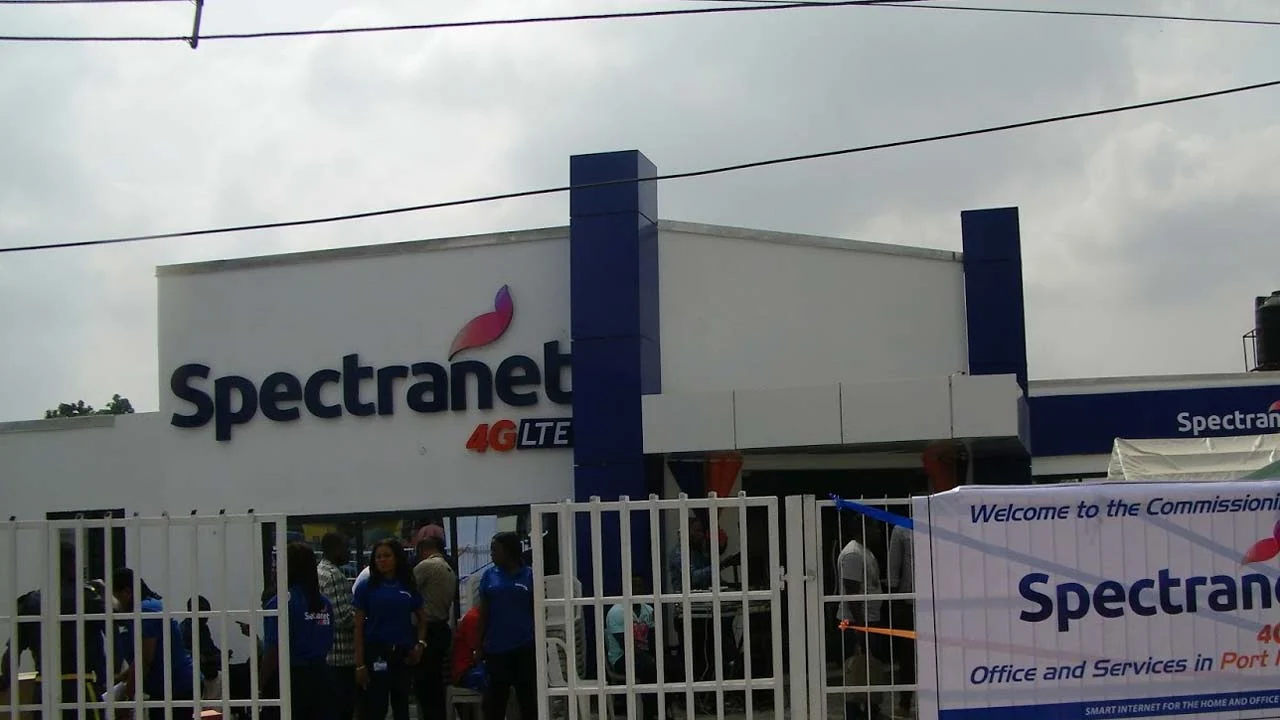
Nigerian internet service provider Spectranet is shutting down its operations in Ibadan and Port Harcourt, ending its broadband services in both cities by May 2027 as rising operational challenges force the company to concentrate on Lagos and Abuja.
The decision, announced on Tuesday, November 24, 2026, will affect customers who rely on Spectranet for home and business connectivity. Subscribers will receive six months’ notice before their services are discontinued, with arrangements being made for eligible devices and unused data balances.
Spectranet has not disclosed how many customers will be affected or the financial losses behind its withdrawal.
Speaking to journalists in Lagos, the company’s Chief Operating Officer, Sumit Gambhir, attributed the decision to the increasing difficulties of maintaining operations in the two cities.
“Following a careful review of our operations and the increasing operational challenges associated with delivering our services in these two cities, we have taken the difficult decision to discontinue Spectranet services in Ibadan and Port Harcourt,” Gambhir said.
The move comes barely two months after the company celebrated 15 years in Nigeria and outlined plans to strengthen its broadband infrastructure.
Spectranet shutdown: What happens to customers in Ibadan and Port Harcourt?
Spectranet said affected subscribers would receive six months’ advance notice, beginning from the date of their first official notification.
During this period, customers will continue to access existing services, while the company maintains customer support and provides updates on the transition.
The ISP also plans to introduce a device buy-back programme for eligible equipment and arrangements for customers with unused data balances. However, it has yet to disclose the financial terms, eligibility requirements or compensation procedures.
Customers who own compatible Spectranet devices may retain them for use in Lagos or Abuja or transfer them to friends and family in those cities, subject to applicable conditions.
The shutdown presents an immediate challenge for households and businesses that depend on Spectranet for work, online transactions, education and entertainment.
Affected customers will need to consider alternative providers, including mobile broadband operators, fixed wireless services and fibre internet companies. However, availability, pricing and network performance vary by neighbourhood.
As TechSoma previously explained in its review of MTN’s outdoor broadband equipment, the quality of a home internet connection depends heavily on the infrastructure and signal coverage available at a customer’s specific location.
Why Spectranet is abandoning two Nigerian cities
Spectranet’s withdrawal signals a shift towards concentrating its resources in markets where it believes its operations can remain commercially sustainable.
In September 2026, the company appointed Gambhir as Chief Operating Officer, tasking him with overseeing operations and long-term infrastructure planning.
A month later, Spectranet announced an expansion of its fibre-to-the-home network, targeting residential and commercial customers in Lagos and Abuja.
At the time, the company said its fibre services were available across more than 300 major locations in both cities, while it continued providing wireless, fibre and enterprise connectivity in Ibadan and Port Harcourt.
The latest announcement changes that strategy.
Rather than sustaining operations across four cities, Spectranet intends to focus on service quality, customer experience and broadband development in Lagos and Abuja.
The company has not provided a breakdown of the operational costs driving its decision, making it difficult to establish whether power expenses, infrastructure maintenance, customer demand or competition played the biggest role.
It has also not disclosed whether its exit will involve infrastructure sales, employee layoffs or the termination of existing commercial agreements.
Spectranet’s withdrawal exposes the economics of Nigeria’s broadband market
Spectranet’s decision comes at a time when Nigeria is recording growth in internet subscriptions, even as service providers confront the cost of expanding and maintaining infrastructure.
According to the Nigerian Communications Commission’s latest available ISP data, Spectranet recorded 111,384 active internet subscribers in the second quarter of 2026.
Of those subscribers, 110,040 used wireless broadband services, while 1,344 were connected through wired or fibre infrastructure.
The figures placed Spectranet among Nigeria’s largest dedicated internet service providers in the NCC’s reporting dataset.
However, the regulator’s published figures do not show how many of those subscribers are based in Ibadan or Port Harcourt, making the scale of the impending disruption difficult to quantify.
The wider market also illustrates how competitive dedicated broadband provision has become.
In the same reporting period, Starlink recorded 98,642 active Nigerian subscribers, while FiberOne had 56,486. These figures exclude the much larger subscriber bases of mobile network operators such as MTN, Airtel and Globacom.
Unlike mobile network operators, smaller ISPs must compete for customers while managing the cost of maintaining broadband infrastructure within their service areas.
Nigeria’s telecom sector also faces challenges involving unreliable electricity, infrastructure vandalism and network disruptions.
These problems previously attracted legislative attention, as TechSoma reported when the House of Representatives directed the NCC to address persistent telecom service failures.
However, Spectranet has not confirmed that any particular industry-wide challenge directly caused its decision to exit Ibadan and Port Harcourt.
What Spectranet’s exit means for broadband competition
Spectranet’s withdrawal could reduce the number of broadband options available to consumers in affected neighbourhoods, particularly where alternative fixed wireless or fibre networks have limited coverage.
For competing providers, the development creates an opportunity to attract customers seeking replacement connections.
But winning those subscribers will depend on whether operators can offer reliable service at affordable prices, rather than simply advertising coverage in the two cities.
The development also presents a challenge for Nigeria’s broader connectivity ambitions.
The federal government is pursuing Project BRIDGE, a $2 billion initiative to expand Nigeria’s fibre network by 90,000 kilometres, with the aim of improving national broadband infrastructure and connecting underserved communities.
Yet Spectranet’s decision demonstrates that expanding infrastructure and maintaining commercially sustainable retail internet services are separate challenges.
For the company, retreating to Lagos and Abuja may create an opportunity to improve operational efficiency and focus investment on existing customers.
For subscribers in Ibadan and Port Harcourt, however, the consequences are more immediate.
They must find another dependable internet connection before Spectranet’s six-month withdrawal period ends.
And for Nigeria’s broadband industry, the bigger question is whether internet providers can expand beyond the country’s largest markets without facing similar pressures.