
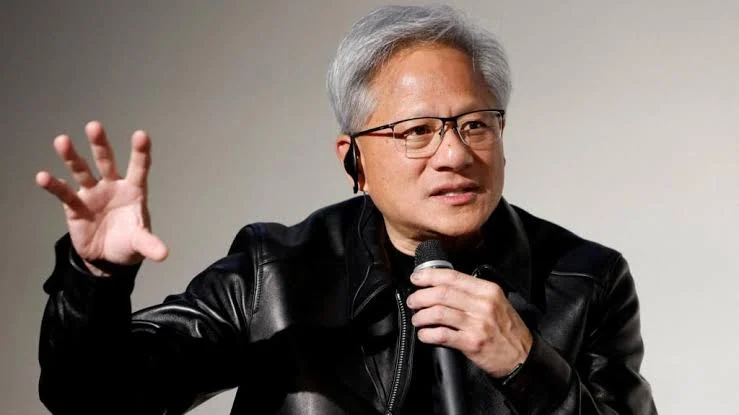
Jensen Huang returns as NVIDIA CEO just 11 days after the artificial intelligence chipmaker announced his resignation, following a unanimous decision by the company’s board to reinstate its co-founder.
NVIDIA confirmed the decision on Monday, November 23, 2026, restoring Huang as president, chief executive officer and a member of its board of directors with immediate effect.
The announcement reverses the board’s November 17 position, when chairman Harvey Jones publicly ruled out Huang’s return following his resignation amid concerns about his personal conduct and an ongoing national security investigation.
NVIDIA said its directors reconsidered the decision after several discussions with Huang and consultations involving senior US government officials. The board said it was satisfied with his ability to lead the company and believed his reinstatement posed no national security risk.
However, the independent investigation into allegations surrounding Huang’s relationships and a possible foreign intelligence operation remains ongoing.
Why NVIDIA Reinstated Jensen Huang as CEO
According to NVIDIA’s November 23 announcement, the board unanimously approved Huang’s reinstatement after reviewing the circumstances surrounding his departure.
“The Board believes Jensen is the right person to lead NVIDIA,” chairman Harvey Jones said.
Jones explained that the decision followed discussions with Huang and input from senior US government officials, which gave directors confidence in his return.
The company did not disclose the details of those government consultations.
Huang welcomed his reinstatement, thanking the board, employees, shareholders and industry partners for supporting him during his absence.
He also expressed gratitude to his family and acknowledged the responsibility of returning to lead the company he co-founded in 1993.
Colette Kress, who served as interim CEO following Huang’s departure, will return to her responsibilities as chief financial officer, while Jones remains board chairman.
The decision restores NVIDIA’s founder-led leadership after a period of uncertainty surrounding the company’s management and future direction.
What Led to Jensen Huang’s Resignation?
The controversy began in early November after reports emerged about Huang’s extramarital relationships, including one involving a businesswoman whom US authorities reportedly suspected of having connections to Chinese intelligence.
Huang acknowledged being unfaithful to his wife and apologised to his family and NVIDIA employees.
On November 8, NVIDIA’s board announced an independent investigation into reports that Huang had been targeted by a foreign intelligence effort.
At the time, the company said it had no reason to believe national security or confidential NVIDIA information had been compromised.
Three days later, on November 11, the board accepted Huang’s resignation as CEO, president and director, according to NVIDIA’s filing with the US Securities and Exchange Commission.
The company publicly announced his departure on November 12, appointing Kress as interim chief executive while beginning a search for a permanent replacement.
On November 17, Huang expressed willingness to return, but the board publicly stated that it did not intend to reinstate him.
The November 23 announcement therefore marks a reversal of a position the company had maintained less than a week earlier.
Importantly, the allegations involving possible foreign intelligence connections have not been established as proven misconduct by Huang, and NVIDIA has not announced findings that he disclosed confidential information.
NVIDIA Investigation Continues Despite Huang’s Return
Huang’s reinstatement does not bring the investigation to an end.
NVIDIA confirmed that a committee of independent directors, supported by external legal counsel, will continue examining reports that Huang was targeted by a foreign intelligence effort.
The company said Huang has agreed to cooperate fully with the investigation.
NVIDIA has also established a National Security and Export Control Committee comprising independent directors to oversee compliance with trade restrictions and national security obligations.
The committee will receive support from legal advisers and specialists in national security matters.
Separately, the company is recruiting a chief compliance officer to strengthen oversight of regulatory compliance across its operations.
NVIDIA said it would continue cooperating with government investigations and inquiries.
These measures reflect the sensitivity surrounding the company’s position in the global semiconductor industry, where advanced AI processors are subject to US export restrictions.
Although the board has expressed confidence in Huang’s return, its statement should not be interpreted as a completed investigation or a formal finding that every allegation has been resolved.
What Jensen Huang’s Return Means for Africa’s AI Industry
Huang’s reinstatement is also relevant to Africa’s growing artificial intelligence industry, where access to NVIDIA’s specialised computing infrastructure is becoming increasingly important.
NVIDIA processors power AI systems used by cloud providers, research institutions, technology companies and developers worldwide.
Across Africa, companies are investing in local AI computing infrastructure to reduce dependence on overseas data centres and improve access to the processing power required to develop AI applications.
One example is Cassava Technologies, which has been expanding its NVIDIA-powered AI infrastructure in South Africa, with plans covering Nigeria, Kenya, Egypt and Morocco.
As TechSoma previously reported, NVIDIA and Cassava were also named knowledge partners in a World Bank initiative aimed at improving access to affordable AI computing infrastructure.
For Nigerian AI startups, access to such infrastructure could reduce the cost and complexity of building, training and deploying AI applications.
However, Huang’s reinstatement does not automatically change NVIDIA’s existing African partnerships, investment commitments or the availability of its processors.
Its immediate significance is the restoration of leadership continuity at a company supplying critical infrastructure for the global AI industry.
For NVIDIA, the next challenge will be maintaining investor and customer confidence while completing its independent investigation and strengthening corporate governance.
Huang is back in charge, but the circumstances surrounding his departure remain under scrutiny.