


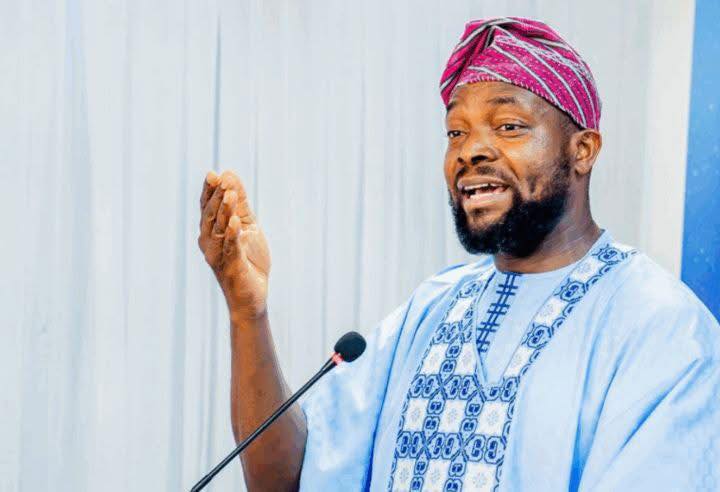
Nigeria has cut the delivery timeline for its $2 billion national fibre network from five years to three. Minister of Communications, Innovation and Digital Economy Bosun Tijani announced the revised schedule at Semafor’s “The Next 3 Billion” event in New York on September 22, 2026. The 90,000-kilometre rollout, known as Project BRIDGE, will now target completion by 2028 or early 2029.
The acceleration reflects confidence in a project that has assembled $845 million in funding commitments from development finance institutions. The World Bank has committed $500 million. The African Development Bank approved $200 million in April 2026. The European Bank for Reconstruction and Development added $100 million, and the European Union contributed a €22 million grant.
The government has secured the funding required for implementation, according to Tijani. Physical cable laying and ground construction are slated to begin in the fourth quarter of 2026.
The Project Extends Nigeria’s Backbone to All 774 Local Governments
Project BRIDGE will extend Nigeria’s fibre backbone from roughly 30,000 to 35,000 kilometres to about 120,000 to 125,000 kilometres. The network will reach all 774 local government areas and connect critical public infrastructure, including 38,800 public schools, 16,900 health facilities, and 3,400 local government offices.
The project provides wholesale, open-access fibre infrastructure. Telecom operators and internet service providers can use it to extend services into underserved markets. That distinction matters because a national fibre backbone alone does not bring an internet connection to a rural household. Operators and ISPs still have to build the last-mile connections that bring services to homes and businesses.
Nigeria is pairing the fibre expansion with a separate programme to deploy 3,700 telecommunications towers. At least 200 of those towers should be active before December, with each serving communities of 5,000 to 10,000 people. The government is also looking to satellite connectivity for locations where fibre and towers cannot reach.
Meaningful Connectivity Is the Goal, Not Just Coverage
Tijani described the problem directly at the New York event. “What we do not have is meaningful connectivity, the sort of connectivity that you truly need to be able to benefit from the sort of innovation that we’re seeing”.
The numbers explain what he means. Nigeria recorded 154.72 million active internet subscriptions in April 2026. Broadband penetration climbed to 56.79 percent by June 2026, up from 53.07 percent in January. Nigerians consumed 8.52 million terabytes of data in the first half of 2026, an increase of 42.9 percent from the same period a year earlier.
Those figures suggest a connected country. They are not. Only about 265,000 homes have fibre-to-the-home connections. Nigeria has 156.4 million mobile internet subscribers but just 319,735 fibre-to-the-x subscribers. Mobile broadband coverage is broad. Fixed, high-capacity connectivity remains scarce for households.
Project BRIDGE targets the middle-mile backbone. It will give operators the capacity to extend services. It will not solve the affordability problem that keeps most Nigerians on mobile data. It will not fix the electricity gaps that make fixed connections unreliable in many areas. It will not build the last-mile networks that reach individual homes.
More than 23 million Nigerians remain without meaningful connectivity, according to industry estimates. The Federal Government’s own assessment identified more than 33 million Nigerians as offline. Tijani has said the government is seeking to connect about 40 million people.
The project is designed to create the middle-mile backbone that allows operators to reach these communities. Building infrastructure at this scale requires the kind of disciplined execution that African tech startups often have to develop when they expand into new markets. The challenges are similar. Build the foundation first. Scale what works. Maintain quality as you grow.
The Funding Structure Attracts Private Capital
Project BRIDGE is being structured around a special purpose vehicle intended to attract private capital alongside development-finance funding. The Federal Government will hold a minority stake capped at 49 percent in a majority privately owned and managed project company.
The government has already secured the funding required for the rollout, according to Tijani. The financing mix includes contributions from the World Bank, AfDB, EBRD, European Union, and the Islamic Development Bank. The project is expected to create 20,000 direct jobs and more than 150,000 indirect jobs. Officials project it could increase GDP per capita by about 1.5 percent over four years, adding an estimated $7 to $8 billion in economic output.
The private-sector structure is a deliberate choice. A government-owned fibre company would face the same operational inefficiencies that have slowed other state infrastructure projects. A privately managed company with development-finance backing has a better chance of hitting deadlines and maintaining quality. The 49 percent government stake gives the state influence without giving it control.
Fibre Cuts Remain the Biggest Threat to the Network
The infrastructure Nigeria wants to build faces a persistent threat. The Nigerian Communications Commission recorded more than 5,000 fibre cuts in the first half of 2026 alone, averaging nearly 500 incidents per week in the first quarter.
Road construction, excavation, and vandalism caused most of the damage. Fibre cuts jumped from just four cases in December 2025 to 41 incidents in January 2026, a tenfold month-on-month increase.
The financial cost is significant. Industry estimates indicate that fibre-related disruptions cost operators between ₦27 billion and ₦35.4 billion annually when repair expenses, lost revenue, and operational disruptions are combined. Direct repair costs alone exceed ₦14 billion every year.
The NCC has inaugurated a Standing Committee on the Protection of Fibre Optic Cables, involving the Federal Ministry of Works, the Ministry of Communications, and the Office of the National Security Adviser. The committee will develop coordination mechanisms before, during, and after road works. Telecommunications infrastructure has been designated as Critical National Information Infrastructure, requiring protection with appropriate legal consequences for damage.
NCC Executive Vice Chairman Aminu Maida framed the issue as one of coordination rather than blame. “No road contractor sets out to disconnect a community. No telecommunications operator wants to obstruct the building of a road. No public agency wants one vital national project to undermine another,” he said. “Our interests are aligned; what has too often been missing is a dependable system of early coordination” .
The NCC has also pushed a “Dig Once” policy that would coordinate road construction with fibre deployment so that roads are excavated once and cables are laid at the same time. The National Economic Council approved a memorandum on the harmonisation of right-of-way charges and directed the ministry to develop standards for shared infrastructure.
The Three-Year Timeline Requires Daily Execution
Building 90,000 kilometres of fibre in three years requires laying roughly 82 kilometres of cable every day, seven days a week, for three years. That pace is achievable with enough crews and equipment. It is not achievable if state governments block access, if contractors dig up cables that are already laid, or if vandals strip copper and damage fibre.
The government has made a calculated bet. It believes that building the backbone fast enough will create momentum that overwhelms the obstacles. The obstacles have not gone away. They have simply been given a shorter deadline to overcome.
That bet deserves a fair hearing. Nigeria has never attempted a fibre rollout at this scale or this speed. The funding structure gives the project a better chance than previous infrastructure efforts. The Standing Committee and the Critical National Information Infrastructure designation give the NCC tools to protect what gets built.
If Nigeria delivers, the payoff for its digital economy will be enormous. The fibre network will carry the traffic of an economy that wants to reach $1 trillion. It will connect schools, hospitals, and government offices. It will support fintech, e-commerce, healthcare, and education. It will do none of those things if it cannot stay in the ground.
What’s Ahead
Project BRIDGE has transitioned from planning into active deployment. The funding is committed. The structure is in place. The timeline is set. The remaining question is execution.
Nigeria’s digital economy depends on infrastructure that works. The country has the demand. It has the funding. It has the political will. What it needs now is the discipline to lay cable every day, protect what gets built, and connect the 40 million people who remain offline.
The three-year timeline is ambitious. It is also achievable if the coordination problems that have plagued Nigeria’s infrastructure projects get solved. The NCC has put the mechanisms in place. The rest depends on whether everyone involved uses them.