

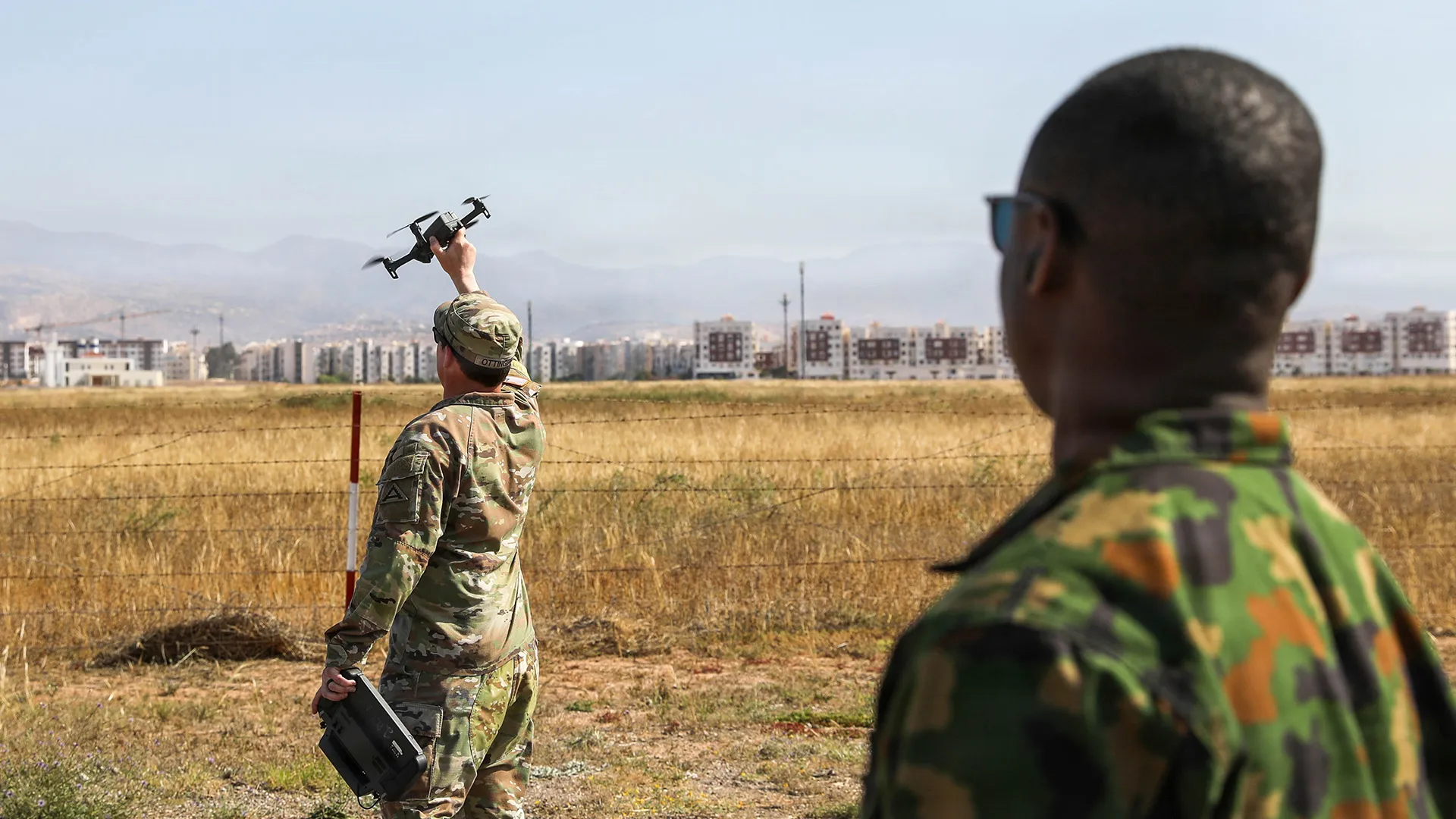
The United States and Morocco just signed a deal to build a massive military training center in the Moroccan desert. The facility will open in Tan-Tan by 2030. It includes a drone academy, a testing ground for new weapons, and a large training area.
The Terrorism Problem Keeps Getting Worse
Africa now sits at the center of global terrorism. ISIS has African leadership. Al-Qaeda runs its economic operations from the continent. Both groups want to attack the US homeland.
The threat keeps expanding. Militant groups in Mali and Somalia have grown stronger. Boko Haram in Nigeria now uses commercial AI models to plan attacks and design explosives. These groups share information across borders.
The US military knows it cannot fight this alone. General Dagvin Anderson, who leads US Africa Command, put it clearly. African partners must take the lead.
America Is Pulling Back Troops
The US has reduced its military presence in Africa by 75 percent over the last decade. American forces left Niger in 2024. They also withdrew from Nigeria earlier this month.
These pullbacks created a serious problem. Anderson warned that the US now struggles with an intelligence black hole. Without troops on the ground, American commanders risk going blind to growing dangers.
The new center in Morocco offers a solution. It lets the US train local forces instead of deploying its own troops. This approach fits the new American strategy of empowerment over dependency.
The Center Has Three Main Parts
The Africa Multidomain Training and Experimentation Center, or AMTEC, breaks down into three distinct pieces.
The first part is a multidomain training area. This is a large physical space where forces can train across land, air, sea, cyber, and electronic warfare. Troops practice operating in contested environments with full electromagnetic spectrum capabilities.
The second part is the drone academy. This school trains operators, planners, and instructors from Morocco and other African nations. Students learn to integrate small drones into military operations. They study airspace management, strike capabilities, and intelligence gathering.
The third part is an innovation and experimentation center. This facility rapidly develops, tests, and evaluates new technologies. The focus stays on low-cost, scalable equipment that African militaries can actually afford.
The Focus Stays on Affordable Technology
Military tech often costs too much for African nations to buy. The AMTEC center takes a different approach. It specifically targets low-cost, scalable solutions.
This makes practical sense. A drone that costs millions of dollars does little good for a military with a small budget. But a cheap drone that works well can change the fight against terrorists.
The innovation center brings together industry, universities, and research institutions. Moroccan and American companies can test their products at low cost. This gives businesses a reason to develop affordable solutions for the African market.
Moroccan General Mohammed Berrid highlighted this advantage. He said Morocco’s existing facilities and skilled personnel ensure rapid progress from concept to operational reality.
This Changes How the US Fights Terrorism
The AMTEC center marks a major departure from past American strategy.
Previously, the US built its own bases and deployed its own troops. Now it builds training centers for local partners. The US military steps back. African forces step forward.
This shift carries real advantages. Local troops know the terrain and the culture. They speak the languages. They can gather intelligence that Americans cannot.
The strategy also reduces American casualties and costs. Training partners costs less than maintaining large troop deployments. And when local forces fight, American soldiers stay safe.
West Africa Gets Special Attention
The center will focus heavily on West Africa. Multiple militant groups have expanded their influence there. International counterterrorism support has collapsed in the region.
The drone academy will train forces specifically to counter threats in West Africa. This targeted approach addresses the most urgent danger first.
Morocco is in a strategic position to help. The country shares borders with conflict zones. Its military has experience fighting extremists. And Morocco has strong ties with other African nations.
The First Test Comes in 2027
The annual African Lion military exercise will serve as the first proof of concept for AMTEC. This exercise, hosted in Morocco, is the largest military training event in Africa.
During African Lion 2027, industry partners will work alongside service members to test new technologies. They will try out AI-enabled systems, autonomous platforms, and advanced communications tools.
This testing process matters. It moves new technology from concept to actual capability. What works in the exercise can then be deployed in real operations.
Industry and Academia Get a Seat at the Table
The AMTEC center opens doors for private companies and universities.
American and Moroccan defense industries can test their products at low cost. Academic experts can be embedded in cross-functional design teams. This collaboration speeds up innovation.
General Anderson described the opportunity clearly. He said the partnership allows US and African defense industrial bases and academic institutions to experiment, innovate, and develop scalable solutions.
This matters for American companies. They gain access to a new testing ground. They can validate their products in real-world conditions. And they can build relationships with African militaries that may become future customers.
This Model Could Spread Across Africa
If the AMTEC center works, it could become a template for other regions.
The US could build similar facilities in other parts of Africa. Each center would focus on local threats. Each would train regional forces. Each would test affordable technology for local conditions.
This decentralized approach fits the reality of African security. Threats vary by region. Local solutions work better than one-size-fits-all answers.
The AMTEC center also creates a hub for innovation. Moroccan and American companies can develop products for the African market. Universities can research local security challenges. Over time, this ecosystem could produce new technologies that transform how African militaries operate.
The Real Test Comes After Opening
The center will not open until 2030. That gives plenty of time for planning and construction.
But the real test will come after the center starts operating. Will African militaries actually use the training? Will they adopt the new technologies? Will the center reduce terrorist attacks?
These questions remain unanswered. The US has tried similar approaches before with mixed results. Training local forces takes time. Building trust takes even longer.
Still, the AMTEC center offers a smarter approach than what came before. Instead of fighting terrorism alone, the US now builds partners who can fight for themselves. Instead of expensive high-tech weapons, the focus stays on affordable solutions that African nations can sustain.
The desert training center in Tan-Tan may not look like a revolution. But it represents a new way of fighting terrorism. A smarter use of American resources. And a genuine partnership with African nations who want to secure their own future.