
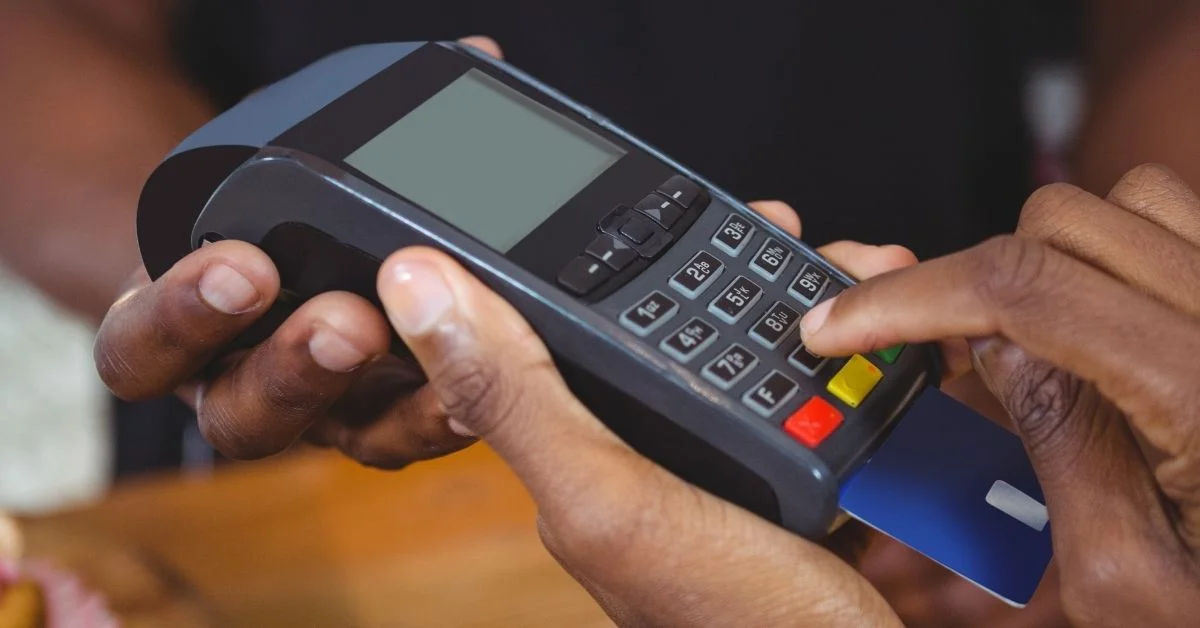
The POS agent has become one of the most recognisable small businesses in Nigeria, and for good reason. It solves a real problem: banks are overcrowded, ATMs run dry, and millions of Nigerians live too far from a branch to bank the traditional way.
What a POS Agent Actually Does
In simple terms, a POS agent acts as a mini-bank for their community. Using a portable card reader machine linked to a bank or fintech’s system, you help customers withdraw cash, deposit money, transfer funds, pay bills, and buy airtime, without them ever needing to visit an actual bank branch. When a customer wants ₦10,000, you hand them the cash from your own float, the money you’ve deposited in your POS account, and the system deducts that amount electronically. In exchange, you charge a small fee, and that fee is your profit.
What It Actually Costs to Start
Getting started is genuinely low-barrier compared to most small businesses. Startup costs typically range from ₦50,000 to ₦200,000, covering the POS terminal itself (some providers give it free, others charge a refundable deposit), your initial float capital for transactions, and basic setup costs like a table, chair, umbrella, and signage.
Registration has gotten more formal recently. The Corporate Affairs Commission set January 1, 2026, as a deadline for POS operators to register their businesses, and has threatened to place major fintech providers on a watchlist if they keep enabling unregistered agents. Beyond that, the Central Bank of Nigeria introduced a rule effective April 1, 2026, requiring every POS agent to work with only one principal, meaning one bank, mobile money operator, or licensed super-agent, rather than running multiple provider accounts side by side.
How the Money Actually Works
Your income comes entirely from transaction commissions, and understanding the split matters. On most transactions, commission rates hover around 0.5% to 1%, though the actual fee you charge a customer is usually higher than what you keep, since a portion goes back to the bank or fintech provider running the platform behind your machine. A withdrawal of ₦20,000, for instance, might carry a customer-facing charge of a few hundred naira, of which you keep the bulk while the platform takes a small cut.
Bill payments and airtime sales tend to be the most straightforwardly profitable part of the business, since there’s no cash float risk involved, you’re not handing out physical money, just processing a digital transaction and earning a commission on it. Daily earnings genuinely vary by location and traffic, with agents in busy areas reporting anywhere from ₦5,000 to ₦50,000 a day, though that top end typically belongs to agents who’ve built up a loyal customer base and offer a wide range of services beyond basic withdrawals.
Is It Actually Still Worth Starting in 2026?
Here’s where the honest answer gets more complicated than most guides admit. The business is more competitive now than it’s ever been. Nigeria has over 2 million POS agents nationwide, and in busy areas like Lagos, Ibadan, and Port Harcourt, several agents often compete for the same customers within a few hundred meters of each other. That saturation has genuinely eroded margins in the most crowded locations, pushing what used to be a high-margin opportunity toward a volume-driven one, where profit depends more on transaction count than on a fat fee per transaction.
There’s also a structural headwind worth naming plainly. As banking apps and mobile money platforms keep improving, more Nigerians who can access a smartphone and stable data are handling routine transfers and bill payments themselves, without needing a POS agent at all. The core demand for POS agents still rests on serving people who are unbanked, underbanked, or simply prefer handling cash in person, and that demand hasn’t disappeared, but it’s not growing the way it did a few years ago either.
The Realistic Verdict
POS remains a genuinely viable small business in 2026, but the version of it that made early agents wealthy simply by planting an umbrella in a busy spot is largely over. What actually determines profitability now is location, the range of services you offer beyond basic cash transactions, and how reliably you can access cash without paying extra for it through informal sources when banks run short.
If you’re going in with the expectation of easy, guaranteed daily income, the market has genuinely gotten harder than that. If you’re going in with a specific underserved location already scoped out, a plan to offer bill payments and airtime alongside withdrawals, and realistic expectations about margins tightening as competition grows, there’s still real money to be made. The business hasn’t died. It’s grown up, and it now rewards strategy over simply showing up first.