
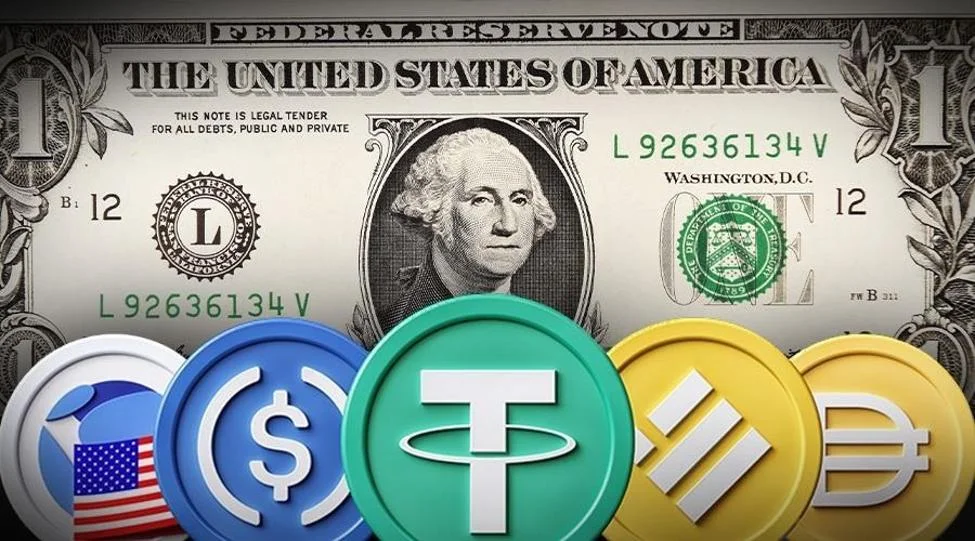
A stablecoin is a digital token designed to always be worth one dollar.
That’s the whole concept. Everything else is detail.
Why That’s Different From Bitcoin
Bitcoin’s price moves constantly. It might be worth $60,000 today and $52,000 next month. That makes it interesting to speculate on and useless for paying anyone, because neither of you knows what the amount will be worth by the time it arrives.
A stablecoin is built to remove that. One token, one dollar, today and next month. The issuing company is supposed to hold real dollars or equivalent assets in reserve, so that anyone holding a token can exchange it for an actual dollar. The value doesn’t come from what people are willing to bet. It comes from the reserve backing it.
Why That’s Also Different From Money in Your Bank App
This is the part that trips people up, because naira in a banking app is already digital. Nobody’s moving paper when you transfer money.
The difference is what happens underneath. A bank transfer moves through the banking system. Domestically that’s quick. Internationally it goes through correspondent banks, each taking a fee and adding delay, which is why sending money across borders is slow and expensive.
A stablecoin moves on a blockchain, a shared record that isn’t owned by any single bank. Transfers settle in minutes regardless of geography, because there’s no chain of intermediary banks to pass through. That’s the appeal, and it’s why almost every serious stablecoin story is really a cross-border payments story.
What’s Actually Happening in Africa
Two live examples explain the interest and the tension.
In the DRC, Visa, M-Pesa and Onafriq are testing stablecoin settlement for cross-border mobile money transfers. Users see nothing different. They top up a wallet as usual, while behind the scenes a stablecoin carries the value instead of a chain of correspondent banks. Remittances into Sub-Saharan Africa are the most expensive in the world, so the cost case is real.
In South Africa, the regulated crypto industry has formed a coalition to fight draft rules from Treasury and the Reserve Bank that would bar businesses from using crypto rails for cross-border payments, effectively ruling out stablecoins while leaving identical bank transfers permitted.
Why Regulators Are Nervous
Most stablecoins are pegged to the dollar. So a country encouraging stablecoin use is, in practice, encouraging more dollars to circulate in its economy. For central banks trying to defend a local currency, that cuts directly against the policy. The DRC has spent years trying to reduce dollarization, which makes a dollar-pegged token embedded in its biggest mobile money network an awkward development.
There’s also the reserve question. A stablecoin is only as good as the assets behind it. If an issuer claims full backing and doesn’t have it, holders discover that at exactly the worst moment. That’s a supervision problem regulators reasonably want a view of.
And capital controls exist for reasons governments care about. Money that moves across borders in minutes without touching a bank is harder to monitor, whatever the sender’s intentions.
What It Means for You
Right now, mostly nothing directly. Most African stablecoin activity is infrastructure, sitting underneath services you already use rather than something you’d hold yourself.
If it works, cross-border transfers get cheaper and faster, and the diaspora sending money home keeps more of it. If regulators push back hard, as South Africa may, it stays a business-to-business tool that never reaches consumer products at all.
Either way, the word will keep appearing, and now you know what it means: a digital token pegged to a dollar, moving on rails that don’t belong to a bank.