
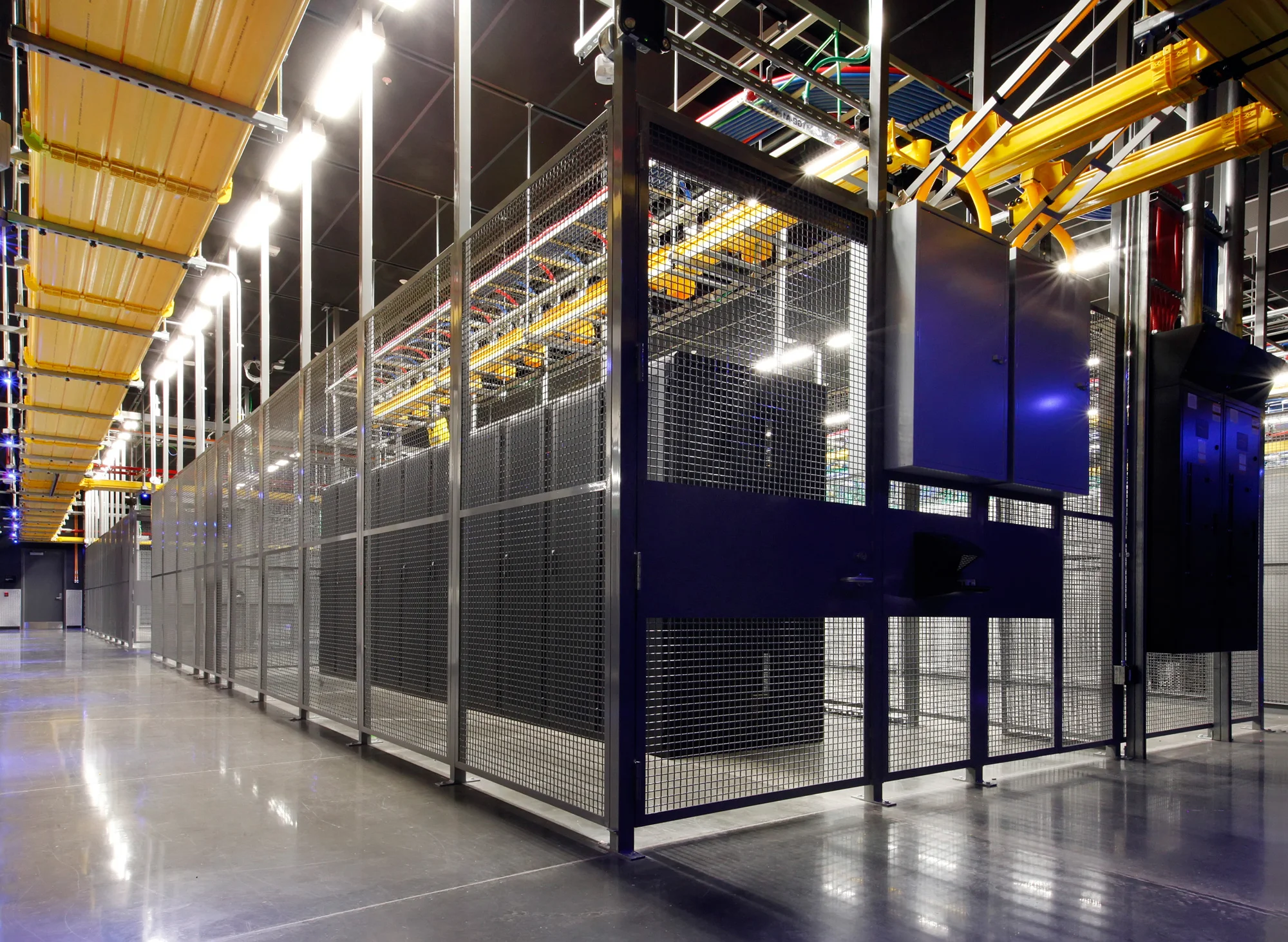
US-based technology firm Cybastion has unveiled plans to invest $75 million in an AI-powered data centre and a dedicated power plant in Douala, Cameroon’s economic capital.
Deal Emerges From US-Cameroon Bilateral Dialogue
The announcement came from the US Embassy in Cameroon on 28 August, a day after the first US-Cameroon Bilateral Economic and Commercial Dialogue held in Yaoundé. The Douala project forms part of a broader package of nearly $7 billion in investment and trade opportunities identified during the talks, spanning critical minerals, energy, infrastructure, forestry, logistics, and digital technology.
Officials clarified that the $7 billion figure reflects opportunities at various stages of development rather than committed capital, with actual US-Cameroon trade standing at roughly $704.6 million in 2025. Cameroon has also remained excluded from the African Growth and Opportunity Act since January 2020.
Company Pairs Data Infrastructure With Dedicated Power Supply
Cybastion’s proposed facility would combine an AI-focused data centre with a purpose-built power plant, a model the Virginia-headquartered company has used elsewhere on the continent. In Gabon, Cybastion is developing a 20MW data centre in Libreville alongside a 20MW gas power plant built specifically to supply it, working with the Gabonese government and Cisco. That approach addresses one of the biggest obstacles to data centre growth in the region: unreliable grid power.
Cameroon currently has just three data centre facilities, run by MTN Cameroon, Ringo, and ST Digital, concentrated in Douala and Yaoundé, according to Data Centre Journal. A new AI-capable facility backed by dedicated power generation would meaningfully expand the country’s digital infrastructure capacity.
Regional Relevance
For Cameroon, the proposed investment lands at a moment when digital adoption is accelerating faster than local computing infrastructure can keep pace. AI-ready data centres remain scarce across Central Africa, and power reliability has long been a constraint on hosting compute-intensive workloads locally rather than routing them through facilities abroad. If the Douala project advances beyond the announcement stage, it could position Cameroon alongside Gabon and Côte d’Ivoire as an emerging hub for sovereign digital infrastructure in the region, reducing dependence on foreign data hosting and supporting the country’s broader push toward digital services expansion.