

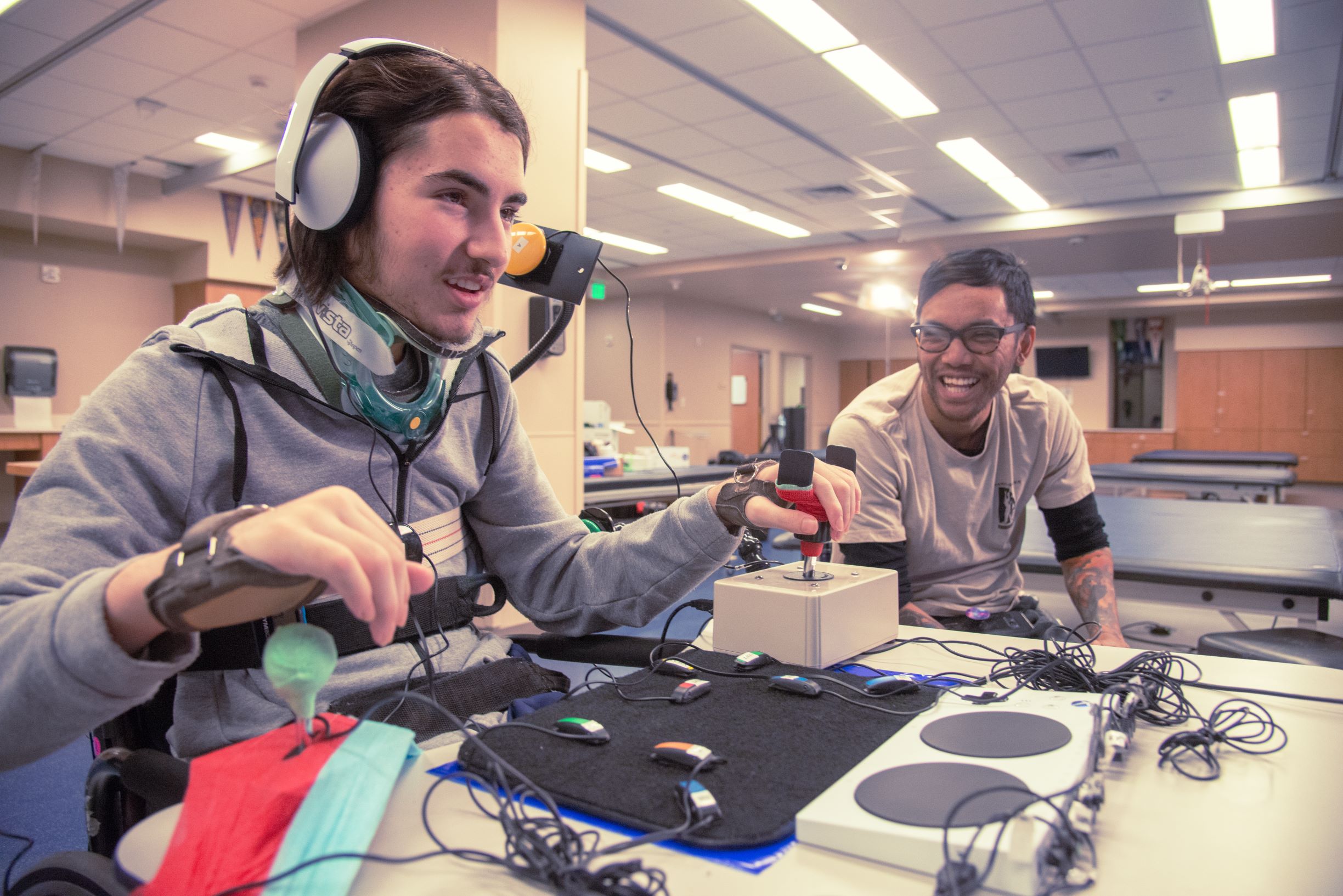
Artificial Intelligence (AI) is increasingly being used to support people with disabilities, improving independence and communication. From vision impairment to mobility limitations, AI technologies are reshaping how individuals navigate daily life, work, and healthcare.
According to the World Health Organization, over 1.3 billion people live with some form of disability. AI’s role in this space has grown rapidly, with applications now spanning predictive health monitoring, assistive communication tools, and smart prosthetics.
Real-World Examples
1. Seeing AI by Microsoft

Developed by Microsoft, Seeing AI is a free app for the visually impaired that uses computer vision and natural language processing. It can describe surroundings, identify currency, read documents aloud, and recognise faces. The app is widely available and has been downloaded over 1 million times globally.
2. Voiceitt

Voiceitt helps people with speech impairments communicate by translating non-standard speech patterns into understandable speech in real time. In 2021, the company partnered with Amazon Alexa, enabling users to control smart home devices using their own voice patterns.
3. AI-powered Prosthetics by Össur

Icelandic company Össur has developed AI-integrated prosthetic limbs that learn a user’s walking style and adjust in real time for smoother movement. The company’s “mind-controlled” bionic legs use implanted sensors to allow natural limb movement, a major leap in mobility technology.
4. Cognoa for Autism Diagnosis

Cognoa, an FDA-approved AI diagnostic tool, helps detect autism spectrum disorder in children as young as 18 months. This early detection is critical, as early intervention leads to better developmental outcomes. Cognoa uses parent and physician input along with AI algorithms to issue results in days instead of months.
5. Ava for Deaf and Hard-of-Hearing Users

Ava is an AI app that provides real-time transcription of conversations. It captures group discussions and displays them as text on a smartphone, helping deaf and hard-of-hearing users participate in meetings, classrooms, and social settings more effectively.
Why It Matters
AI enables a level of personalisation, speed, and accessibility that traditional tools often cannot. For many individuals with disabilities, these technologies mean improved autonomy, better health outcomes, and inclusion in work and education.
Governments and institutions are starting to notice. In the UK, NHS pilot programmes are exploring AI-based tools for dementia care. In the US, the Department of Education has funded AI initiatives aimed at students with cognitive disabilities.
Still, accessibility gaps remain. Many AI tools are not yet affordable or widely distributed. Ethical concerns around bias and privacy in AI systems must also be addressed, especially in healthcare and education contexts.
The Future of AI in Disability Management
The future of AI in disability management looks promising. Advances in natural language processing, wearable sensors, and neurotechnology are opening up new possibilities. With proper oversight, inclusive design, and investment, AI can shift from supporting individuals with disabilities to actively removing barriers.
Governments, startups, and tech giants share a responsibility in ensuring that these tools are accessible, ethical, and shaped by the communities they serve.