
Techsoma Africa
Latest FinTech Startups AI Tech Global Apps Opinions African
Policy & Regulations Artificial Intelligence Reports About Contact Advertise FinTech & Digital Money African Startup Ecosystem Artificial Intelligence Technology Global News Apps, Gadgets, Tools & Softwares Opinions & Perspectives African Telecommunications
Advertisement Advertise on Techsoma
Techsoma Africa
No Result
View All Result
Techsoma Africa
No Result
View All Result
Techsoma Africa
No Result
View All Result
Home African Telecommunications

Egypt Gets a $1bn Data Centre and Its First Sovereign AI Site

Vodafone, Cassava and Elsewedy signed two deals in Cairo. One builds what could become Egypt's largest data centre. The other puts Nvidia chips on Egyptian soil and sells the compute locally.

by Onyinye Moyosore
September 10, 2026
in African Telecommunications, Artificial Intelligence
Reading Time: 3 mins read
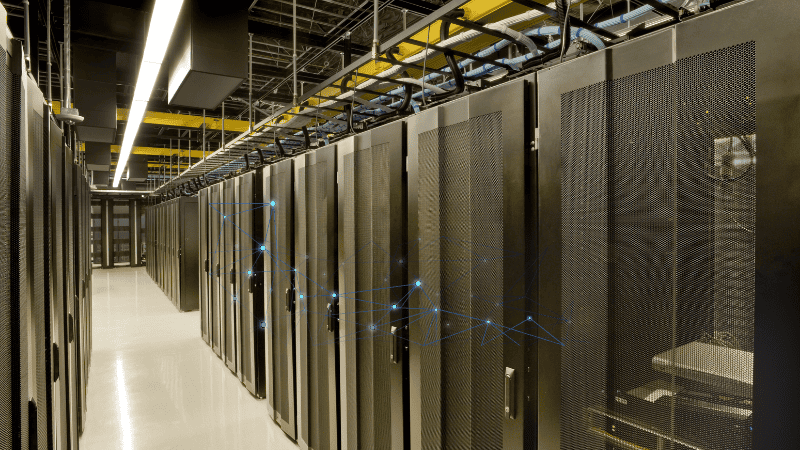
Server racks inside a data centre, as Egypt signs deals to build capacity scaling toward 200MW

Egypt has signed two agreements that would put a serious amount of computing power inside its own borders, and the second one matters more than the first.

Vodafone Business, Cassava Technologies and Elsewedy Electric agreed on Tuesday to establish Africa Data Centers Egypt, a joint venture that will build out data centre capacity in phases. The signing took place in Cairo in the presence of Egypt’s Ministry of Communications and Information Technology.

Separately and on the same day, Vodafone Business and Cassava signed a second agreement to build what they describe as Egypt’s first sovereign AI data centre.

The Numbers

The joint venture starts at 20MW of capacity over its first three years, with a path to 200MW. Egypt’s ministry expects it to draw roughly $200 million in foreign direct investment initially, rising to about $1 billion once fully built, and to create up to 200 direct jobs and around 2,000 indirect ones.

Advertisement Advertise on Techsoma

Each partner brings a different piece. Vodafone Business supplies cloud and enterprise services, Elsewedy Electric handles energy, infrastructure and project execution, and Cassava contributes the operating experience it has built running data centres across the continent.

Communications Minister Raafat Hendy said the project strengthens Egypt’s digital infrastructure and data sovereignty by letting sensitive data be hosted and processed locally rather than shipped offshore. Elsewedy is backing the push with about $100 million of its own.

The AI Factory Is the Real Story

The second agreement is narrower and more consequential. Cassava is Nvidia’s official cloud partner in Africa, and the sovereign AI facility will run on Nvidia accelerated computing, selling GPU-as-a-Service to Egyptian customers.

That last part is what separates this from a standard hosting deal. Training and running AI models requires GPUs that are expensive, scarce, and mostly sitting in data centres in the United States and Europe. An Egyptian company or government agency wanting to build something serious has generally had to rent that compute abroad, which means the data goes abroad too.

Selling GPU access locally changes the calculation for anyone operating under rules about where sensitive data can live. Mahmoud El-Khatib, Vodafone Egypt’s VP of enterprise business, framed it as keeping data inside Egypt while meeting regulatory requirements. Cassava AI chief executive Ahmed El Beheiry put the ambition more bluntly, saying African businesses should be architects of global technology rather than only consumers of it.

Why Egypt, and Why Now

Egypt has been positioning itself as a regional data and cloud hub for several years, helped by its geography at the meeting point of submarine cable routes between Europe, Asia and Africa.

The sovereignty framing also lands at a moment when governments across the continent are tightening rules on where citizen and financial data can be stored. Nigeria’s central bank has ordered payment data to be held domestically. Building local capacity is one way to comply without cutting companies off from modern infrastructure.

There’s a practical constraint worth watching, though. Data centres consume enormous amounts of power, which is presumably why an energy and infrastructure company sits inside the joint venture rather than alongside it. Getting from 20MW to 200MW is as much an electricity problem as a technology one, and that is the part of the plan that will take longest to prove out.

Related Techsoma coverage

  • OpenAI Says It Solved the Navier-Stokes Millennium Prize Problem, Sparking Debate Over AI and Research Credit
  • Meta Launches Muse AI, a Personal AI Agent to Handle Tasks and Long-Term Goals
  • MTN Nigeria Pays Record ₦545.89 Billion Interim Dividend To Shareholders
Onyinye Moyosore

Onyinye Moyosore

Onyinye Moyosore is a tech writer at Techsoma, where she covers startups, digital infrastructure, and how technology reshapes everyday life...

Recommended For You

The Communications Authority of Kenya, which published a new framework for numbering and short code allocation
African Telecommunications

Kenya Scraps Rule Forcing Firms to Buy a Code Per Network

by Onyinye Moyosore
September 10, 2026

Kenya's Communications Authority has changed how short codes get allocated, moving from an operator-based system to a service-based one. A bank that previously needed separate codes for Safaricom, Airtel and...

Read moreDetails
OpenAI solves Navier-Stokes problem

OpenAI Says It Solved the Navier-Stokes Millennium Prize Problem, Sparking Debate Over AI and Research Credit

September 9, 2026
meta launches muse ai

Meta Launches Muse AI, a Personal AI Agent to Handle Tasks and Long-Term Goals

September 9, 2026

MTN Nigeria Pays Record ₦545.89 Billion Interim Dividend To Shareholders

September 8, 2026

Google Rolls Out Gemini-Powered Voice AI in Gmail, Docs and Keep

September 7, 2026
Next Post
A ride-hailing driver in Lagos traffic, one of thousands affected by Uber's sudden departure from Nigeria

Uber Paid Some Nigerian Drivers ₦40,000. Others Got Nothing.

The Bank of Ghana headquarters, which granted dLocal an Enhanced Payment Service Provider licence

Bank of Ghana Clears dLocal to Operate Payments Locally

Please login to join discussion

Browse by Category

  • African Startup Ecosystem
  • African Telecommunications
  • Apps, Gadgets, Tools & Softwares
  • Artificial Intelligence
  • Business & Markets
  • Creator Economy
  • Cybersecurity
  • Digital Work-Life Series
  • E-Commerce
  • Education
  • Event Radar Africa
  • Exclusive Interviews
  • Explainers
  • Features/Spotlights
  • FinTech & Digital Money
  • Funding news
  • GenZ Desk!
  • Global News
  • Healthtech
  • Logistics & Mobility Tech
  • Media & Entertainment
  • News
  • Opinions & Perspectives
  • Opportunities, Careers & Learning
  • Partner
  • Policy & Regulations
  • Reports
  • Reviews
  • Tech Insights for Creators
  • Technology
  • Thought Leadership
  • Uncategorized
  • About Us
  • Advertise on Techsoma
  • Contact
  • Corrections Policy
  • Editorial Standards
  • Ownership and Funding
  • Privacy Policy
  • Publish Your Articles
  • Techsoma Africa
  • Terms of Service

Copyright 2026 Techsoma Africa. All rights reserved.

Welcome Back!

Login to your account below

Forgotten Password?

Retrieve your password

Please enter your username or email address to reset your password.

Log In
Advertisement Advertise on Techsoma
Techsoma Africa

© 2026 Techsoma Africa Media.

Company

Policy AI Reports About Contact Advertise

Legal

Terms Privacy RSS

Latest

Kenya Scraps Rule Forcing Firms to Buy a Code Per Network Kenya's Communications Authority has changed how short codes get allocated, moving from an operator-based system to a service-based one. A bank that previously needed separate codes for Safaricom, Airtel and Telkom customers can now use a single code across all of them. It applies to newly assigned codes, and sits alongside consultations on network equipment specifications and recycling inactive numbers. Bank of Ghana Clears dLocal to Operate Payments Locally dLocal has moved money in and out of Ghana since 2020 without being allowed to touch the rails directly. An Enhanced PSP licence from the Bank of Ghana changes that, letting it connect straight to banks and mobile money networks, onboard merchants and settle locally. It enters a market that processed GH¢4.54 trillion in mobile money last year, and where Flutterwave, Paystack and Fincra already hold the same licence. Uber Paid Some Nigerian Drivers ₦40,000. Others Got Nothing. Uber promised Nigerian drivers a goodwill payment when it left but wouldn't say how much. The figure has landed: ₦40,000, roughly $30, with a confidentiality clause attached and eligibility limited to drivers active in the last three to six months. Some got less. Some got nothing. And Nigeria's FCCPC has now opened an investigation into what riders are owed.
Techsoma Network Techsoma Network Techsoma Africa Techsoma Middle East Techsoma Canada
Transparency About Editorial Standards Corrections Ownership & Funding Privacy Terms Contact
No Result
View All Result
  • About Us
  • Advertise on Techsoma
  • Contact
  • Corrections Policy
  • Editorial Standards
  • Ownership and Funding
  • Privacy Policy
  • Publish Your Articles
  • Techsoma Africa
  • Terms of Service

Copyright 2026 Techsoma Africa. All rights reserved.