
Techsoma Africa
Latest FinTech Startups AI Tech Global Apps Opinions African
Policy & Regulations Artificial Intelligence Reports About Contact Advertise FinTech & Digital Money African Startup Ecosystem Artificial Intelligence Technology Global News Apps, Gadgets, Tools & Softwares Opinions & Perspectives African Telecommunications
Advertisement Advertise on Techsoma
Techsoma Africa
No Result
View All Result
Techsoma Africa
No Result
View All Result
Techsoma Africa
No Result
View All Result
Home Artificial Intelligence

OpenAI Says It Solved the Navier-Stokes Millennium Prize Problem, Sparking Debate Over AI and Research Credit

by Kingsley Okeke
September 9, 2026
in Artificial Intelligence
Reading Time: 3 mins read
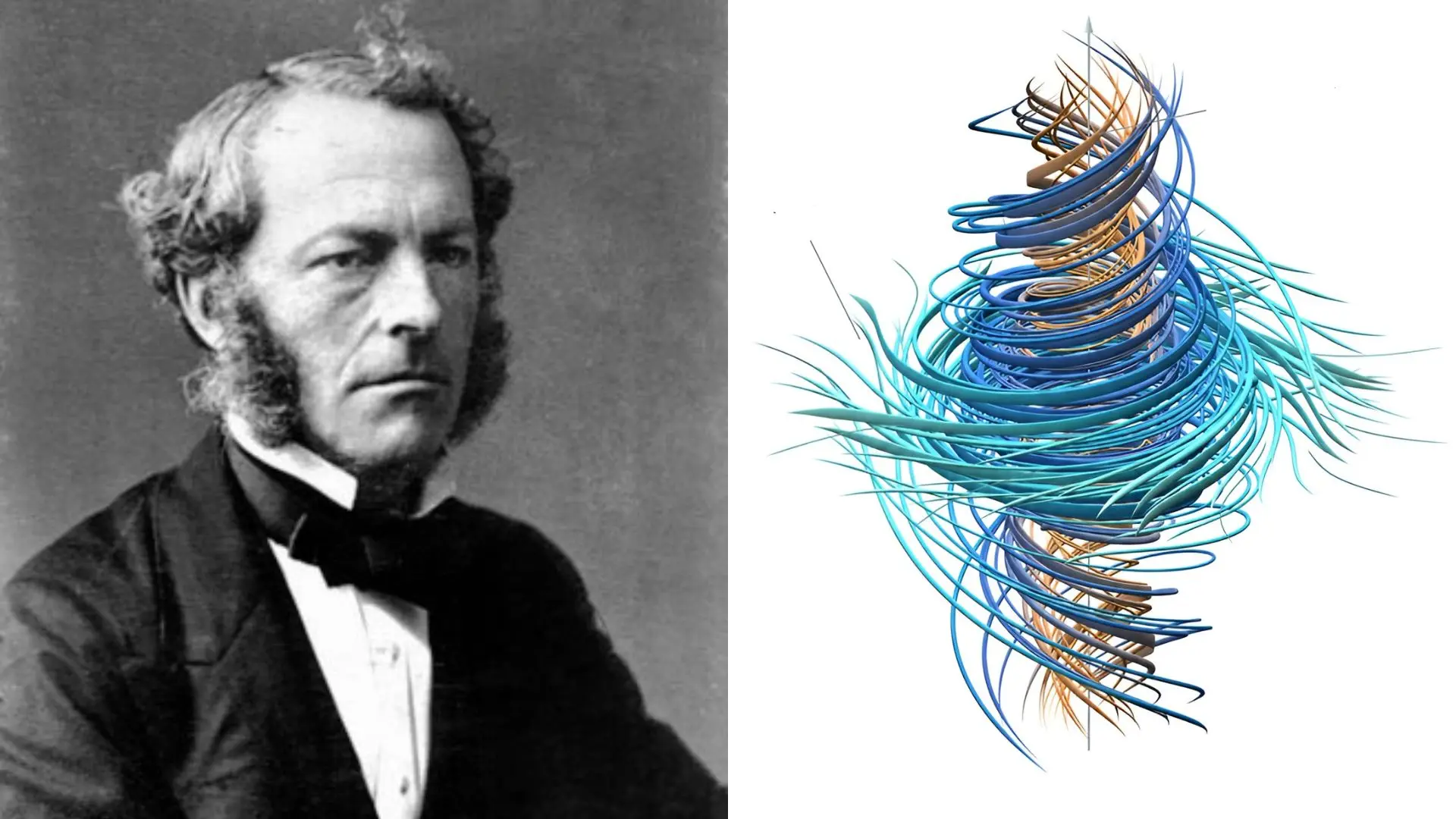
OpenAI solves Navier-Stokes problem

OpenAI has announced that an internal AI system produced a proof for the Navier-Stokes existence and smoothness problem, one of seven Millennium Prize Problems set by the Clay Mathematics Institute in 2000. The announcement has been met with excitement over what could be a historic mathematical breakthrough, alongside pointed questions about whether the AI system drew on unpublished human research to get there.

What OpenAI Claims to Have Solved

The Navier-Stokes equations, dating back to nineteenth-century work by Claude-Louis Navier and George Gabriel Stokes, describe the motion of fluids and have remained a central unresolved question in mathematics for roughly 90 years. OpenAI says its system produced both an analytical proof and a formal verification in the programming language Lean, showing that a smooth, three-dimensional fluid at rest, under a smooth applied force and with finite energy throughout, can develop a singularity in finite time.

The company said the proof came from an internal model more advanced than its current publicly available system. According to OpenAI, groups of autonomous AI agents, reportedly numbering in the thousands, worked over roughly 88 hours to arrive at the result, following an earlier effort in which around 100 agents spent about 50 hours producing a related disproof involving the Euler equations.

Why the Timing Raised Questions

OpenAI has said its push on Navier-Stokes began on September 1, after the company heard rumors that two Millennium Prize problems had been solved elsewhere. Those rumours reportedly traced back to independent work by mathematicians Theodore Buckmaster and Levent Alpöge, who had been using AI tools, including models from a rival lab, to work through a simpler version of the same problem. Their approach reportedly built on earlier methods developed by other researchers in the field.

Advertisement Advertise on Techsoma

The overlap between OpenAI’s internal timeline and the unpublished work of outside mathematicians has raised a central concern: whether an AI lab’s own systems could have had indirect access to research that had not yet been made public. OpenAI has stated that its agents worked only from cached internet data and code execution tools, did not view the outside mathematicians’ work through any channel before it was released publicly, and did not access specific user data in the course of solving the problem. The company also said it offered the two mathematicians a concurrent release of results, along with visibility into the prompts used and an early look at the proof.

A Trust Problem for AI-Assisted Science

The episode highlights a broader tension now facing research fields that increasingly rely on AI tools: researchers working on unpublished, high-value problems may have no way of confirming whether the same lab whose tools they are using is also training or running systems that could arrive at similar results independently, or through some form of indirect exposure to their work.

Some mathematicians in the field have voiced discomfort with what they describe as a shift toward frenetic competition, warning that the unchecked use of AI systems to chase priority on famous problems could reduce parts of mathematics to a race for output rather than deliberate, verifiable progress. Others have called the result a genuinely remarkable achievement, regardless of the surrounding controversy, and have noted that the Clay Mathematics Institute itself has acknowledged the significance of the moment.

What Happens Next

OpenAI has published its write-up and the formal Lean proof publicly, allowing independent mathematicians to verify the result. Formal verification through Lean gives the mathematics community a higher degree of confidence that the underlying logic holds, even as questions about the research process behind it continue.

For African and Middle Eastern tech and research communities increasingly exploring AI-assisted research and academic tools, the controversy is a preview of governance questions that will likely follow as AI systems get pulled deeper into scientific and mathematical discovery: how research provenance is protected, how credit is assigned, and how much visibility outside researchers should have into what AI labs’ internal systems are trained on or exposed to.


Related Techsoma coverage

  • Meta Launches Muse AI, a Personal AI Agent to Handle Tasks and Long-Term Goals
  • Google Rolls Out Gemini-Powered Voice AI in Gmail, Docs and Keep
  •  GITEX Nigeria 2026 in a Nutshell: The Pivot from Connectivity to Digital Sovereignty
Kingsley Okeke

Kingsley Okeke

I'm a skilled content writer, anatomist, and researcher with a strong academic background in human anatomy. I hold a degree...

Recommended For You

meta launches muse ai
Artificial Intelligence

Meta Launches Muse AI, a Personal AI Agent to Handle Tasks and Long-Term Goals

by Kingsley Okeke
September 9, 2026

Meta has introduced Muse AI, a personal AI agent designed to take on everyday tasks and help users work toward long-term goals, marking the company's biggest push yet into agentic...

Read moreDetails
Google adds voice AI

Google Rolls Out Gemini-Powered Voice AI in Gmail, Docs and Keep

September 7, 2026
GITEX Nigeria 2026 talking points

 GITEX Nigeria 2026 in a Nutshell: The Pivot from Connectivity to Digital Sovereignty

September 5, 2026

Nomba Secures $3 Million Debt Facility to Expand Africa-Asia Payment Corridor

September 3, 2026

I Tested Gemini, Claude and ChatGPT: Here’s How Each One Performed

September 3, 2026
Next Post
A Terra Industries drone

Terra Industries Closes $2 Million in Contracts to Secure Nigeria's Lithium Mining Operations

Please login to join discussion

Browse by Category

  • African Startup Ecosystem
  • African Telecommunications
  • Apps, Gadgets, Tools & Softwares
  • Artificial Intelligence
  • Business & Markets
  • Creator Economy
  • Cybersecurity
  • Digital Work-Life Series
  • E-Commerce
  • Education
  • Event Radar Africa
  • Exclusive Interviews
  • Explainers
  • Features/Spotlights
  • FinTech & Digital Money
  • Funding news
  • GenZ Desk!
  • Global News
  • Healthtech
  • Logistics & Mobility Tech
  • Media & Entertainment
  • News
  • Opinions & Perspectives
  • Opportunities, Careers & Learning
  • Partner
  • Policy & Regulations
  • Reports
  • Reviews
  • Tech Insights for Creators
  • Technology
  • Thought Leadership
  • Uncategorized
  • About Us
  • Advertise on Techsoma
  • Contact
  • Corrections Policy
  • Editorial Standards
  • Ownership and Funding
  • Privacy Policy
  • Publish Your Articles
  • Techsoma Africa
  • Terms of Service

Copyright 2026 Techsoma Africa. All rights reserved.

Welcome Back!

Login to your account below

Forgotten Password?

Retrieve your password

Please enter your username or email address to reset your password.

Log In
Advertisement Advertise on Techsoma
Techsoma Africa

© 2026 Techsoma Africa Media.

Company

Policy AI Reports About Contact Advertise

Legal

Terms Privacy RSS

Latest

Terra Industries Closes $2 Million in Contracts to Secure Nigeria’s Lithium Mining Operations Terra Industries has closed $2 million in contracts to protect lithium mining operations in Nigeria, marking the first... OpenAI Says It Solved the Navier-Stokes Millennium Prize Problem, Sparking Debate Over AI and Research Credit OpenAI has announced that an internal AI system produced a proof for the Navier-Stokes existence and smoothness problem,... ChamsSwitch Launches GLASS to Bring Global Payment Options to Nigerian Businesses ChamsSwitch has launched GLASS, a new payment gateway built to let Nigerian businesses accept both local and international...
Techsoma Network Techsoma Network Techsoma Africa Techsoma Middle East Techsoma Canada
Transparency About Editorial Standards Corrections Ownership & Funding Privacy Terms Contact
No Result
View All Result
  • About Us
  • Advertise on Techsoma
  • Contact
  • Corrections Policy
  • Editorial Standards
  • Ownership and Funding
  • Privacy Policy
  • Publish Your Articles
  • Techsoma Africa
  • Terms of Service

Copyright 2026 Techsoma Africa. All rights reserved.