

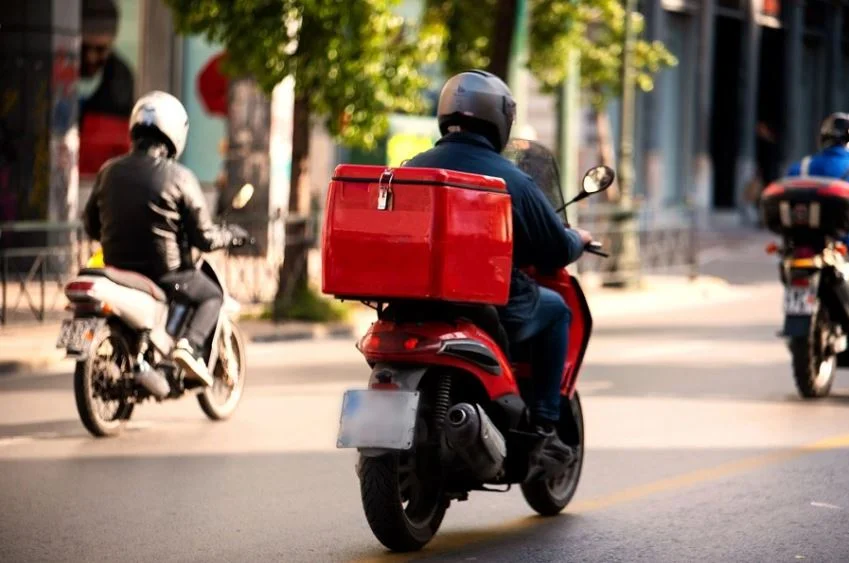
You order something online, it ships from a warehouse, travels across the country, and then somehow the last few kilometers to your actual doorstep cost more than everything before it combined. That’s not a coincidence, and it’s not unique to Africa. But the problem is sharper here than almost anywhere else in the world.
Globally, the “last mile,” the final leg of delivery from a local hub to a customer’s door, typically eats up about 28% of a product’s total shipping cost. In many African markets, that number climbs to somewhere between 35% and 55%. The shortest part of the journey is, by a wide margin, the most expensive part.
The Address Problem Nobody Outside Africa Thinks About
Start with something that sounds almost too basic to matter: knowing exactly where to deliver something. In much of Europe or North America, every building has a standardized street address that maps neatly onto a digital mapping system. A delivery driver types it in, and a GPS route appears.
In large parts of urban and peri-urban Africa, that system simply doesn’t exist the same way. Informal settlements, rapidly grown neighborhoods, and areas that predate formal city planning often don’t have addresses that standard mapping tools can locate at all. Drivers end up calling customers for verbal directions, “turn left after the blue gate, past the second kiosk,” which works, but it’s slow, unreliable, and impossible to automate the way address-based routing is everywhere else. Every failed or delayed delivery because a driver couldn’t find the location adds direct cost: wasted fuel, wasted time, and sometimes a customer who’s simply given up waiting.
Cash Still Rules, and Cash Is Expensive to Handle
Here’s a detail that surprises people who assume African e-commerce runs entirely on mobile money by now: cash-on-delivery still accounts for somewhere between 60% and 85% of e-commerce transactions across much of Sub-Saharan Africa. Many customers still prefer to pay when the item physically arrives, rather than upfront online.
That preference creates real operational costs that prepaid delivery models simply don’t have. A driver carrying cash has to count exact change, reconcile collections at the end of every shift, and physically secure that cash until it can be banked. If a customer isn’t home when the driver arrives, the whole transaction stalls, because there’s no way to complete a cash payment without both parties present. That single issue drives up failed delivery rates significantly, and every failed attempt means the item has to be redelivered, doubling the cost of that one parcel.
Traffic That Breaks the Math
Lagos, Nairobi, Accra, and Kinshasa rank among the most congested cities on earth, and that congestion isn’t just an inconvenience, it actively wrecks the cost calculations logistics companies rely on. A route that takes a driver 45 minutes at eight in the morning can take three hours by mid-morning, and standard route-planning software, much of it built and trained using traffic data from cities in Europe or North America, simply can’t predict that swing accurately. When a delivery van can only complete a fraction of the stops it was scheduled for because of unpredictable gridlock, the cost per successful delivery climbs sharply, because the same fuel, driver wages, and vehicle wear now have to be spread across fewer completed drops.
Security Costs That Don’t Exist Elsewhere
In some markets, particularly South Africa, delivery logistics carries a cost line that barely exists in most other regions: security. Vehicle hijackings targeting delivery vans happen with enough frequency that logistics companies budget for cash-in-transit escorts and protective measures as a standard operating cost, not an occasional precaution. Combined with fuel costs and the sheer distance covered in sprawling metro areas, the final delivery leg on a single parcel can range anywhere from roughly $5 to $50, depending on distance, risk, and special handling required.
Who Actually Pays For All This
All of these costs, the address confusion, the cash handling, the traffic delays, the security measures, land somewhere. Sometimes it’s baked directly into a higher delivery fee the customer sees at checkout. Sometimes the e-commerce platform absorbs part of it to stay price-competitive, quietly eating into thin margins. And sometimes it gets pushed down to the delivery riders themselves, through lower per-delivery pay or unrealistic expectations about how many stops they should complete in a shift.
Companies like Jumia have spent years experimenting with different models, sometimes running their own delivery fleets directly, other times outsourcing to third-party couriers or building networks of pickup points customers collect from themselves, trying to find whichever combination keeps costs manageable without collapsing service quality. None of these approaches has fully solved the underlying problem, because the underlying problem isn’t really about logistics strategy. It’s about infrastructure: addressing systems, road networks, and payment habits that took decades to build in other parts of the world and are still being built here in real time.
The Fix Is Slow, Not Simple
Some genuine progress is happening. Digital address-verification tools are helping some logistics companies improve first-time delivery success rates meaningfully, without needing to add a single extra vehicle. Mobile money adoption keeps growing, gradually chipping away at the dominance of cash-on-delivery in some markets. But these are gradual shifts, not overnight fixes, and until they mature further, that final stretch from warehouse to doorstep will keep being the most expensive part of the journey, not because anyone’s overcharging, but because the ground itself makes it genuinely harder to deliver a package here than almost anywhere else.