

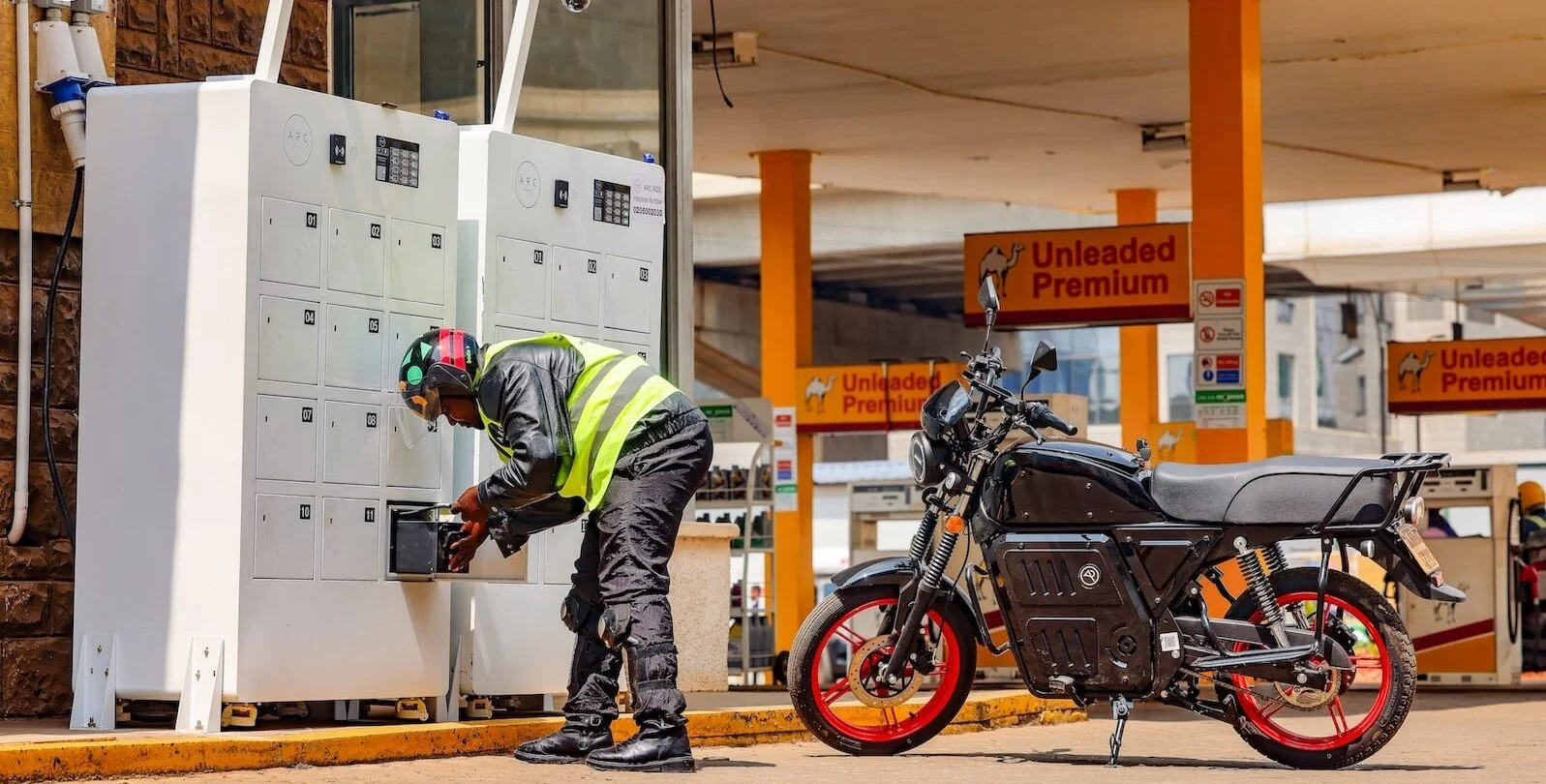
Kenyan electric mobility startup ARC Ride has raised $33.3 million in a combination of equity and asset-backed debt to scale its battery-swapping network beyond its home market and into new African territories.
Who Backed The Round
The round was led by Novastar Ventures and Norrsken22, with equity participation from the International Finance Corporation (IFC), British International Investment (BII), and Proparco, the French development finance institution. Existing investors Musashi Seimitsu, a Japanese automotive supplier, and African impact investor Talanton also participated. The debt portion came from BII’s Kinetic programme and Mirova, the sustainable investment manager affiliated with Natixis.
The mix of equity and debt fits the nature of the business: equity supports technology and market expansion, while debt is suited to physical assets like motorcycles, batteries, and swapping infrastructure that can generate revenue over time.
How ARC Ride’s Model Works
Arc Ride was founded in Kenya in 2019 by British entrepreneur Joseph Hurst-Croft and operates a battery-as-a-service (BaaS) model for two- and three-wheeler transport. Riders lease batteries rather than purchasing them outright, lowering upfront costs, and exchange depleted units at automated swap stations. Its clientele includes Yadea, one of the world’s largest EV manufacturers.
Expansion Plans
ARC Ride said it will continue expanding in Kenya, including Nairobi and the western region, while also targeting new markets including Ghana, South Africa, Tanzania, and Uganda. ARC Ride said it will use the funding to expand its operations in Kenya, add 5,000 electric motorcycles to its fleet, strengthen its battery infrastructure, and develop technologies such as automated swapping systems.
In July, ARC Ride piloted in South Africa, rolling out its battery-swapping model through the ARC Panther, an electric motorcycle designed for local conditions. The company has been setting up infrastructure in Gauteng and has also completed a pilot in Cape Town. Hurst-Croft said in a LinkedIn post in August that the company had established an assembly plant in South Africa, built its first batch of motorcycles for the market, and cleared the regulatory requirements needed to begin operations.
Competitive Landscape
ARC Ride faces competition from other battery-swapping ventures operating in African markets, including Ampersand in Rwanda and Spiro, which operates across multiple West African countries. The sector’s economics depend on achieving sufficient rider density to make swap station networks viable. The round ranks among the largest ever raised by an electric mobility company on the continent.
Whether that ambition is realised will depend on execution across a wider and more complex footprint. Kenya has served as the company’s proving ground, and expanding into Ghana, South Africa, Tanzania, and Uganda will test whether its swap-station model holds up amid different regulatory environments, electricity grids, and urban layouts.