

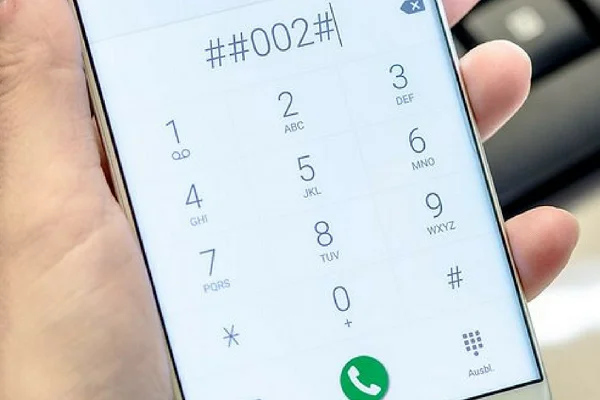
Dial a short code on your phone, a string of numbers starting and ending with a star or a hash, and a menu pops up. No app, no internet connection, no data charges. That’s USSD, and despite years of headlines about Africa’s smartphone revolution, it’s still how most mobile money moves on the continent.
In 2024, USSD carried 63.5% of all mobile money transaction volume across Africa. Not a shrinking legacy share, the dominant one. To put that in perspective, Africa handled roughly 82 billion mobile money transactions that year, worth over a trillion dollars, and nearly two-thirds of them ran through a technology that predates the smartphone entirely.
What USSD Actually Is
USSD stands for Unstructured Supplementary Service Data, which is a mouthful for something simple. It’s a way for your phone to have a live, back-and-forth conversation with a bank or telecom’s server using nothing but the basic signal every mobile network already carries. You dial a code, a menu appears, you type a number to pick an option, and the next menu appears. It all happens in seconds, over the same connection that lets you make a phone call.
Because it rides on the most basic layer of mobile networks, USSD works on any phone ever made, from a decade-old feature phone to the newest smartphone, on 2G, 3G, 4G, or 5G. It doesn’t touch mobile data, so there’s no data cost to the user. And it doesn’t need an app installed, which matters more than it sounds.
Why It Still Wins in 2026
The obvious assumption is that USSD is a bridge technology, something people use until they can afford a smartphone and switch to an app. That assumption gets the story backwards in a lot of African markets.
Take a look at where USSD dominance is strongest. In the West African economic zone covered by the Central Bank of West African States, 89% of mobile money interactions happen through USSD. In markets like Niger and Malawi, where smartphone ownership remains low, USSD isn’t a fallback option, it’s the only option for most people. Even in more developed markets, a huge share of the population still relies on basic phones, or owns a smartphone but can’t always afford mobile data to run an app.
There’s also a cost dimension that apps simply can’t beat. Every time you open a banking app, you’re spending mobile data, however small the amount. In markets where data costs represent a meaningful chunk of someone’s daily budget, that cost adds up, transaction after transaction. USSD sessions are free of that entirely, because they never touch the data network.
Speed matters too. A USSD session is a live, instant connection, not something that has to load, buffer, or wait for a weak data signal to catch up. For someone sending money urgently or checking a balance before a payment, that instant response beats an app that takes ten seconds to load on a spotty connection.
The Smartphone Boom Is Real, Just Slower Than the Headlines Suggest
None of this means smartphones aren’t spreading across Africa, because they clearly are. Mobile wallets, the app-based alternative to USSD, are the fastest-growing segment of the mobile money market, expanding much faster than USSD itself. But growing fastest from a smaller base is different from having already taken over. Sub-Saharan Africa’s mobile subscriber penetration sits around 46%, and despite years of smartphone price drops, a huge share of that base still can’t or doesn’t run banking apps as their primary way of moving money.
The transition from USSD to apps is happening market by market, not all at once. Ghana, for instance, has seen smartphone penetration climb alongside heavy state investment in digital payment infrastructure, and its interoperable mobile money transaction value nearly doubled between December 2024 and December 2025. But even there, USSD hasn’t disappeared, it’s just sharing the stage with a growing number of app users rather than being replaced outright.
Why This Matters Beyond the Technology
The reason this matters isn’t nostalgia for old technology. It’s that any business, government service, or fintech product built only for smartphone apps is, by definition, locking out a large share of the very people it’s trying to reach. Governments running social payments, banks offering savings products, and fintechs selling loans have all learned this the hard way when app-only strategies quietly excluded rural users, older customers, or anyone without reliable data.
USSD isn’t a relic waiting to be replaced. It’s infrastructure, the same way a road doesn’t stop being useful once a train line gets built nearby. Until data costs fall further and smartphone ownership becomes near-universal, USSD will likely keep carrying the bulk of Africa’s everyday money movement, whether the headlines notice it or not.