

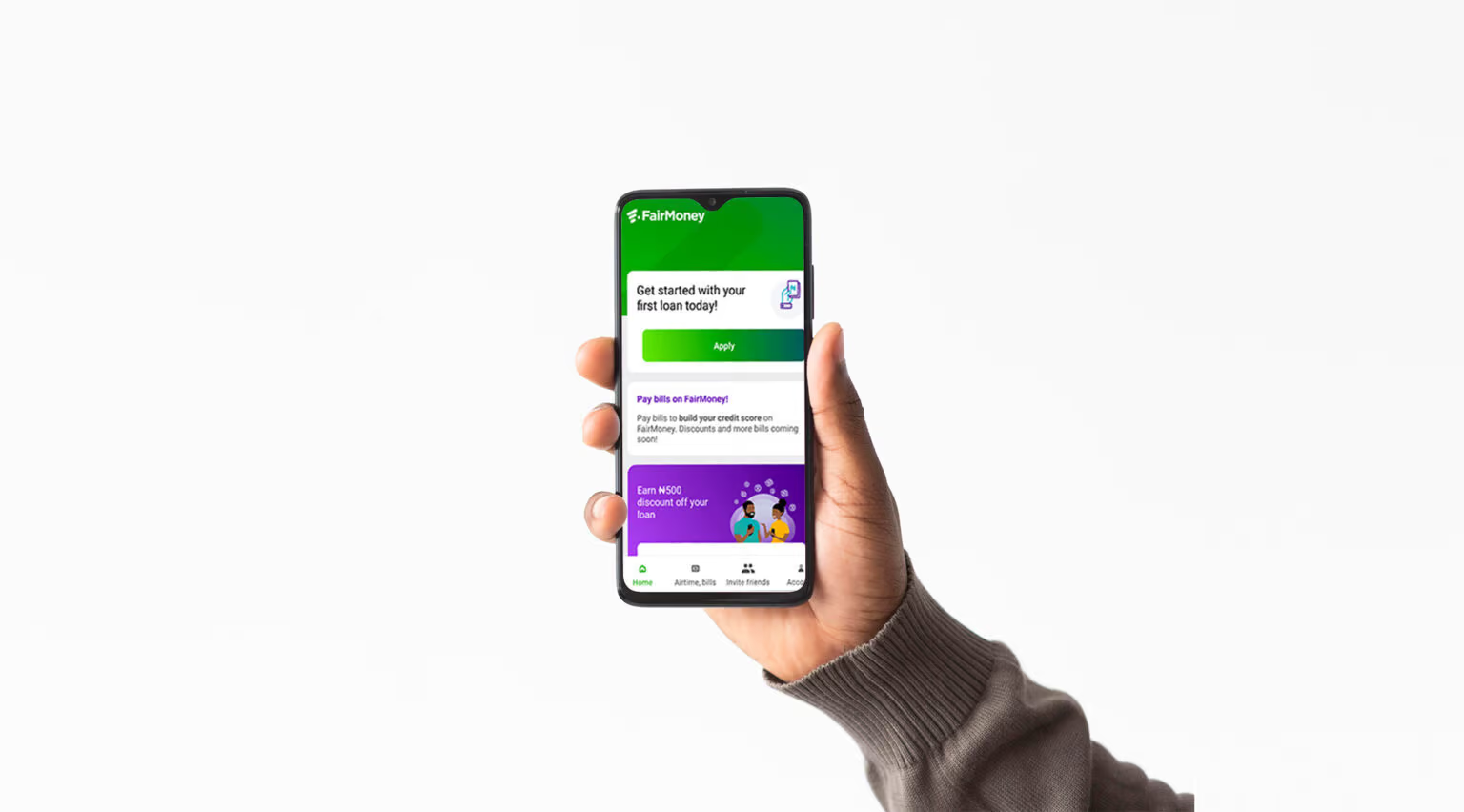
FairMoney has crossed 30 million users in Nigeria, the digital lender confirmed, marking one of the clearest signals yet that the country’s fintech sector is scaling faster than at any point in its history.
The milestone places FairMoney among a growing cluster of Nigerian platforms reporting record user numbers through 2026, a year that has seen mobile-first financial services move from niche convenience to default infrastructure for tens of millions of previously underserved Nigerians.
A Milestone Year for User Growth
FairMoney’s growth mirrors a broader pattern playing out across the industry. OPay crossed 45 million users by June 2026, up from 30 million in 2022, with 50 million total downloads making it one of the most downloaded fintech apps in the country. PalmPay reported surpassing 35 million users earlier in the year, while PiggyVest marked its 10th anniversary by confirming more than six million registered users and cumulative payouts exceeding ₦3 trillion.
Each platform serves a different corner of the market. Where OPay and PalmPay lean on payments, transfers, and agent networks, FairMoney has built its base primarily around instant, collateral-free digital lending, alongside savings and investment products layered on top. That lending-first model has made it one of the most-used credit apps in Nigeria, particularly among users without access to traditional bank loans.
Why the Numbers Keep Climbing
Several forces are driving this simultaneous growth across competing platforms rather than a single winner pulling ahead. Nigeria’s cash scarcity episodes pushed millions of first-time users onto digital wallets, and many never fully reverted to cash-based transactions afterwards. Improved interoperability, including live transactions processed through the Nigeria Inter-Bank Settlement System’s National Payment Stack, has also made it easier for fintechs to plug into the country’s formal payment rails.
Agent networks remain central too. OPay alone had grown its agent base past 500,000 by 2022, extending fintech access into areas traditional bank branches never reached. That agent-driven distribution model, replicated by rivals, has been a major factor in pushing adoption beyond Nigeria’s major cities.
What It Means for the Sector
FairMoney’s 30-million milestone reinforces a trend that’s been building for years: Nigerian fintech is no longer a fragmented, early-stage market. With multiple platforms independently crossing tens of millions of users, the sector is consolidating into a smaller group of scaled players competing directly for the same expanding pool of digital-first consumers.
For an ecosystem watched closely by investors and regulators alike, that scale brings both opportunity and scrutiny. As lending, payments, and savings products increasingly blur into single super-app experiences, the next phase of competition will likely be decided less by who can win new users and more by who can retain them profitably and sustainably, a shift Nigerian fintechs are only beginning to navigate.