

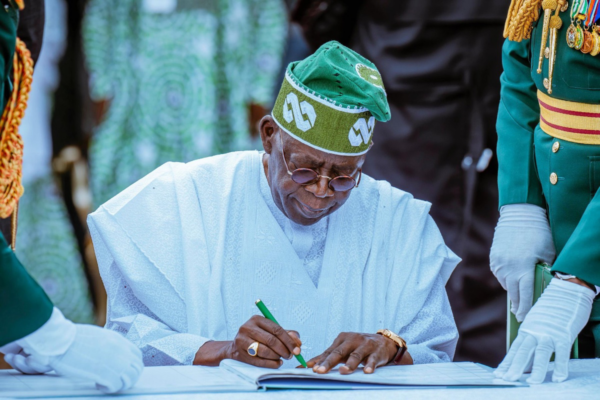
President Bola Tinubu signed the Presidential Executive Order on Virtual Assets Coordination, 2026, creating a new inter-agency structure to bring order to Nigeria’s regulation of cryptocurrencies and other digital assets. The order, issued under Section 5 of the 1999 Constitution as amended, took effect immediately after it was signed on Friday.
The Presidency, through a statement from Special Adviser on Information and Strategy Bayo Onanuga, explained that the move responds to years of regulatory fragmentation. As virtual assets have grown, they have increasingly blurred the lines between currencies, commodities, securities and digital payment tools, leaving Nigerian regulators operating in silos with overlapping mandates in some areas and clear gaps in others. According to the Presidency, that fragmentation left room for bad actors to operate largely unchecked, with the statement noting that unregistered and fraudulent operators had exploited these gaps to prey on unsuspecting Nigerians, costing families their savings.
A Council, Not a New Regulator
Rather than creating a fresh regulatory body or stripping powers from existing agencies, the order sets up a Virtual Asset Council designed to coordinate the work already being done across government. The Central Bank of Nigeria chairs the council, with the Nigeria Revenue Service and the Securities and Exchange Commission serving as vice-chairs. The Nigerian Financial Intelligence Unit and the Office of the National Security Adviser round out the membership.
The council’s job is to set policy direction, get participating agencies working in sync, and partner with the Office of the Attorney-General of the Federation to build a unified legal and institutional framework for the sector. Regulatory responsibility for any given virtual asset will still depend on what that asset actually is and does. Assets that function as securities remain under SEC oversight, while payment, settlement and custody services fall under the CBN.
To carry out the council’s day-to-day work, the order also establishes a Virtual Asset Office, which will operate out of a secretariat housed at the CBN. This office is expected to manage information sharing, licensing applications and regulatory reporting through a shared supervisory technology platform, while each agency retains ownership of its own data.
Why This Matters for Nigeria’s Digital Asset Market
Nigeria has one of the largest crypto-using populations in the world, and its regulators have historically struggled to keep pace with the speed of adoption. The CBN’s earlier restrictions on banks facilitating crypto transactions, followed by a partial reversal and the introduction of licensing rules for virtual asset service providers, reflected years of policy back-and-forth. This latest order signals an attempt to settle that inconsistency by giving agencies a single coordinating structure instead of letting each regulator chart its own course independently.
For exchanges, wallet providers and other virtual asset businesses operating in Nigeria, the immediate effect is less about new rules and more about clearer lines of authority. Knowing which agency is responsible for which type of asset, and having one office to route applications and reporting through, could reduce the compliance uncertainty that has long made Nigeria a difficult market to operate in legally. Whether the council delivers on that promise will depend on how quickly the promised implementation framework materialises and how consistently the participating agencies apply it.