

A lot of Nigerians share the same memory. The first time you opened an app, watched a car crawl toward you on a map, got in, and arrived somewhere without haggling a single naira with anybody. For most people who had that moment, the app was Uber.
That’s worth saying before anything else, because Uber earned it. It landed in Lagos in 2014 and taught a country a behaviour that didn’t exist here before, cashless fares, a driver’s name and plate on your screen before he pulled up, a receipt at the end. Twelve years on, “let me book a ride” is ordinary language in Nigerian cities, and Uber is a good part of the reason why.
But affection isn’t market share. Somewhere between that first ride and the goodbye email, Nigeria stopped choosing Uber.
The Numbers Uber Stopped Publishing
The last time Uber said publicly how big its Nigerian business was, the year was 2017. About 300,000 riders, roughly 7,000 drivers. After that, nothing. For nine years one of the most data-rich companies in the world simply stopped reporting how it was doing in Africa’s largest market, and companies don’t usually go quiet about good news.
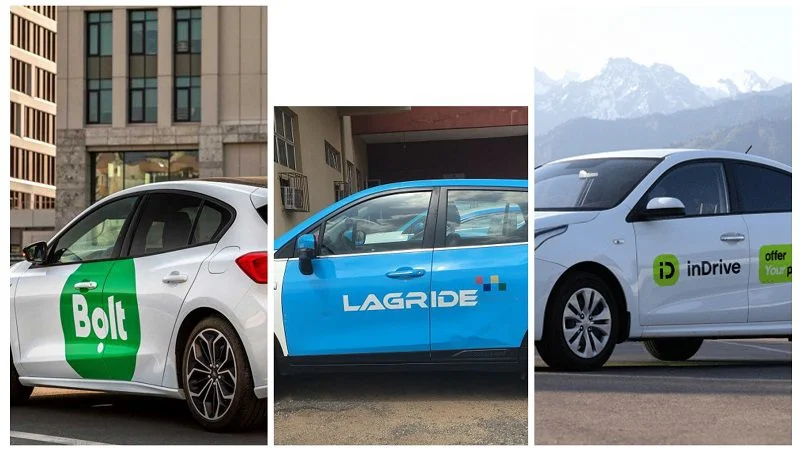
Other people kept counting, though. By 2020, Technext reported that Bolt had taken over 60% of Nigeria’s ride-hailing volume. That was six years ago. More recently, market research on Nigerian urban mobility recorded Bolt’s active users climbing to a peak of about 2.9 million in the fourth quarter of 2024, up from 2.1 million, and a 2024 preference poll in the same research put inDrive at 47.4% against Uber’s 31.5%.
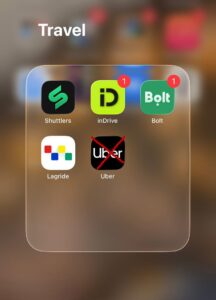
So in the year before last, in a market Uber built, Uber wasn’t first. The company that taught Nigerians how to hail a ride had become the third option on a phone with three ride apps on it.
The Drivers Left Before the Riders Did
Ride-hailing runs on a fairly simple loop. Drivers go where they earn more, riders go where cars arrive fastest and cost least, and whoever wins the drivers usually wins the riders a few months later.
Uber lost the drivers, and it lost them in a predictable way. Under price pressure from inDrive, it cut fares. Then, to protect its margin on those thinner fares, it raised its commission. Drivers who spoke to TechCabal said Uber had pushed its cut to 30% while slashing fares, where Bolt held around 25% with higher fares on the board, and that Uber’s lowest fare ran about 26% below Bolt’s.
Sit in the driver’s seat and that maths is brutal. You’re paid less per trip, and a bigger share of that smaller number is taken before it reaches you, while fuel climbs and spare parts are priced against a naira nobody can predict. One driver told TechCabal that moving from Uber to Bolt lifted his weekly take-home by ₦8,000 to ₦12,000, on fewer trips.
There was never a wall to climb either. Nigerian drivers have run three and four apps at once for years, so switching didn’t require breaking a contract or giving notice. It just meant declining Uber pings and accepting Bolt ones, thousands of times a day, until the market had reshaped itself without an announcement.
Riders did the same from their side. inDrive undercuts Uber by roughly 30 to 60% depending on the trip and lets you name your own fare, which in a country where everybody negotiates everything isn’t really a feature so much as a homecoming.
So Who Actually Inherits This?
Less than the headlines suggest, because most of it has already been claimed.
Bolt is the obvious beneficiary and said as much today, telling BusinessDay it is staying. It has the brand, the largest driver network, and years of second-tier city coverage in places like Ibadan, Benin and Enugu that Uber never chased seriously while it focused on premium riders in Lagos and Abuja. Whatever demand is genuinely displaced today, Bolt is best placed to absorb.
inDrive holds the price floor and the negotiation model. LagRide has state backing and a vehicle-ownership pathway rather than a pure commission relationship with its drivers. Rida, Shuttlers and a handful of smaller local operators work the edges.
Every one of them inherits the same problem that pushed Uber out, though, and that’s worth saying rather than treating this as a competitor’s victory lap. Fuel punishes drivers. Maintenance is priced in a currency nobody controls. Riders in this economy can’t absorb a fare increase, so platforms can’t pass those costs on. The squeeze that made Nigeria unworkable for a listed American company doesn’t lift because the remaining players are local.
The market itself isn’t the problem. Nigeria’s urban mobility and ride-hailing sector is valued at around $450 million in 2026, projected to reach roughly $879 million by 2031, with more than 200,000 drivers already working in it. Uber didn’t walk away from a shrinking market. It walked away from a growing one it could no longer make money in on its own terms, which should worry everyone still playing.
The Part Worth Watching
Less competition isn’t automatically good news for anyone except the platforms.
For over a decade Nigerian riders have benefited from a real price war, three or four apps discounting hard against each other to buy share. Remove one of the largest and the pressure to keep fares down eases a little for everyone left. Whether Bolt and inDrive keep pricing aggressively to capture Uber’s displaced users, or let fares drift up now that a competitor is gone, matters more to ordinary Nigerians than the question of who technically wins the market.
Drivers have their own version of that. A shake-up like this is the closest thing to leverage they’ve had in a while, and they’ve staged shutdowns over fares and commissions repeatedly, most recently in Lagos and Ogun earlier this year. Several told TechCabal today that they expect things to get harder, not easier, including one who bought his car specifically to drive for the platform. If the remaining apps are now competing for a larger pool of available drivers, terms should improve. Whether they actually do is a different question.
We’ll Miss Uber, Sort Of
Something real ends today. Uber built the habit, set the safety expectations, made tracked routes and driver ratings and receipts normal, and every platform still standing here runs on rails it laid.
But the market Uber built grew past Uber. It got more competitive, more price-sensitive and much harder to profit from than it was in 2014, partly because Uber proved the model worked and others then ran it better. You can read that as a failure. You can also read it as what a functioning market does to a first mover that stops competing hard enough.
The drivers on Nigerian roads tonight were voting with their apps long before the email. They’ll keep voting tomorrow. The show goes on, and honestly it has been going on without Uber at the centre of it for a while. We’re just finding out today.