

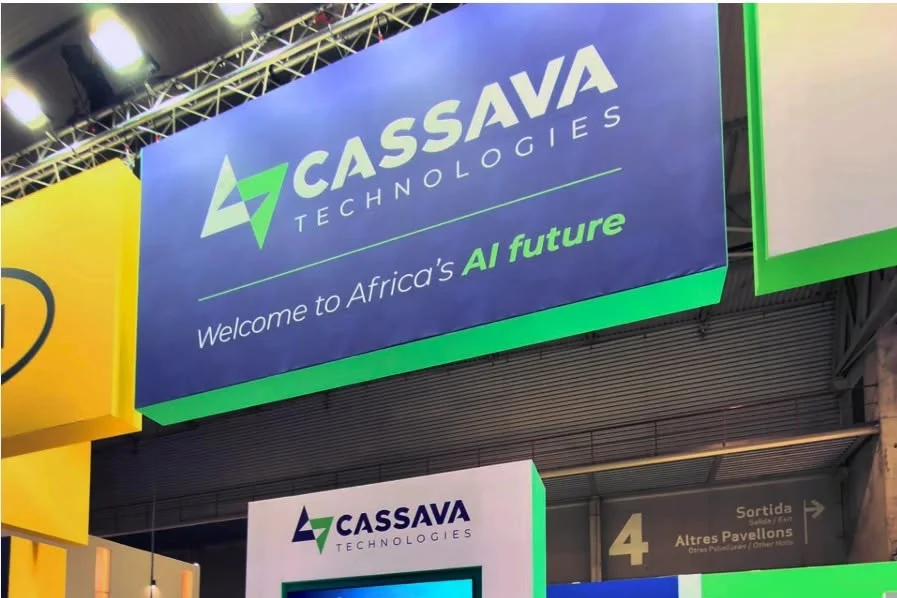
The World Bank Group has named NVIDIA and Cassava Technologies as knowledge partners in a new AI infrastructure initiative designed to help African governments access affordable computing power without building expensive standalone national data centres.
Announced on October 20, 2026, in Seoul, South Korea, the AI Infrastructure and Readiness Initiative will focus initially on Africa and Latin America, offering shared, pay-as-you-go access to the specialised computing infrastructure needed to develop and run artificial intelligence applications.
The initiative forms part of the World Bank Group’s first digital strategy, which aims to improve internet connectivity, make digital services more affordable and help developing economies benefit from AI.
Rather than requiring individual governments to invest heavily in their own AI data centres, the proposed model would allow them to access shared graphics processing unit (GPU) infrastructure according to their computing needs.
However, the World Bank has not disclosed the initiative’s funding size, participating African countries, pricing structure or operational launch date.
How the World Bank’s AI Infrastructure Initiative Will Work
Building and operating AI infrastructure requires significant investment in specialised processors, electricity, cooling systems and high-speed connectivity.
These costs can make advanced computing difficult to access for developing economies, particularly those with limited data centre infrastructure.
The World Bank’s proposed shared-computing model is intended to address this challenge.
Instead of purchasing and maintaining expensive AI hardware, participating governments would be able to pay for access to computing resources when needed.
The approach could make it easier to develop AI-powered public services, support local research and deploy applications designed for African languages and industries.
The initiative also places emphasis on what the World Bank describes as “small AI”, referring to practical AI systems developed or adapted for specific tasks and local conditions.
Potential applications include helping farmers identify crop diseases, assisting healthcare workers and supporting businesses with inventory management.
Unlike large-scale AI development programmes that require enormous computing resources, smaller and specialised AI systems can often operate with more limited infrastructure.
The World Bank believes this approach could help developing countries adopt AI without facing the full cost of developing large foundational models.
Why Africa Needs More AI Computing Infrastructure
Africa’s AI ambitions are growing, but the continent still faces a significant infrastructure gap.
As Techsoma previously reported, Africa holds just 0.6% of global data centre capacity, despite accounting for nearly 18% of the world’s population.
The imbalance was highlighted in the World Bank’s October 2026 Africa Economic Update, which warned that inadequate electricity, connectivity, computing infrastructure and digital skills could prevent African countries from fully benefiting from AI.
For developers building AI applications, limited local infrastructure can mean relying on overseas cloud providers to access specialised processing power.
Although international cloud platforms have made advanced computing more accessible, using foreign-hosted infrastructure can create additional challenges around costs, latency and compliance with national data protection requirements.
Expanding access to AI computing capacity within Africa could support local technology companies working in healthcare, agriculture, finance and education.
However, shared infrastructure would only address part of the challenge. Reliable electricity, affordable internet access and skilled workers would remain essential.
Cassava and NVIDIA Strengthen Their African AI Infrastructure Push
The World Bank’s selection of Cassava Technologies and NVIDIA as knowledge partners builds on an existing relationship between the two companies.
Cassava, founded by Zimbabwean entrepreneur Strive Masiyiwa, has been expanding its AI infrastructure operations across Africa through NVIDIA-powered data centres.
In March 2026, the company announced the deployment of NVIDIA-powered AI factories in South Africa, with expansion plans covering Nigeria, Kenya, Egypt and Morocco.
The facilities are designed to provide GPU-as-a-Service, allowing businesses and developers to rent computing capacity instead of purchasing expensive processors.
Cassava has also been developing sovereign AI infrastructure that enables organisations to process sensitive information within national borders.
In September, Techsoma reported that Cassava partnered with Vodafone Business to develop Egypt’s first sovereign AI data centre, using NVIDIA technology to support local AI applications.
The World Bank initiative could complement these existing efforts by introducing a development-focused framework for shared AI computing.
However, the announcement identifies Cassava and NVIDIA as knowledge partners. It does not confirm that either company will directly finance the programme, supply a specified number of GPUs or build new facilities under the initiative.
World Bank Launches Broader Digital Strategy
The AI computing initiative accompanies a wider World Bank strategy addressing four areas of digital development: connectivity, affordable devices and data, digital services and skills, and AI readiness.
The institution plans to use financing, policy advice, private investment and guarantees to help developing countries strengthen their digital economies.
According to the World Bank, more than two billion people remained offline globally in 2025.
Only 23% of people in low-income countries used the internet, compared with 94% in high-income countries.
The lender also estimates that 1.2 billion young people will reach working age across developing economies over the next 10 to 15 years, while those economies are projected to create approximately 420 million jobs.
World Bank Group President Ajay Banga said digital technology could help address these challenges by supporting employment and improving access to essential services.
“Digital technology can help countries create jobs and make scarce resources go further,” Banga said in the announcement.
The strategy also prioritises privacy, cybersecurity and fraud prevention as countries expand digital services and AI adoption.
What This Means for Nigeria and African AI Startups
For Nigeria, the initiative comes as demand grows for computing infrastructure capable of supporting local AI companies, universities and government institutions.
Access to affordable AI processing power could help developers build products without the high upfront costs of purchasing specialised hardware.
It could also support the development of locally relevant AI applications, including systems designed for African languages, financial services and public administration.
But the announcement does not yet establish whether Nigeria will participate or how Nigerian startups could access the proposed infrastructure.
The initiative’s eventual impact will depend on the availability of computing capacity, access conditions and whether its pricing makes AI development more affordable.
For now, the World Bank has outlined its intended approach and identified knowledge partners, but has not announced a financing commitment or implementation timetable.
The next development to watch will be the selection of participating countries and the publication of details explaining how governments can access the shared GPU infrastructure.