
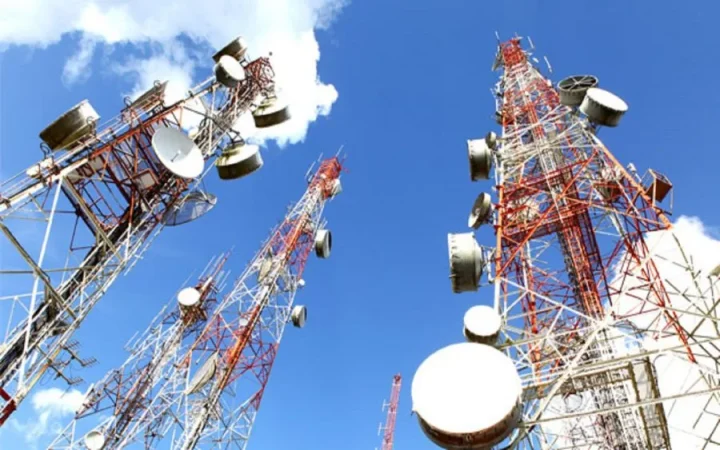
The NCC has signed a new agreement aimed at reducing the industry’s heavy reliance on diesel generators, one of the biggest drags on operator profitability and network expansion across the country.
The New Agreement
The Nigerian Communications Commission and the Rural Electrification Agency signed a memorandum of understanding at a stakeholder forum in Abuja to power telecom infrastructure with renewable energy. Under the deal, telecom base stations will be able to draw electricity from existing and planned mini-grids rather than depending on diesel generators, particularly in communities with little or no access to the national grid.
NCC Executive Vice Chairman Aminu Maida, represented at the event by Executive Commissioner for Technical Services Abraham Oshadami, said reliable electricity and digital connectivity function as mutually reinforcing pillars of national development. He noted that communities without electricity struggle to sustain telecom infrastructure, while communities without connectivity cannot fully benefit from whatever power supply they do have.
Why Diesel Has Become a Crisis
The scale of the problem the MoU is meant to address is significant. Nigeria’s telecom operators consume more than 40 million litres of diesel every month to keep base stations running, a bill that industry estimates put at well over 350 million dollars a year. Diesel alone is estimated to account for roughly a third of telecom operating expenses nationwide, with rural and remote sites often facing even higher energy costs than urban ones due to weaker grid access.
This burden has been building for years. Diesel prices have continued to climb through 2026, adding further strain to operators already contending with fibre cuts, multiple taxation, and right-of-way delays. Industry groups have repeatedly warned that the combination of these pressures threatens both network quality and the pace of expansion into underserved areas, where the economics of running diesel-powered towers are hardest to justify. The poor network quality has also led to probes on the NCC by the National Assembly.
Part of a Broader Push
The REA partnership is not the NCC’s first attempt to address the problem. Earlier in the year, the commission launched an Energy Transition Funding Programme intended to support Nigeria’s wider Energy Transition Plan by helping operators shift toward greener power sources. The regulator has also floated a Green Telecoms Initiative aimed at cutting operating costs by as much as half through wider adoption of solar and other renewable alternatives to diesel generators.
Individual operators have been experimenting with hybrid solutions of their own, combining lithium batteries and solar power at select sites to reduce fuel dependence. The new mini-grid arrangement effectively formalises and scales that approach by tying telecom infrastructure directly into the rural electrification agency’s existing renewable energy rollout, rather than leaving each operator to pursue its own patchwork of solar pilots.
What It Means Going Forward
If implemented at scale, the agreement could ease one of the most persistent cost pressures facing Nigerian telecom operators, particularly in rural and underserved regions where diesel-powered base stations have made network expansion commercially difficult. Lower energy costs could also translate into more stable service and a stronger case for extending coverage to areas the industry has historically been reluctant to serve.
Whether the MoU delivers on that scale will depend on how quickly mini-grid capacity can be built out and connected to telecom sites, and how many operators actually shift meaningful portions of their infrastructure onto renewable power rather than treating it as a supplementary source. For now, the agreement signals that Nigeria’s telecom energy problem has moved from industry complaint to a formal item on the regulatory agenda.