
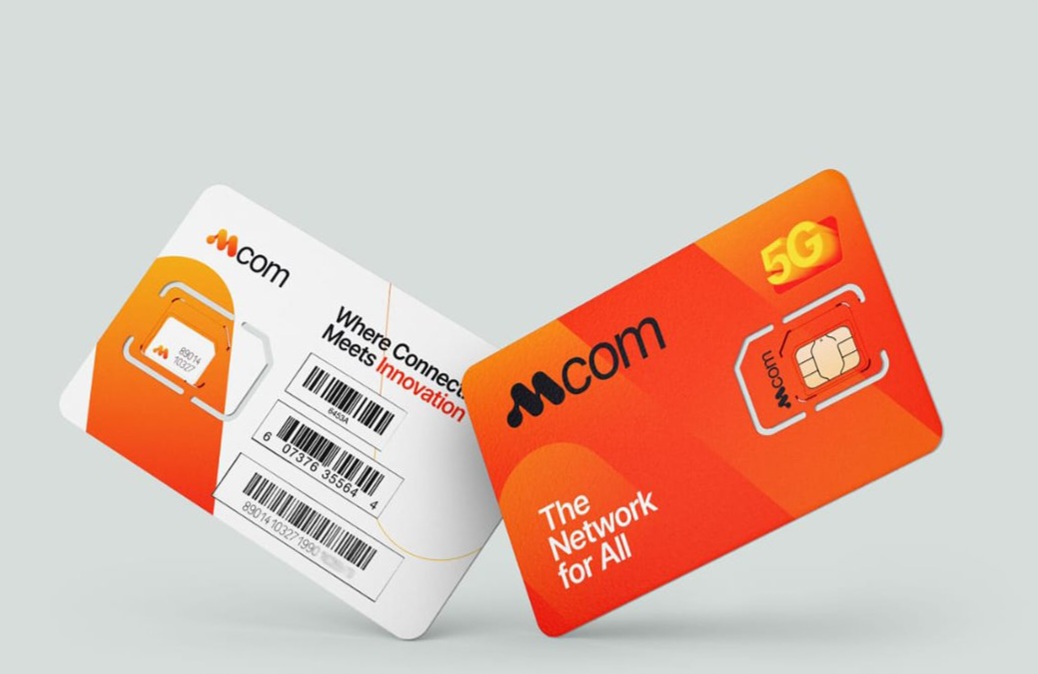
Mafab Communications paid $273.6 million in 2021 for a 100 MHz block of 5G spectrum. Nearly five years later, the company is seeking regulatory approval to transfer that spectrum, along with a 2×20 MHz holding in the 2.1 GHz band, to MTN Nigeria. The transaction would end Mafab’s run as one of Nigeria’s two original 5G operators.
The deal is not just about one company’s struggles. It is part of an effort by the Nigerian Communications Commission to move spectrum from holders that cannot deploy it to operators that can. A person familiar with the process described it as “a bigger clean-up than Mafab”. The regulator wants “limited valuable spectrum in the hands of those who need it”.
That phrase captures the core problem. Nigeria sold spectrum to companies that promised to build networks. Some of them never did. Now the government is taking it back, one transfer at a time.
Mafab Won Spectrum It Could Not Use
Mafab’s story is not one of failure in the traditional sense. The company did everything the auction required. It paid the full $273.6 million. It launched commercial 5G services in Abuja in January 2023 and Lagos shortly after. It announced plans to expand to Port Harcourt, Enugu, Kano, and Kaduna.
But those plans never materialised at scale. By mid-2025, Mafab’s 5G deployment remained minimal. One report noted that the company had “failed to roll out its service or deploy a single network mast despite hosting a public launch event in January 2023”. Another described Mafab’s 5G deployment as “unconvincing” and noted that the NCC continued to defend the gap.
Mafab attributed its difficulties to foreign exchange costs, which raised the naira price of network equipment. That explanation is credible. The naira lost significant value against the dollar after 2023. Equipment priced in dollars became far more expensive in local currency. Building a greenfield network from scratch requires massive capital expenditure, and Mafab lacked the balance sheet of an established operator like MTN or Airtel.
But the deeper issue is structural. Mafab won spectrum designed to introduce competition into Nigeria’s 5G market. The auction was structured to widen the pool of operators with access to high-capacity spectrum. That goal assumed Mafab could build a network that would challenge MTN’s dominance. It could not.
READ ALSO:
The NCC Is Turning Spectrum Into a Tradable Asset
Nigeria’s telecom regulator has been building a secondary spectrum market for years. The framework allows operators to trade, lease, or transfer spectrum under NCC-approved arrangements. The NCC developed the guidelines in 2018 after industry consultations, and it has facilitated several transactions since.
The Megatech-Globacom deal is the clearest example. Megatech acquired a 2.6 GHz licence in March 2020, then transferred it to Globacom for more than ₦20 billion ($15.01 million). Megatech had pursued the band for national operations, but the spectrum never translated into network deployment. The transfer moved the asset to an operator with the infrastructure and customer demand to use it.
ntel tells a similar story. The company inherited spectrum when it acquired the core assets of NITEL/M-Tel in 2015, including 5 MHz of paired 900 MHz spectrum and 10 MHz of paired 1800 MHz spectrum across 19 states. NTel’s operational and financial challenges limited its ability to deploy those assets. The company instead monetised some of its underused spectrum through NCC-approved secondary-market arrangements with MTN Nigeria, allowing MTN to lease the 900 MHz and 1800 MHz blocks.
The Mafab-MTN deal fits this pattern. It moves spectrum from a company that cannot deploy it at scale to a company that can. The NCC approves these transactions because they increase the productive use of a scarce resource.
MTN Gets Stronger, and That Raises a Real Question
MTN Nigeria already controls more than half of Nigeria’s mobile market. Adding Mafab’s 100 MHz block in the 3.5 GHz band and its 2.1 GHz holdings would strengthen that position further.
Telecom consultant Ejikeme Onyeaso described the situation as a difficult balancing act for regulators. Additional spectrum could help MTN improve service quality and deploy capacity more efficiently. But greater concentration of spectrum could alter the competitive position of operators without comparable infrastructure or financial resources.
An industry executive raised a more pointed question. Why had Mafab not developed a stronger independent ecosystem around the spectrum it won nearly five years ago? Understanding that outcome matters before fully assessing the implications of handing the spectrum to MTN.
The NCC’s original policy intent was to widen access to high-capacity spectrum. A transfer that consolidates that spectrum back into the hands of Nigeria’s largest operator runs counter to that intent, even if current rules do not explicitly prohibit it.
Nigeria’s 5G Market Is Growing, but Not Fast Enough
5G adoption in Nigeria remains low. As of July 2026, 5G accounted for 4.74 percent of mobile connections, up from 3.94 percent in January and 2.46 percent in December 2025. 4G still dominates at 54.31 percent of connections.
The growth is real. Nigeria’s 5G connections rose 41 percent in the year to June 2026. Active telecom subscriptions reached 192.23 million in June 2026, and broadband penetration rose to 56.79 percent.
But 5G’s share of connections is far behind where it needs to be for Nigeria to compete globally. By the end of 2026, 5G connections will account for just 15 percent of total mobile connections, compared with 56 percent in Morocco and 35 percent in Mauritius.
The gap matters because spectrum sitting idle does not help anyone. Every block of 5G spectrum that a company holds without deploying represents capacity that Nigerian consumers cannot access. The NCC’s push to move spectrum to operators that will use it is, in that light, a consumer protection measure.
The Broader Spectrum Cleanup Goes Beyond Mafab
The NCC is not only looking at Mafab. The regulator has removed over 450 illegal signal boosters deployed in the Federal Capital Territory and approved spectrum reassignments. It directed users of the 5.4 GHz frequency band to vacate unauthorised transmissions within 14 days. It released a draft Spectrum Roadmap for 2026 to 2030 that includes spectrum repurposing for bands like 1427 to 1518 MHz and 3.3 to 3.4 GHz.
The roadmap sets specific milestones. It includes auctioning the 3.5 GHz TDD spectrum and licensing the upper 6 GHz band in 2027, full licensing of the 26 GHz band and an independent spectrum audit in 2028.
This is a regulator that is trying to impose discipline on a market where spectrum has often been hoarded rather than used. The Mafab transfer is one part of that effort. It will not be the last.
What the Mafab Deal Means for Nigeria’s 5G Future
The transfer, if approved, will leave Nigeria with three 5G operators instead of four. MTN, Airtel, and Mafab were the licensed holders. Mafab will exit. MTN will get stronger. Airtel and Globacom will watch to see whether the NCC’s next moves affect their competitive positions.
The deal also sends a signal to any company considering a spectrum bid in future auctions. Winning spectrum is not enough. The NCC will monitor whether you use it. If you do not, it will find a way to move that spectrum to someone who will.
That is a healthier approach than letting idle spectrum sit for years while consumers wait for better service. It is also a necessary correction for a market that sold 5G licences with the promise of competition but delivered consolidation instead.
Mafab’s exit is not a failure of the company alone. It is a failure of a system that assumed paying for spectrum was the same as deploying it. The NCC is now fixing that system, one transfer at a time.