
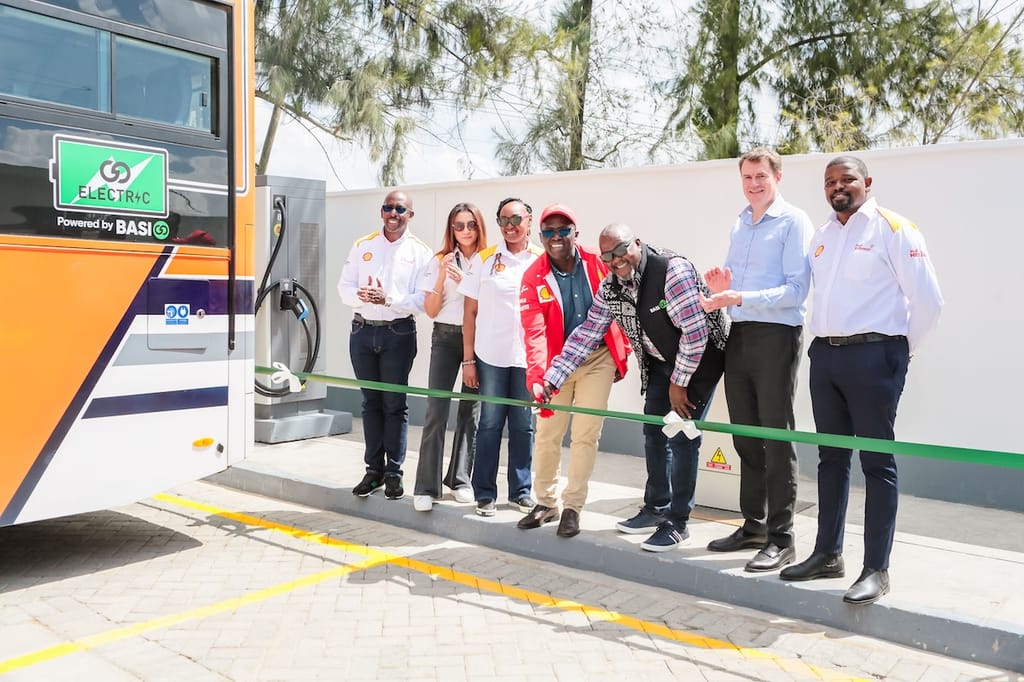
BasiGo has opened its latest electric vehicle charging station at the Shell Athi River service station. The new facility can power up four electric buses at once, supporting the growing fleet of clean transport vehicles serving the busy Nairobi-Kitengela-Machakos route.
The Athi River station brings BasiGo’s partnership with Vivo Energy Kenya to three locations. Shell Waiyaki Way and Shell New Gatitu in Thika already host similar charging points. Each station features both CCS2 and GBT charging technology, built to handle the daily power needs of commercial bus operators.
Electric Bus Operations Expand Beyond Nairobi
Moses Nderitu, BasiGo’s Managing Director in Kenya, called the Athi River launch a vital step in spreading electric transport infrastructure across the country. The location sits on a major transport route connecting Nairobi to Eastern Kenya, giving bus operators confidence to make the switch to electric.
“Access to reliable charging remains the biggest barrier to e-mobility adoption,” Nderitu said during the launch event. “Partnerships like these help us overcome that challenge.”
Bus companies, including Rembo Classic and Enabled Mashariki Sacco, already operate electric vehicles along this corridor. The new charging station gives these operators faster turnaround times and reduces range anxiety for drivers working longer routes.
Shell Partnership Powers Kenya’s Green Transport Push
Peter Murungi, Managing Director of Vivo Energy Kenya, highlighted how the partnership uses Shell’s existing retail network to support the electric vehicle transition. The company operates 336 Shell service stations across Kenya, creating multiple opportunities for future charging installations.
“Every day, we serve millions of Kenyans across our retail network,” Murungi explained. “Today, we expand that service to support electric mobility.” The collaboration creates new business opportunities while helping Kenya build its clean transport infrastructure.
BasiGo Scales Up Electric Bus Manufacturing
The charging station opening comes as BasiGo ramps up production at its Kenyan assembly plant. The company recently passed the 100 electric bus milestone on Kenyan roads and secured fresh funding from French development bank Proparco.
BasiGo’s “Road to 1000” initiative aims to put 1,000 electric buses in service by 2027. The company operates Kenya’s largest network of DC fast chargers for commercial vehicles, with ten charging hubs now active across the country.
Recent expansion includes three new Nairobi charging depots at Taj Mall, Komarock, and Riruta. These facilities can charge up to 100 buses daily using sequential charging technology. The network now handles BasiGo’s growing fleet while maintaining excess capacity for future expansion.
Kenya Targets Complete Electric Bus Fleet by 2027
The Athi River charging station supports Kenya’s ambitious plan to electrify all public transport buses by 2027. Trade Cabinet Secretary Rebecca Miano announced this target at BasiGo’s factory opening in April 2024, making Kenya one of the first African countries to set such a comprehensive electric transport deadline.
The government’s Draft National e-Mobility Policy outlines how Kenya plans to become Africa’s electric vehicle leader. The policy includes tax incentives for electric vehicle imports, local manufacturing support, and charging infrastructure development across the country.
Pay-As-You-Drive Model Attracts Bus Operators
BasiGo’s innovative financing model removes upfront costs for bus operators wanting to go electric. Under the Pay-As-You-Drive system, operators pay only when their buses run. The fee covers vehicle costs, charging services, and maintenance support.
This approach has attracted dozens of public service vehicle operators who previously couldn’t afford electric bus purchases. The model includes guaranteed charging access at BasiGo stations and technical support from trained technicians.
Kenya’s Clean Energy Grid Powers Electric Transport
Kenya’s electricity grid runs mostly on renewable energy from geothermal, hydroelectric, and solar sources. This clean power mix makes electric buses genuinely environmentally friendly compared to countries that still burn coal for electricity.
The transport sector accounts for a significant portion of Kenya’s carbon emissions. Electric buses running on renewable electricity can substantially reduce these emissions while cutting Kenya’s expensive fossil fuel import bill, which now costs nearly $500 million monthly.
Kenya Power’s Managing Director, Dr Joseph Siror, emphasised the national grid’s readiness to support electric transport growth. The company has introduced special e-mobility electricity tariffs to encourage overnight charging when renewable energy capacity often goes unused.
Future Charging Network Expansion Plans
BasiGo operates nine charging hubs across Kenya, with a tenth facility under construction. Locations include Buruburu, Kikuyu, Thika, Even Business Park, and Nyahururu for intercity operations.
The company’s partnership with Shell provides access to prime locations along major transport routes. Vivo Energy Kenya’s extensive retail network offers hundreds of potential sites for future charging installations as electric bus adoption accelerates.
Each charging hub features DC fast charging technology capable of adding significant range in under two hours. The stations use both GB/T and CCS2 connectors, supporting different electric bus models, including the King Long units that BasiGo assembles locally.
The Athi River station represents Kenya’s serious commitment to clean public transport and positions the country as a leader in Africa’s electric mobility transition. With government support, private sector partnerships, and growing operator confidence, Kenya’s 2027 electric bus target looks achievable.