

The company has secured its initial ASIC fleet for a 9MW computing node in southern Nigeria, with the first batch ready to ship from the US ahead of a December 2026 go-live target.
Terrahex is moving closer to launching its first computing node in Nigeria after securing its initial fleet of ASIC mining machines, with the first batch now ready for shipment to the country.
The company, which is developing modular high-performance computing infrastructure around underutilised energy assets, has received its second shipment of ASICs at its processing and quality assurance hub in Florida, United States.
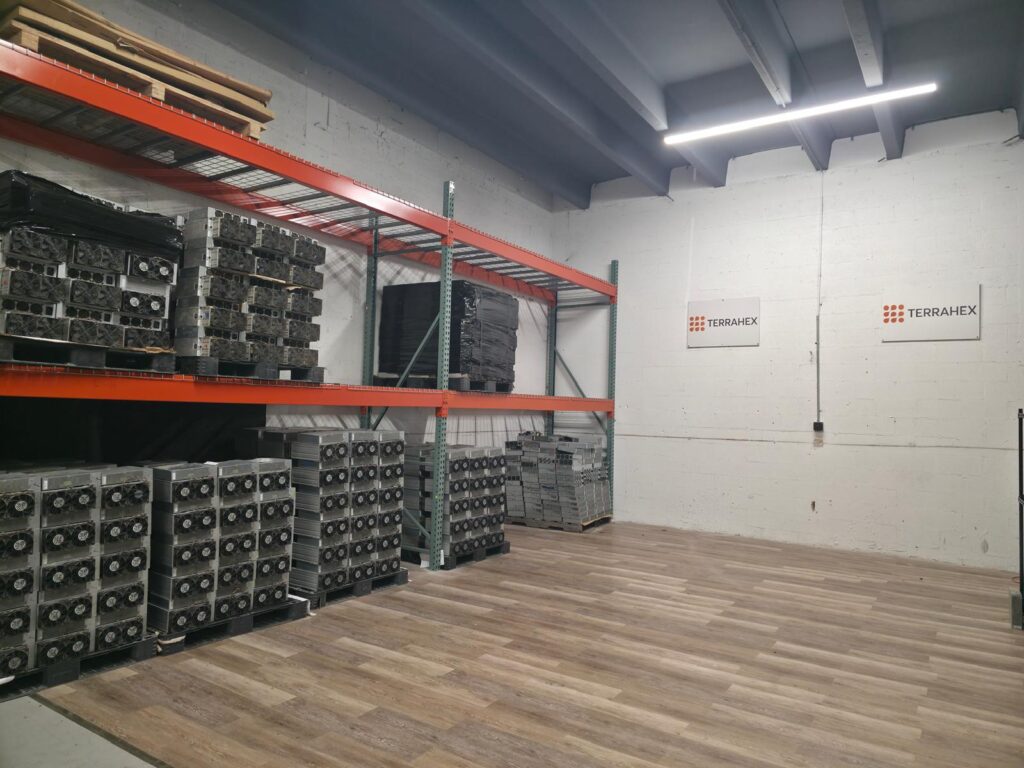
The machines will form part of Terrahex’s first 9MW node in southern Nigeria, which the company expects to bring online by December 2026.
Before being shipped to Nigeria, the ASICs will undergo inspection, testing, conditioning and certification at the Florida facility, which is supported by technical partner M3 Miner Repair.
Preparing the hardware for Nigeria
Deploying computing hardware in Nigeria presents challenges beyond securing machines and power.
Terrahex says its Florida hub will prepare the ASICs for the conditions they are expected to face in Nigeria, including high temperatures, humidity and seasonal Harmattan dust.
Each unit will be inspected, conditioned and certified before shipment as the company seeks to establish a stronger technical baseline before the equipment reaches the Nigerian site.
Terrahex has also ordered air-cooled 40-foot mobile data centre containers from Belgian manufacturer Datacubes.
Each container can accommodate up to 356 miners and has electrical installation capacity of up to 1,300kW. The company has also ordered medium-voltage and low-voltage equipment to support the deployment.
The ASIC fleet, containers and electrical infrastructure will form the core of Terrahex’s first Nigerian node.
Bitcoin mining first, AI compute later
Terrahex’s initial commercial workload will be Bitcoin mining, but the company says it plans to expand into broader high-performance computing, including AI workloads, as its infrastructure grows.
Rather than relying on the economics of conventional hyperscale data centres, Terrahex is building modular infrastructure that can be deployed closer to underutilised energy assets.
The company describes this approach as its Power-for-Equity model, which pairs computing infrastructure with energy partners that have available generation capacity.
Bitcoin mining is being used as the first workload to establish the model, while AI compute is part of the company’s longer-term plans.
OluMayowa Ogunnusi, Founder and CEO of Terrahex, said Nigeria does not need to wait for hyperscale data centre economics to participate in the wider compute economy.
“Terrahex is starting with power that already exists, placing modular infrastructure close to it, and proving the model through mining before moving into wider compute,” Ogunnusi said.
He added that the company is now moving from preparation towards deployment as the hardware and supporting infrastructure come together.
Terrahex targets more than 100MW
The 9MW Nigerian node is the first stage of a much larger expansion plan.
Terrahex says it aims to exceed 100MW of capacity over the next 24 months, supported by additional hardware supply and agreements with energy partners.
Patrick J. Sweeney, Board Chair at Terrahex, said securing the initial hardware supply and testing the machines before deployment should help reduce operational risks associated with the first node.
“Great infrastructure is built on secure supply and disciplined execution,” Sweeney said.
He added that the combination of hardware sourcing, testing and preparation for Nigerian operating conditions provides the initial 9MW node with a stronger foundation and creates a path towards Terrahex’s wider 100MW target.
Dayo Okusami, a Terrahex director and partner at law firm TEMPLARS, also highlighted the importance of due diligence, contracting and counterparty selection when developing infrastructure in frontier energy markets.
“Nigeria has the power and the ambition to host world-class compute,” Okusami said.
From hardware orders to physical deployment
Terrahex’s first Nigerian node is still in the deployment stage.
The ASICs must be shipped from the US, while the mobile data centre containers, power equipment and other infrastructure must be installed before the facility can begin operations.
The company has not disclosed the specific location of the 9MW node in southern Nigeria.
For now, the first major milestone is December 2026, when Terrahex expects the node to go live.
If the initial deployment performs as planned, the company intends to use the project as a foundation for scaling its modular computing infrastructure beyond 100MW across Nigeria over the following two years.