
Techsoma Africa
Latest FinTech Startups AI Tech Global Apps African Opinions
Policy & Regulations Artificial Intelligence Reports About Contact Advertise FinTech & Digital Money African Startup Ecosystem Artificial Intelligence Technology Global News Apps, Gadgets, Tools & Softwares African Telecommunications Opinions & Perspectives
Advertisement Advertise on Techsoma
Techsoma Africa
No Result
View All Result
Techsoma Africa
No Result
View All Result
Techsoma Africa
No Result
View All Result
Home Global News

Facebook Now Limits Users to 2 External Links Monthly Unless They Pay

by Faith Amonimo
December 19, 2025
in Global News, Apps, Gadgets, Tools & Softwares, Technology
Reading Time: 5 mins read
Facebook link posting limit

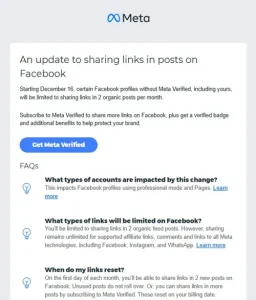
Meta now limits non-paying Facebook users to just two link posts per month. Want to share more? That’ll cost you $14.99 monthly for Meta Verified.

Social media strategist Matt Navarra first spotted the restriction in action. The test targets professional accounts and Facebook Pages specifically. These business-focused profiles suddenly face strict limits on their core marketing strategy.
fb link posts

Meta Verified Becomes Gateway for Content Creators

Meta’s paid subscription service now holds the keys to unlimited link sharing. The company confirmed that this test aims to boost Meta Verified subscriptions by adding “additional value” for paying users.

Advertisement Advertise on Techsoma

Business owners face subscription costs ranging from $14.99 to $499 monthly. The entry-level plan costs $14.99 on mobile apps or $11.99 through Facebook’s website. Premium tiers reach $149.99 monthly, with the maximum plan hitting $499.

Meta’s “Other” revenue stream, which includes Meta Verified subscriptions, jumped to $690 million in Q3. That’s double the amount from when the service launched in 2023.

Publishers Dodge the Bullet for Now

Good news for news organizations: Meta excluded publishers from this current test. The company specifically told reporters that publisher Pages won’t face these restrictions at this stage.

This decision protects news outlets that rely heavily on Facebook traffic. Many publishers share multiple article links daily to drive readership.

Facebook Users See Tiny Link Post Engagement

Meta’s own data reveals why the company feels confident about restricting links. According to their transparency report, posts with external links account for less than 2% of all Facebook views in the US.

The vast majority (98%+) of Facebook engagement comes from native content without external links. YouTube, TikTok, and GoFundMe topped the list of most-shared external domains.

This low engagement gives Meta cover to experiment with restrictions. The company can limit links without significantly hurting overall platform activity.

Social Platforms Wage War Against External Links

Facebook joins other platforms in restricting external content. X (formerly Twitter) actively reduces visibility of posts containing external links. The platform’s algorithm now penalises link-heavy content.

LinkedIn also limits reach for posts with external links, cutting visibility by up to 35%. These platforms want users to stay on their sites longer, not clicking away to other websites.

The trend reflects a broader shift toward platform-native content. Social media companies make more money when users remain engaged within their ecosystems.

Small Businesses Face Tough Choices

The link restrictions hit small businesses hardest. Many rely on Facebook to drive traffic to their websites, blogs, and online stores.

Business owners now must choose between several costly options:

  • Pay $15 monthly for Meta Verified
  • Limit themselves to two strategic link posts monthly
  • Post links in comments (which Meta may also restrict)
  • Abandon Facebook marketing entirely

Affiliate marketers and content creators face similar dilemmas. Their business models depend on driving traffic to external platforms and products.

Content Strategy Pivots Become Necessary

Smart marketers are already adapting their Facebook strategies. Instead of sharing external links, they’re focusing on:

  • Native video content and Reels
  • Image carousels with key information
  • Text-based posts that build brand awareness
  • Community engagement without external traffic goals

This shift requires rethinking content calendars and engagement metrics. Businesses must prioritise brand building over direct traffic generation on Facebook.

Meta Tests Waters for Broader Rollout

While currently limited to select users, this test could expand platform-wide. Meta rarely announces major changes without gradual testing phases.

The company’s statement emphasises learning whether unlimited link posting “adds additional value” for paid subscribers. This language suggests Meta sees link sharing as a premium feature.

Business owners should prepare for the potential expansion of these restrictions. Early adaptation could provide competitive advantages as others struggle with sudden changes.

Revenue Strategy Behind the Restriction

Meta’s move makes financial sense from a platform perspective. The company generates revenue through:

  • Advertising from users staying on Facebook
  • Meta Verified subscription fees
  • Reduced server costs from fewer external redirects

External links pull users away from Facebook’s ad-rich environment. Restricting these links keeps eyeballs on Meta’s profitable content streams.

The strategy mirrors other tech companies monetising previously free features. Twitter/X charges for advanced features, while Instagram limits certain business tools to paid accounts.


Related Techsoma coverage

  • Airtel Africa Partners with SpaceX to Launch Starlink Direct-to-Cell Satellite Connectivity across 14 African markets by 2026
  • BasiGo Opens Third Electric Bus Charging Hub at Shell Athi River Station
  • X Corp Sues Operation Bluebird Startup Over Twitter Trademark Rights
Faith Amonimo

Faith Amonimo

Faith Amonimo is a Tech Editor and Newsletter Lead at Techsoma Africa, where she reports on technology and digital innovation...

Recommended For You

A picture of Biochar co-founders
Technology

Biochar Industrial Group Raises $1.5 Million To Turn African Farm Waste Into Carbon Credits

by Kingsley Okeke
September 17, 2026

Biochar Industrial Group (BIG), a climate-tech startup founded by former executives of Nigerian agro-processing company Releaf, has closed a $1.5 million pre-seed round to expand a business that converts agricultural...

Read moreDetails
7 Powerful AI Design Tools for Creators in 2026

7 Powerful AI Design Tools Creators Are Using in 2026 to Save Time and Work Smarter

September 16, 2026
images 3

Nigeria’s Federal Government has opened applications for S-VCG, a ₦50 million equity-free programme for students

September 16, 2026

Terrahex Secures First ASIC Fleet for 9MW Bitcoin Mining Node in Nigeria

September 15, 2026

Apple Unveils iPhone 18 Pro and Debuts First Foldable iPhone Duo

September 10, 2026
Next Post
Lagos Tech Fest Banner

Lagos Tech Fest Returns in February 2026 for Sixth Edition

Zap by Paystack

Paystack Integrates Zap Into Checkout for Faster Online Payments

Please login to join discussion

Browse by Category

  • African Startup Ecosystem
  • African Telecommunications
  • Apps, Gadgets, Tools & Softwares
  • Artificial Intelligence
  • Business & Markets
  • Consumer Tech
  • Creator Economy
  • Cybersecurity
  • Digital Work-Life Series
  • E-Commerce
  • Education
  • Event Radar Africa
  • Exclusive Interviews
  • Explainers
  • Features/Spotlights
  • FinTech & Digital Money
  • Funding news
  • GenZ Desk!
  • Global News
  • Healthtech
  • Logistics & Mobility Tech
  • Media & Entertainment
  • News
  • Opinions & Perspectives
  • Opportunities, Careers & Learning
  • Partner
  • Policy & Regulations
  • Reports
  • Reviews
  • Tech Insights for Creators
  • Technology
  • Thought Leadership
  • Uncategorized
  • About Us
  • Advertise on Techsoma
  • Contact
  • Corrections Policy
  • Editorial Standards
  • Ownership and Funding
  • Privacy Policy
  • Publish Your Articles
  • Techsoma Africa
  • Terms of Service

Copyright 2026 Techsoma Africa. All rights reserved.

Welcome Back!

Login to your account below

Forgotten Password?

Retrieve your password

Please enter your username or email address to reset your password.

Log In
Advertisement Advertise on Techsoma
Techsoma Africa

© 2026 Techsoma Africa Media.

Company

Policy AI Reports About Contact Advertise

Legal

Terms Privacy RSS

Latest

EFCC Warns PoS Agents Against Money Laundering and Terror Financing The Economic and Financial Crimes Commission (EFCC) has cautioned Point of Sale operators across Nigeria against enabling fraudsters... Zoho Launches Zoho Books Nigeria Edition to Simplify VAT and E-Invoicing Zoho Corporation has rolled out a Nigeria-specific version of Zoho Books, its cloud accounting platform, aimed at helping... Airtel Shuts Down Unit in Kenya, After Making Zero Revenue in Two Years Airtel Kenya Telesonic, the wholesale fibre arm incorporated in 2022, is being wound up and struck off by December 2026. Its accounts show no revenue in either 2024 or 2025, and a first-period expense line of just KES 66,667 in licence fees. Kenya's wholesale fibre market had already been divided between Safaricom, Liquid, Seacom and Bayobab before Telesonic's licence went live.
Techsoma Network Techsoma Network Techsoma Africa Techsoma Middle East Techsoma Canada
Transparency About Editorial Standards Corrections Ownership & Funding Privacy Terms Contact
No Result
View All Result
  • About Us
  • Advertise on Techsoma
  • Contact
  • Corrections Policy
  • Editorial Standards
  • Ownership and Funding
  • Privacy Policy
  • Publish Your Articles
  • Techsoma Africa
  • Terms of Service

Copyright 2026 Techsoma Africa. All rights reserved.