
For many African small businesses, social media is no longer just a marketing channel. It has become the shop, the customer service desk, the payment reminder system, the order book and the delivery coordination centre.
A customer sees a product on Instagram. The conversation moves to WhatsApp. The seller confirms availability manually. Payment is sent to a bank account. Delivery is arranged separately. Inventory is updated later, sometimes by memory, sometimes through notes, spreadsheets or screenshots.
This model has helped many businesses start selling online without building websites or paying for complex digital tools. But it has also created a ceiling.
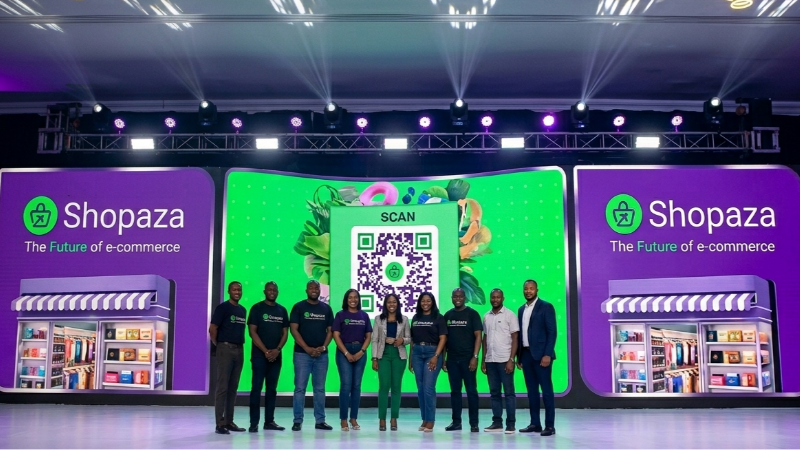
At the launch of Shopaza in Lagos, Payaza Africa positioned its new e-commerce platform as a response to this problem. The company is targeting merchants who already have customers online but still lack the structure needed to sell, manage payments, track products, and scale across markets.
The bigger story is not just the launch of another e-commerce product. The bigger story is that African digital commerce still has an infrastructure problem.
Social Media Helped Businesses Start
WhatsApp, Instagram, Facebook, and TikTok have lowered the barrier to entry for African entrepreneurs.
A fashion business can post pictures and take orders in direct messages. A food vendor can build a customer list through WhatsApp. A beauty brand can launch with Instagram reels. A craft maker can reach diaspora buyers without owning a physical store.
This has created a powerful form of social commerce.
It is fast, cheap, and familiar. It allows entrepreneurs to test products, speak directly to customers and sell without waiting for a formal e-commerce setup.
But social selling is not the same as structured commerce.
A business can be visible online and still lack a proper storefront. It can have customers and still struggle with checkout. It can receive orders and still lose track of inventory. It can make sales and still have no reliable customer data.
That is the gap products like Shopaza are trying to close.
The Fragmentation Problem
The early-stage social commerce model works because it is simple. But as orders grow, the weaknesses become more obvious.
Merchants often manage product enquiries across several channels. Customers ask the same questions repeatedly. Product availability may not be updated in real time. Payment confirmation can depend on screenshots or manual bank checks. Delivery updates are handled through separate calls or messages. Customer records are scattered across phones, chats, and spreadsheets.
That kind of system can support hustle. It cannot easily support scale.
At the Shopaza launch, Payaza highlighted many of these merchant pain points, including fragmented payments, high transaction costs, limited structured storefronts, and the difficulty of selling across borders.
The company’s pitch is that African merchants need a more unified way to sell.
Shopaza combines a digital storefront with product management, payment processing, settlement and delivery flexibility. It is designed to move merchants from informal social selling to a more organised online business model.
The Merchant Reality
The launch event also showed why the problem is practical, not theoretical.
During an audience interaction, Brenda, an entrepreneur who produces handcrafted souvenir bags in Nigeria, explained that her products appeal to Nigerians abroad, expatriates, and travellers looking for culturally rooted gift items.
Her business has been running for three years. But when asked about her biggest challenge, her answer was clear: sales.
She said she mostly sells through exhibitions and Instagram, but does not yet have a strong online sales system. She also identified logistics as a major concern for businesses trying to sell digitally in Nigeria.
That response reflects the reality of many African SMEs.
They have products. They have market potential. They have some online visibility. What they often lack is the operating structure that turns visibility into repeatable sales.
A merchant selling through Instagram may still need a proper catalogue, clear pricing, live inventory, trusted checkout, order tracking, delivery support, and payment confirmation. Without those pieces, the customer experience remains fragile.
Trust Is Still the Hardest Currency
Technology alone will not fix African e-commerce. Trust is still one of the biggest barriers.

In a panel session at the Shopaza launch, Tracy Ajoku, Founder and CEO of Saint Tracy, explained how trust shaped the growth of her jewellery business.
Her company deals in gemstones and precious jewellery, where customers need confidence before making high-value purchases. According to her, trust starts with confidence. Customers need to know what they are buying, what protection exists, and what happens if there is a problem.
She said Saint Tracy built credibility through warranties, exchange policies, product clarity, and after-sales support. Over time, referrals became one of the strongest signs that customers trusted the brand.
Her point applies beyond jewellery.
A customer buying from an unfamiliar online merchant needs assurance. Is the seller real? Is the product genuine? Will the item be delivered? Is the payment secure? Can the buyer complain if something goes wrong?
This is why structured commerce platforms matter. They not only help merchants list products. They also help create a more credible buying environment.
Shopaza is trying to build that trust layer through verified merchants, secure payments, buyer protection mechanisms, and real-time transaction confirmations.
That is the right problem to focus on. African e-commerce does not only need more sellers online. It needs systems that make buyers feel safer when they transact online.
Why Payments Alone Are Not Enough
For years, much of Africa’s fintech conversation has focused on payments. That made sense. Businesses needed simpler ways to accept money, and customers needed better alternatives to cash-heavy transactions.
But the next stage is different.
A merchant does not only need to receive payment. A merchant needs to manage products, track orders, handle customers, control delivery, settle quickly, sell across currencies, and understand demand.
This is why payment companies are moving into commerce enablement.
For Payaza, Shopaza is a way to deepen its relationship with merchants. Instead of sitting only at the point of payment, the company is moving closer to full business operation.
That gives Payaza more relevance in the merchant journey. It also places the company in competition with other players offering storefronts, payment collection, and business management tools.
Cross-Border Commerce Is the Bigger Prize
African merchants are no longer limited to local customers.
A Nigerian fashion brand can sell to customers in Ghana, Kenya, Canada, the United Kingdom, and the United States. A food product business can attract diaspora demand. A jewellery brand can serve international buyers. A handmade goods business can reach customers who want African cultural products.
But cross-border commerce is still difficult.
Payments can be complicated. Currency conversion can create friction. Delivery can be unreliable. Settlement delays can affect cash flow. Customers outside the merchant’s home market may not trust the buying process.
Shopaza’s cross-border positioning is important because it addresses the wider opportunity.
The platform launches with coverage across Nigeria, Ghana, Kenya, and Tanzania, while also supporting merchants serving customers in North America and Europe. Its multi-currency capability gives it a stronger proposition for businesses that are already selling beyond their immediate environment or planning to do so.
If Payaza executes well, Shopaza could become useful for SMEs trying to convert diaspora interest into structured sales.
The Market Will Not Be Easy
Shopaza enters a competitive market.
Paystack, Flutterwave, Interswitch, Bumpa, Selar, and other platforms already serve parts of the merchant enablement space. Some focus on payment-led storefronts. Some focus on digital products. Some help businesses manage online catalogues, customer relationships, and sales.
This means Shopaza needs more than launch momentum.
The platform must prove that it is easier to use, more reliable, more useful for cross-border trade, and better integrated with merchant realities.
The strongest differentiators are clear: AI-powered product setup, multi-currency payments, instant settlement, trust features, logistics flexibility, and Payaza’s payment infrastructure.
But merchants will not adopt it because the features sound impressive. They will adopt it if it saves time, reduces friction, improves trust, and helps them sell more.
Social Commerce Has Reached Its Limit
Social media will remain important for African businesses. It is still one of the best places for discovery, storytelling, and customer engagement.
But it cannot carry the full weight of modern commerce.
A serious business cannot scale forever on screenshots, bank alerts, manual order tracking and scattered chat threads.
The next phase of African e-commerce will require stronger infrastructure: storefronts, payments, inventory, trust systems, logistics, settlement, and customer data working together.
That is the problem Shopaza is trying to solve.
Payaza bets that African SMEs do not only need to be online. They need to become operationally ready for digital commerce.
That is the correct bet.
The opportunity is not simply to help merchants create another online store. The opportunity is to help them build businesses that can sell across channels, across borders, and across currencies without being trapped inside informal systems.
Social media gave African SMEs a starting point. Platforms like Shopaza are now competing to define what comes after that.