
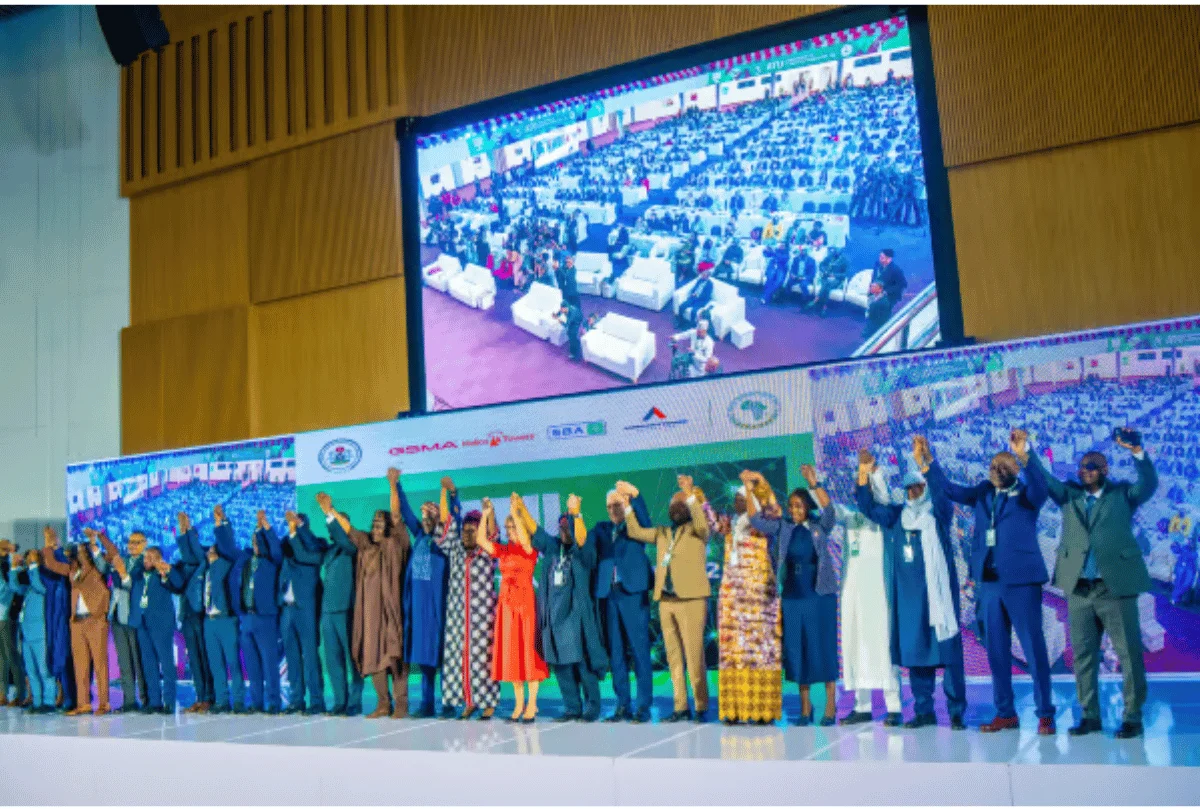
The GSMA has thrown its weight behind a new pan-African effort to build artificial intelligence systems that actually understand the continent’s languages. At the seventh Ordinary Session of the African Telecommunications Union Conference of Plenipotentiaries in Abuja, the GSMA voiced support for the Abuja Ministerial Declaration on Meaningful Connectivity for Africa, calling it an important milestone in strengthening the continent’s digital future through evidence-based policy, investment and regional collaboration.
What The Abuja Declaration Covers
The declaration commits African governments to policies that promote meaningful connectivity, digital inclusion, resilient digital infrastructure, technology-neutral regulation and locally relevant digital services, while pushing for closer collaboration between governments, industry and development partners to close the continent’s connectivity and usage gaps. It sets a policy tone that several of the initiatives announced at the conference, including the new language AI platform, are designed to support in practice.
Introducing ATLAS Umoja AI
Alongside the declaration, the GSMA joined Nigeria’s Ministry of Communications, Innovation and Digital Economy, Togo’s Ministry of Digital Economy and Transformation, Kenya’s Ministry of Information, Communications and the Digital Economy, Namibia’s Ministry of Information and Communication Technology, Benin’s Ministry of Digital Transformation and Innovation, along with Awarri, Zindi, Pawa AI and Mozisha to announce ATLAS Umoja AI, a new pan-African initiative focused on collaboration around African language AI. The platform is designed to complement national AI programmes by bringing governments, industry and researchers together to share expertise, datasets and best practice, to develop trusted, scalable AI that better reflects Africa’s languages, cultures and development priorities.
Why Language Representation Matters
Officials at the launch framed the initiative as a response to a real gap in how AI systems currently handle African languages and context. GSMA’s Africa lead argued that the continent’s AI future needs to reflect its own languages, communities and development priorities, and that building AI and digital services around the languages people actually speak addresses two of the biggest barriers to digital inclusion identified in GSMA’s own research. Zindi’s chief executive echoed that sentiment, describing the platform as an opportunity for local researchers, data scientists and developers to strengthen national AI capabilities so that African language AI is built by Africans for Africans.
A Wider Policy Push
The initiative also builds on the momentum of the recently established AI for Good Global Commission, with ministers from Nigeria, Namibia and Togo serving on that body. Beyond the launch itself, the GSMA used the conference to continue discussions with policymakers on future-ready regulatory frameworks covering satellite connectivity, spectrum policy and technology-neutral licensing, drawing on its own Satellite Regulatory Playbook to explore how modern regulation can attract investment and expand meaningful connectivity across the region.
Nigerian officials at the event called on other African Telecommunications Union member states to join the platform, arguing that the continent has a chance not just to adopt artificial intelligence but to help shape how it develops globally. With five governments already signed on alongside GSMA and a group of African AI companies, ATLAS Umoja AI positions itself as one of the more concrete outcomes to emerge from this year’s ATU conference in Abuja.