

Morocco has established its first ministry explicitly dedicated to artificial intelligence, appointing former banking executive and competition regulator Ahmed Rahhou to lead the department as the country pursues an ambitious plan to generate $10 billion in economic value from AI by 2030.
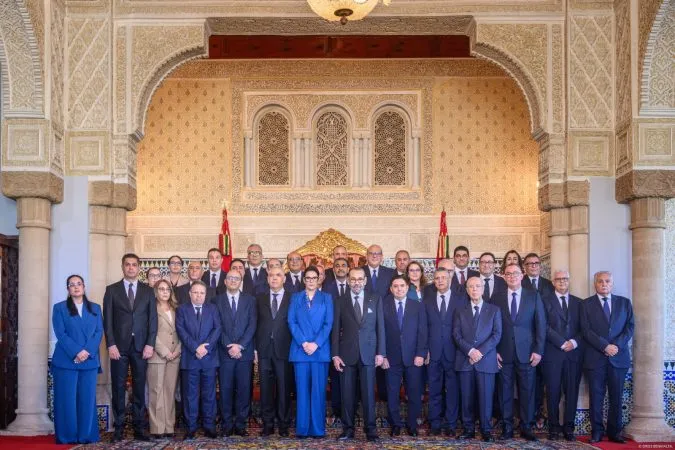
King Mohammed VI appointed Rahhou as Minister of Artificial Intelligence, Digital Transformation and Administration Reform on Friday, October 16, during the inauguration of a new government led by Prime Minister Fatima Ezzahra El Mansouri, according to an official government announcement.
The appointment marks the first time artificial intelligence has been explicitly included in the title of a full Moroccan government ministry, elevating the technology within the country’s administrative structure.
Rahhou takes over the digital transformation portfolio previously managed by Amal El Fallah Seghrouchni, whose administration developed much of Morocco’s existing national AI roadmap.
The restructuring comes as African governments increasingly seek to build domestic AI capabilities, attract technology investment and reduce dependence on foreign computing infrastructure.
Morocco’s $10 Billion AI Ambition
Morocco has set three major targets under its national AI roadmap, known as Morocco AI 2030: generate 100 billion Moroccan dirhams (approximately $10 billion) in additional economic value, create 50,000 direct and indirect jobs, and train and certify 200,000 people in AI-related skills by 2030.
The targets were outlined in September, when the government presented an implementation update on the strategy.
The plan prioritises digital sovereignty, innovation, economic competitiveness and the adoption of AI across public institutions and private businesses.
Rather than relying entirely on foreign technology providers, Morocco wants to develop more of the infrastructure and expertise needed to build and deploy AI systems domestically.
Its initiatives include investment in data centres, sovereign cloud infrastructure, research facilities and locally developed AI applications.
The government is also developing a national network of research and innovation centres known as the JAZARI Institutes. The network includes programmes focused on smart cities, education and industrial applications.
Other initiatives include a Data Factory for preparing datasets used in AI systems and a Software Factory designed to help government agencies share and reuse software components.
According to the Ministry of Digital Transition’s September roadmap update, Morocco is also working on national language models and AI-powered services for public administration.
These projects could create opportunities for domestic startups and researchers, particularly those developing applications suited to Morocco’s languages and local business needs.
However, the government’s $10 billion figure represents projected additional economic value, not funding already secured or committed to AI projects.
Who Is Ahmed Rahhou?
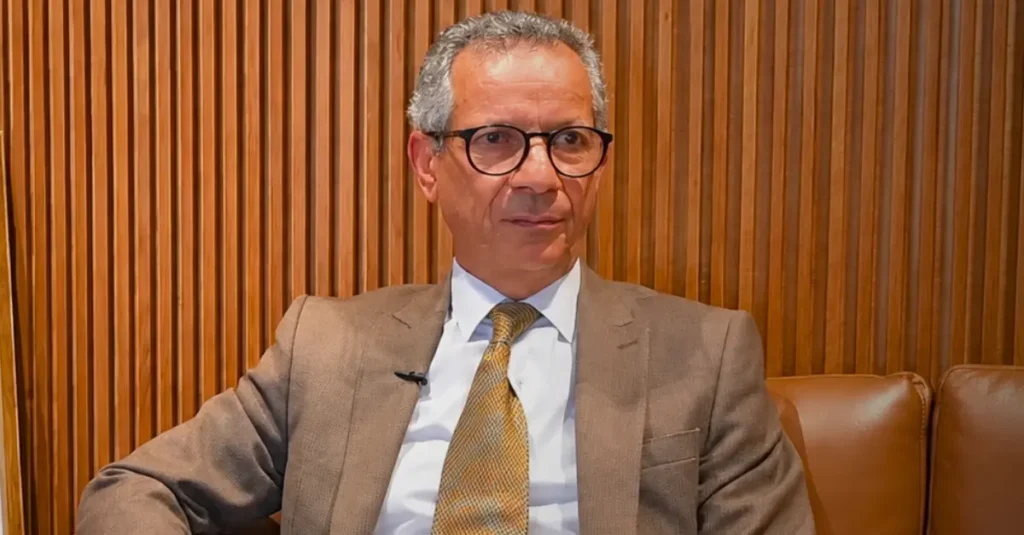
Rahhou brings experience from banking, technology management and economic regulation to Morocco’s new AI ministry.
Before his appointment, he served as president of the country’s Competition Council, a position he had held since 2021.
He previously led CIH Bank, where he oversaw digital transformation initiatives, and served as chief executive of industrial group Lesieur Cristal.
The 68-year-old engineer studied at France’s École Polytechnique and the National Higher School of Telecommunications. Earlier in his career, he worked in information technology at Royal Air Maroc.
According to Moroccan publication Le360, Rahhou also inherits work on a proposed legal framework for artificial intelligence.
His background in competition regulation could become particularly relevant as Morocco considers rules governing AI deployment, data protection and the growing influence of technology companies.
The government has not yet announced a timetable for introducing the proposed AI legislation.
What Morocco’s AI Ministry Means for Africa
Morocco’s decision highlights a shift in how African governments are approaching artificial intelligence.
Rather than treating AI solely as an emerging technology requiring regulation, Morocco is placing it within a broader economic development strategy covering infrastructure, employment, innovation and public services.
The approach also addresses challenges confronting AI companies across Africa, including limited access to affordable computing resources, shortages of specialised talent and dependence on technology developed outside the continent.
For countries such as Nigeria, which is developing its own national AI strategy through existing government institutions, Morocco’s restructuring offers a different model for coordinating AI policy.
However, establishing a dedicated ministry does not automatically guarantee faster innovation or stronger technology investment.
Much will depend on the government’s ability to finance infrastructure, support local businesses and translate its research programmes into commercially viable products.
Morocco has not disclosed a separate budget for the new ministry or announced additional AI investment commitments alongside Rahhou’s appointment.
The new minister will therefore inherit substantial ambitions but also the responsibility of delivering measurable results from programmes already underway.
With 2030 approaching, Morocco’s challenge is no longer simply establishing itself as a country with an AI strategy. It is demonstrating that government-backed infrastructure, research and skills programmes can create competitive technology businesses, jobs and economic growth.
The creation of a dedicated AI ministry places greater political responsibility behind that ambition, but its success will ultimately be measured by implementation rather than institutional restructuring.