

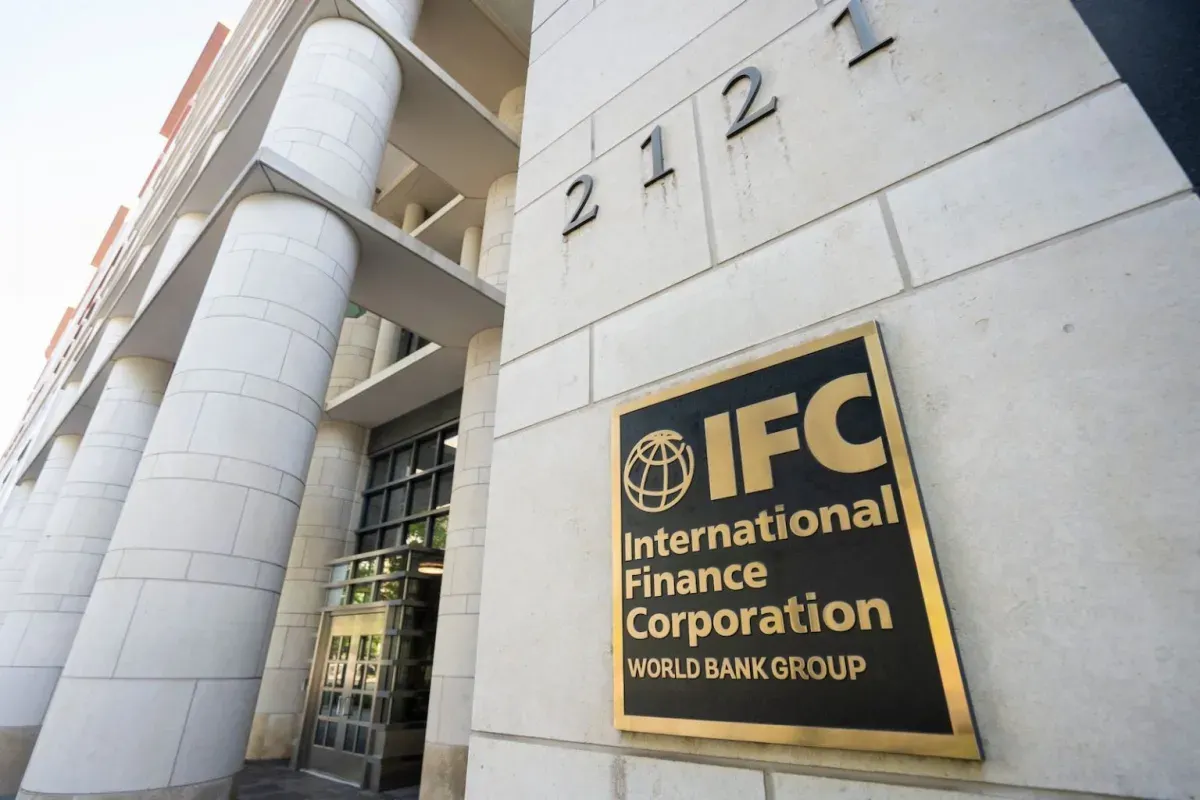
The International Finance Corporation (IFC) is considering a $7.5 million investment in a new African fintech lending fund that could raise as much as $100 million to finance digital lenders supporting small businesses and mobility entrepreneurs across the continent.
The proposed investment, disclosed on October 15, 2026, would support Cauris Finance’s Third Wave Fund, a private credit vehicle designed to provide financing to technology-enabled lenders serving underserved African markets.
According to the IFC’s official investment disclosure portal, the fund is targeting $75 million, with a maximum fundraising limit of $100 million.
IFC, the World Bank Group’s private-sector investment arm, proposes to provide a senior loan of up to $7.5 million, or 10% of the fund’s total size, whichever is lower.
The investment has not been approved, with the IFC’s board decision currently projected for November 30, 2026.
If approved, the financing could help Cauris attract additional investors and expand access to credit for African fintech companies that struggle to secure affordable long-term funding.
How the $100 Million African Fintech Lending Fund Will Work
The Third Wave Fund will focus on providing debt financing to fintech companies that extend credit to micro, small and medium-sized enterprises (MSMEs) and mobility entrepreneurs.
Unlike traditional venture capital investments, which typically involve purchasing ownership stakes in startups, the fund will provide loans to financial technology companies.
This structure allows eligible businesses to access capital without necessarily giving up equity, although they must repay the borrowed funds under agreed terms.
As Techsoma previously explained in its analysis of why African startups are choosing debt over equity, debt financing is increasingly becoming an option for established startups with predictable revenue and sustainable business models.
Under the proposed investment strategy, approximately 60% of the fund’s capital will go to fintech lenders serving small businesses, particularly those providing working capital to underserved entrepreneurs.
The remaining 40% will support mobility-focused fintech companies offering vehicle financing, including lease-to-own arrangements for drivers and gig-economy workers.
The fund plans to operate across East, West and Central Africa, targeting markets including Kenya, Ghana, Uganda, Côte d’Ivoire, Rwanda, Tanzania, Senegal and Cameroon.
Nigeria was not specifically named among the initial target markets in published reporting, although the fund’s broader regional mandate includes West Africa.
Cauris also expects more than 25% of its MSME-focused investments to support women-led enterprises.
IFC Proposes Five-Year Loan to Support African Fintechs
The proposed IFC financing would have a five-year term, including a grace period of up to 48 months, followed by a 12-month repayment period.
The fund’s financing structure is designed to attract investors with different risk preferences.
Approximately 60% of its capital would consist of senior debt, 30% mezzanine debt and 10% first-loss capital.
Senior lenders receive repayment priority, while the first-loss portion is designed to absorb initial losses before more senior investors are affected.
This layered structure could help attract institutional investors who would otherwise be reluctant to finance smaller African digital lenders directly.
According to Africa Private Equity News, the proposed financing is intended to support technology-enabled lenders serving small businesses and mobility entrepreneurs.
However, neither the $75 million fundraising target nor the $100 million maximum fund size represents capital already raised.
Why African Fintechs Are Turning to Debt Financing
African fintech companies have traditionally relied heavily on venture capital to finance expansion, develop products and enter new markets.
However, businesses offering lending services face a different financial challenge.
While equity funding can support technology development and operational growth, lending platforms also need substantial pools of capital to issue loans to customers.
For companies financing merchants, small businesses and commercial vehicle operators, access to predictable debt financing can be particularly important.
The proposed Cauris fund comes as investment activity across Africa’s startup ecosystem shows signs of recovery.
According to Techsoma’s report on African startup funding in the third quarter of 2026, African startups raised approximately $582.8 million during the quarter, representing a 70% increase compared with the same period in 2025, based on Disrupt Africa’s dataset.
However, much of the continent’s funding continues to be concentrated among a relatively small number of companies securing large investment rounds.
This has created opportunities for specialised private credit investors such as Cauris Finance, which focuses on providing capital to lenders serving underserved businesses.
The growing emphasis on financing small businesses is also attracting investment firms beyond traditional lenders.
In July, Techsoma reported that Renew Capital selected 15 African embedded finance startups for its venture programme, targeting companies developing financial products for small businesses across the continent.
The developments point to increasing investor interest in financial services that address working capital shortages rather than focusing exclusively on consumer payments.
How Cauris Finance Plans to Support Digital Lenders
Founded in 2021, Cauris Investment Management specialises in lending to technology-enabled financial institutions serving emerging markets.
Its investment approach focuses on productive-use financing, including inventory purchases, business expansion and vehicle ownership.
The company uses a proprietary technology platform called DeepDive to monitor lending portfolios and assess financial performance.
This approach is intended to help investors evaluate credit risk and track how financing is being used.
Access to reliable credit information is particularly important for lenders operating in African markets, where many small businesses lack traditional credit histories.
In Nigeria, startups are already building technology to address these gaps.
For example, Nigerian fintech CreditChek secured $600,000 to expand its credit data infrastructure across East Africa, offering tools that help lenders assess borrowers using banking data and financial information.
Although CreditChek is not identified as a beneficiary of the proposed Cauris fund, its expansion illustrates the growing demand for lending infrastructure across African markets.
For investment firms such as Cauris, better credit assessment and portfolio monitoring could make it easier to provide financing while managing the risks associated with lending to underserved businesses.
What the IFC Investment Could Mean for African Startups
The proposed $7.5 million investment reflects growing interest in financing African fintechs through structured lending rather than relying exclusively on venture capital.
For small businesses, the potential benefit is greater access to working capital through digital lenders.
For mobility entrepreneurs, additional financing could make it easier to acquire motorcycles, vehicles and other income-generating assets through structured repayment arrangements.
The initiative could also help fintech lenders expand their loan portfolios without repeatedly raising equity funding.
However, its eventual impact will depend on how much capital Cauris successfully raises, which lenders receive financing and the terms offered to end borrowers.
The IFC’s proposed participation could encourage other institutional investors to support the fund, but no final investment commitment has been announced.
With a projected board decision scheduled for November 30, the next milestone will be whether the IFC approves the financing and Cauris secures sufficient investor commitments to advance the fund’s lending strategy.