
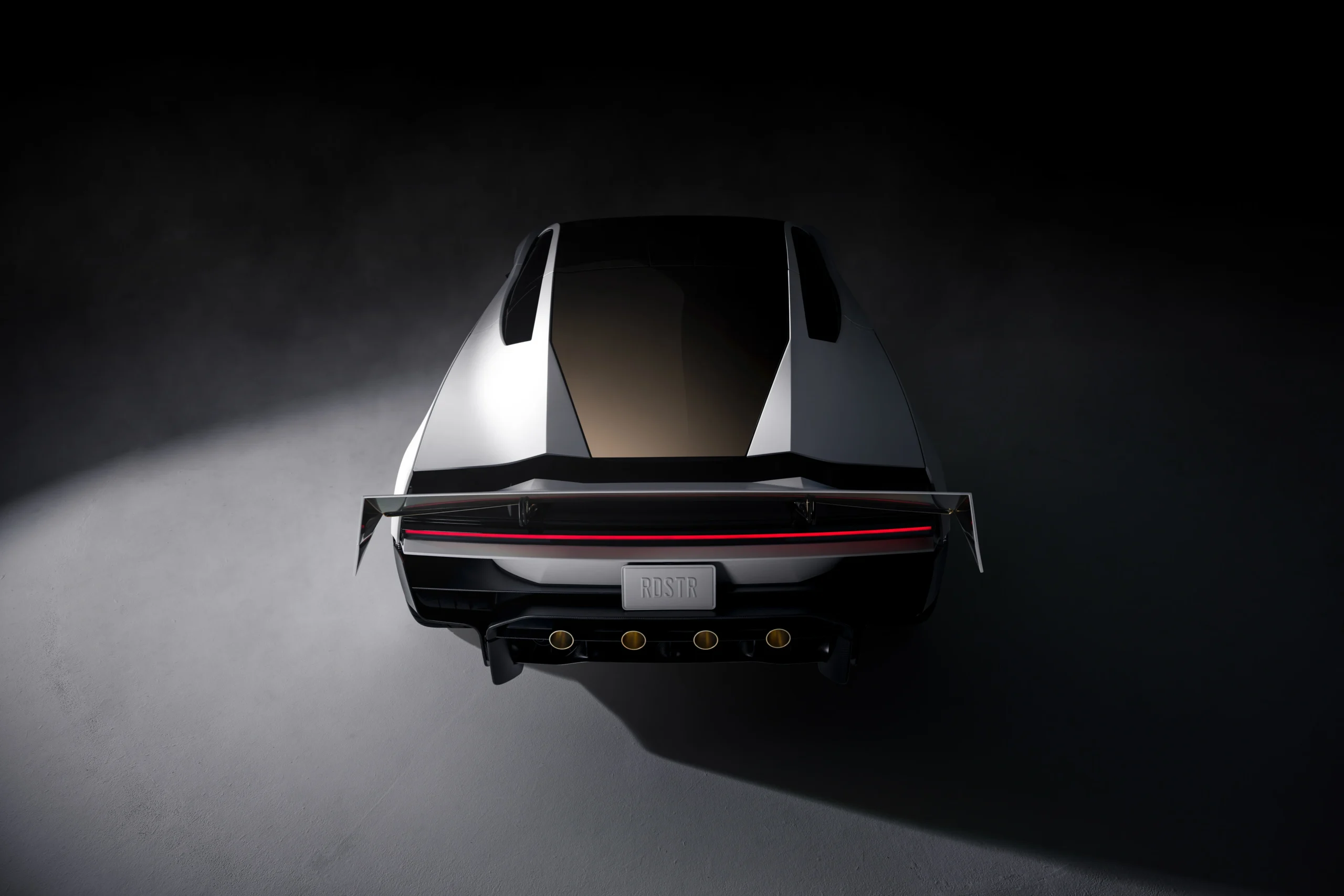
Tesla has finally shown its long-delayed next-generation Roadster, and it did so with a stunt that looked closer to a film set than a car launch. On Thursday night, the electric supercar drove up a giant curved ramp, flipped through the air and landed safely on the ground.
A Reveal Staged Like a Stunt Show
The event took place at a SpaceX test site in Texas. The Roadster accelerated up the ramp and stayed attached to it using a fan-based suction system, even as the car ended up completely upside down. It then left the ramp, flipped in the air and touched down upright.
Tesla also showed a second demonstration in which the car launched over a line of parked vehicles and a semi-truck before landing safely on the other side.
Musk reacted to the successful run with typical dry humour, and later declared that the future does have flying cars.
The SpaceX Connection
The Roadster is the product of a joint effort between Tesla and SpaceX engineers. The car uses compressed-air thrusters, also described as cold-gas thrusters, which release bursts of high-pressure air. These bursts help the car lift off the ground, adjust its position in flight and cushion its landing.
The idea is not new. In 2018, Musk said a SpaceX option package for the Roadster would include small rocket thrusters placed around the car. He suggested at the time that they could improve speed and braking and might even allow a Tesla to fly. This week’s demonstration is the first public attempt to show that vision working.
Speed Claims Still Need Proof
Tesla says the new Roadster can go from zero to 60 miles per hour in under one second, which would make it the quickest accelerating car in the world. Those figures come from the company itself. Independent testing has not confirmed them, and Tesla has left many specifications unannounced, including full details on pricing, range and battery.
Nine Years of Waiting
Musk first presented the Roadster concept in November 2017, and Tesla began taking deposits soon after. The company has missed every delivery target set since then. Musk now says the car will enter production in 2028.
Analysts expect it to be a high-end, low-volume model, which means it is unlikely to make a major financial difference to Tesla. Its value may lie in the attention it draws to the brand and to the shared technology between Tesla and SpaceX.
What Comes Next
For fans, Thursday’s show was proof that the car is more than a concept. For buyers and investors, the questions that matter remain unanswered. Tesla still has to publish final specifications, set a firm price and prove that the flying features can work safely in a car that people can actually buy.