

For most tech founders, the hardest money to raise is the first money. This stage, known as pre-seed funding, is when an idea transforms into a product. It is also when most promising startups die. In Francophone West Africa, this problem has been acute. Founders often run out of money just when they need to test their models and build their teams.
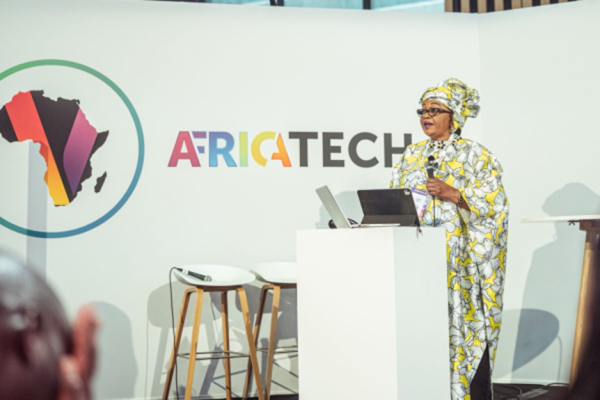
Senegal just announced a solution. The country launched the Catalyst DER/FJ fund, a $50 million vehicle dedicated to pre-seed and seed-stage startups. The government’s Rapid Entrepreneurship Delegation for Women and Youth (DER/FJ) announced VivaTech 2026 in Paris. This move directly targets the region’s most stubborn bottleneck: the lack of early capital.
A Clear Funding Gap
Seed-stage financing accounts for only 1.5% of total capital invested across Africa. In mature markets like the United States, that figure ranges from 4% to 6%. This difference means African founders often struggle to secure funding at the most fragile point of their journey.
Francophone West Africa faces an even steeper climb. The region captures just 10% to 15% of Africa’s total startup funding. Anglophone Africa, by comparison, takes in more than 55%. This imbalance has left a generation of entrepreneurs without the runway they need to build sustainable businesses.
The Catalyst Fund Takes a Different Approach
Senegal’s new fund does not just write cheques. It aims to attract private investment by using public capital as a catalyst. The model works like this: the government takes on early risk. This action encourages private investors to come in later. The goal is to create a sustainable pipeline of funding that outlasts the initial $50 million.
The fund focuses on the pre-seed and seed stages. These are the moments when founders validate their business models, assemble their teams, and build early products. Without capital at this stage, many ventures never reach the point where larger investors feel comfortable writing big cheques.
Senegal Positions Itself as a Regional Launchpad
Senegal’s strategy makes geographic sense. The country functions as a natural gateway to Francophone West Africa. Startups that succeed in Dakar can expand to Abidjan, Bamako, or Ouagadougou with fewer regulatory and cultural barriers. The shared CFA currency and harmonised legal frameworks across the region make this expansion possible.
The ecosystem in Dakar already shows promise. Senegal raised over $100 million in 2025, largely driven by Wave’s financing. The country has a well-established entrepreneurial community, strong institutional players, and an active diaspora connected to the US tech ecosystem. The government also backs this push with broader investments. Senegal set its 2026 Digital Ministry budget at CFA81.06 billion, a 38.7% increase from the previous year.
Five Startups Show What the Fund Supports
Following the fund’s launch, five Senegalese startups pitched to international investors in Paris. The companies included Andakia, Baamtu, SenITI, FAJMA, and Absar. These startups represent the kind of innovation the Catalyst DER/FJ fund aims to nurture. They offer a window into the pipeline of ventures waiting for early-stage capital.
The Region Still Faces Real Challenges
The $50 million commitment marks a significant step, but success depends on execution. Government-led venture funds must navigate the high-risk nature of early-stage investing. They also need to address broader ecosystem issues like talent shortages and infrastructure deficits.
The EY Innovation Observatory recently highlighted these structural weaknesses. Francophone Sub-Saharan Africa hosts more than 860 startups, but the region’s ecosystem remains fragmented. Only 38.2% of the population uses the internet on average. Ecosystem actors often operate in parallel rather than in coordination.
Despite these hurdles, Senegal’s move sends a clear signal. Institutional capital at the earliest stage is rare in Francophone West Africa. A $50 million public vehicle aimed squarely at pre-seed and seed-stage startups represents an intentional effort to build the part of the investment chain that private markets have consistently underfunded.
For founders across the region, this fund offers something precious: a chance to turn an idea into a company without running out of money first.