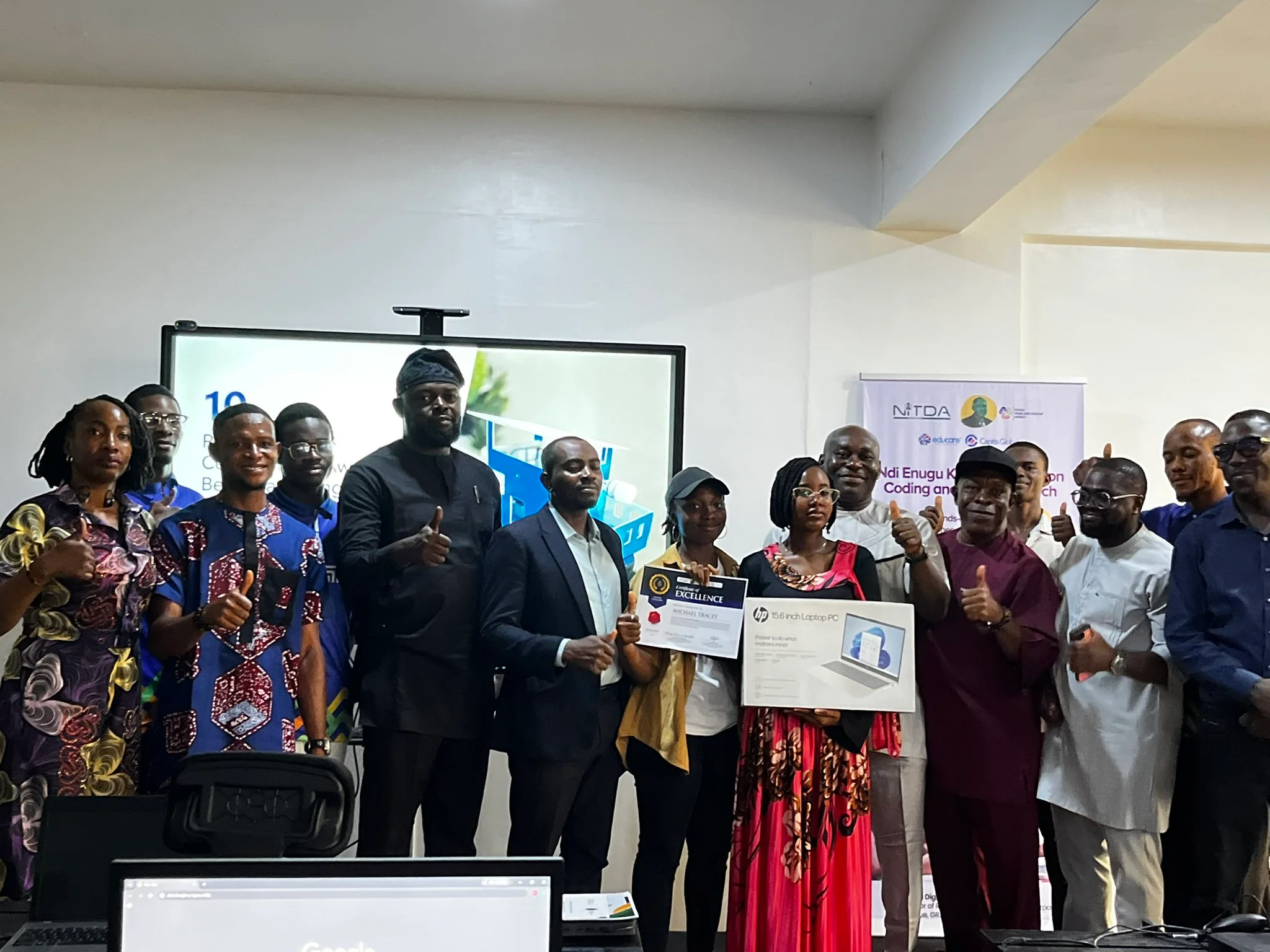
The National Information Technology Development Agency (NITDA) has concluded the Enugu Kids Coding and Emerging Technology Bootcamp, a training programme delivered in partnership with the Enugu MSME and Startup Agency to expose primary and secondary school pupils to practical digital skills.
What the Bootcamp Covered
Participants were introduced to Artificial Intelligence, Machine Learning, Computer Vision, Robotics and Automation, Drone Technology, Autonomous Systems and 3D Design, among other emerging technology areas. The programme was structured to give young Nigerians early, hands-on exposure to tools expected to shape the country’s digital economy in the coming years.
Speaking on behalf of NITDA’s South-East Zonal Director, Ikechukwu Eze urged the students to build on what they had learned and apply their new skills to solving real-world problems within their communities. NITDA described the bootcamp as part of a broader push to strengthen Nigeria’s digital talent pipeline by giving young people an early foundation in emerging technologies.
Part of a Wider Pattern in Enugu
This is not NITDA’s first youth-focused digital intervention in Enugu State this year. In February 2026, the agency empowered 50 young innovators with digital tools at the Enugu Tech Festival (ETF 2026), themed “Coal to Code: Energy in New Form.” That programme followed a broader training drive in which over 900 youths registered on NITDA’s digital learning platform, with 250 participants recognised for outstanding performance across areas including cybersecurity, data science, and digital literacy.
At that event, NITDA Director-General Kashifu Inuwa, represented by Dr Aristotle Onumo, credited Governor Peter Mbah’s backing of the agency’s South-East Zonal Office for its rapid growth, noting the office now ranks among NITDA’s top-performing zones nationwide. Officials also pointed to Enugu’s progress in embedding artificial intelligence into state security operations and digitising core government functions, framing the state’s trajectory as a shift from a resource-based economy built on coal to a knowledge-based one built on code.
Why It Matters
Taken together, these initiatives suggest a deliberate, multi-layered approach to building digital capacity in the South-East, one that runs from primary school pupils through to unemployed youths and adult professionals. For a state government that has publicly tied its economic identity to a transition from coal to technology, the steady drumbeat of coding bootcamps, digital tool donations, and technical training campuses signals an attempt to translate that ambition into a measurable talent pipeline. Whether the region can convert this early-stage exposure into sustained career pathways and local tech jobs will likely determine how much of that ambition materialises.