
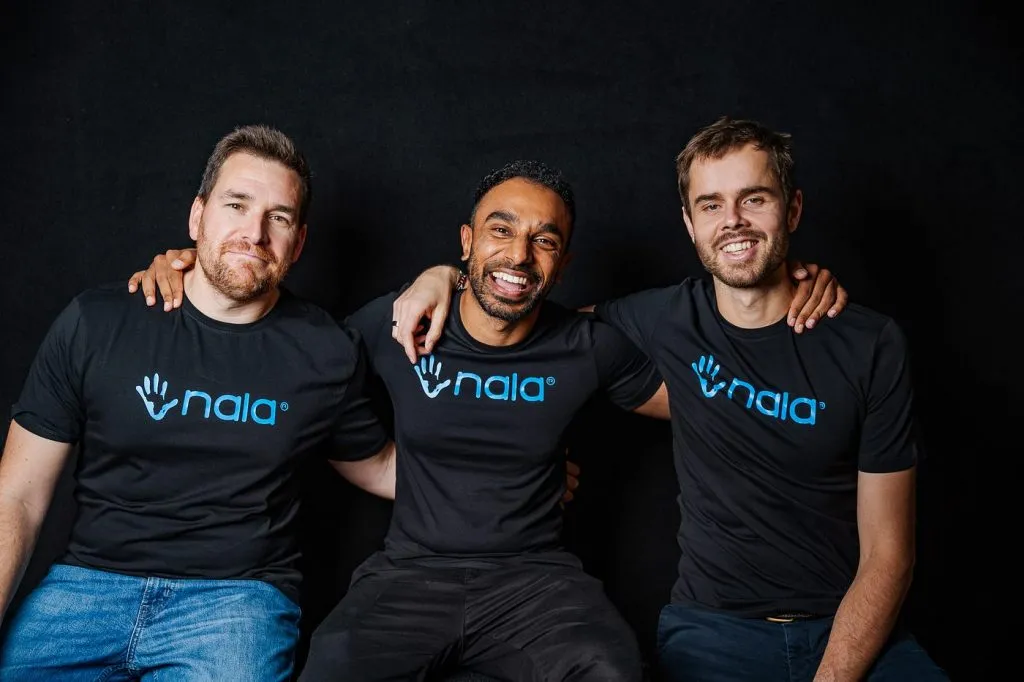
Tanzanian-founded fintech Nala just pulled off one of the most interesting funding moves in African tech this year. The company secured a credit facility worth up to $50 million from private credit firm Liquidity, channelled through Mars Growth Capital, a joint venture between Liquidity and Japan’s MUFG Bank. The deal starts with an initial $25 million tranche and can grow to $50 million or more as the company scales.
Instead of selling more shares to investors, Nala chose to borrow the money. That single decision says a lot about where African fintech is heading right now.
What Nala Actually Does
Founded in 2017, Nala began life as a simple remittance app that helped Africans living abroad send money home to family. Today, the company runs two products that work side by side. The consumer app serves users in the UK, the US, and the EU, who send money to 11 African countries. The second product, called Rafiki, is a business-to-business payments platform that launched in March 2024.
Rafiki gives global companies one API to move money across the US, UK, Europe, Asia, and Africa. Businesses can collect funds in US dollars and pay out in local currency or in stablecoins. Together, the two products connect more than 249 banks and 26 mobile money services across 16 countries.
Why Nala Needed the Money
Founder and CEO Benjamin Fernandes explained the problem in plain terms. “At some point, our business was more than doubling every other quarter,” he said. “We grew faster than we could handle pre-funding for single-direction payments”.
Pre-funding sounds technical, but the idea is simple. When a customer in London sends money to Nairobi, Nala must already hold cash in Kenya to pay the recipient quickly. The sender’s money only arrives in Nala’s UK account a day or two later. The faster the business grows, the more cash the company must keep parked in multiple countries at once. Without enough working capital, growth slows down or breaks completely.
The $50 million facility solves that problem directly. Nala will use the money to pre-fund transfers, open new payment corridors, and support larger enterprise clients running collections and payouts through its rails.
Debt Over Equity
For the first time in the continent’s funding history, debt overtook equity in capital volume during Q1 2026, accounting for more than $490 million of total startup financing. In May 2026 alone, nearly 80% of African startup funding came in the form of debt rather than equity.
Equity rounds dilute founders and existing investors. Debt does not. For fintechs that need large pools of working capital to fund transactions rather than to build new products, borrowing makes far more sense than giving up ownership. Nala still holds more than half the $40 million it raised in its 2024 Series A, so the new facility funds expansion rather than survival.
The Numbers Behind Nala’s Confidence
Nala shared profitability metrics that explain why a private credit firm felt comfortable writing this check. Its consumer business now runs at 64% gross profit margins, while Rafiki posts 80% gross profit margins.
The company also holds 17 regulatory approvals and licenses across multiple jurisdictions, which Fernandes describes as one of the most extensive compliance footprints for any fintech at Nala’s stage. That matters because cross-border money movement lives or dies on licensing, and stablecoin rails attract heavy regulatory attention everywhere they touch.
What Happens Next
Nala says several enterprise contracts will go live later this year, suggesting more corporate customers are lining up to use its settlement network. The company plans to deepen infrastructure investments over the next two years and add more partnerships with major banks and remittance providers.
For African businesses tired of slow, expensive cross-border payments, the timing could not be better. As more companies adopt stablecoin rails, the cost of moving dollars into and out of African markets keeps falling. Nala has positioned itself to ride that wave with serious capital behind it and a working model that already generates real profit.
The story here goes beyond one funding round. Nala shows what African fintech looks like when it stops chasing valuations and starts building infrastructure that pays for itself.