Lebara Nigeria has officially launched full nationwide commercial operations, entering a market of about 179.64 million active phone lines. The UK-based company operates as a Tier 5 Mobile Virtual Network Operator (MVNO), which means it does not own towers or spectrum. Instead, it rides on Airtel Nigeria’s network infrastructure to deliver voice and data services.
The launch drew attention from the highest levels of government. President Bola Tinubu welcomed the entry as a vote of confidence in Nigeria’s digital economy. Lebara’s arrival raises a practical question for every Nigerian phone user. Can this new operator genuinely compete with MTN and Airtel, two companies that together control nearly 86 percent of the market?
The answer depends on several factors that go beyond price tags. It hinges on whether Lebara can convert widespread frustration with the existing duopoly into real subscriber migration.
The Two Giants Control Almost Everything
MTN Nigeria holds 93.06 million subscribers, which translates to 51.87 percent of the market. Airtel follows with 60.89 million users and a 33.94 percent share. Globacom sits at 12.39 percent, while smaller operators collectively hold less than 5 percent.
This concentration means MTN and Airtel set the tone for pricing, service quality, and customer experience across the country. Any new entrant must either undercut them on price, outperform them on service, or find a niche they have ignored.
Lebara has chosen to do all three at once. It promises affordable pricing, transparent billing, and a special focus on Nigerians in the diaspora. The company also plans to add fintech services like microloans and device financing.
Why Nigerian Subscribers Are Frustrated Right Now
Nigerian telecom subscribers have genuine grievances. Data depletion tops the list. Many users report that bundles they expect to last a month vanish within days. One subscriber complained publicly that a weekly data plan finished in less than 48 hours.
MTN held a public hearing in June 2026 called “Data on Trial” to address these complaints. CEO Karl Toriola attributed rapid data consumption to modern digital habits such as video streaming, cloud backups, and background app activity. The company also disclosed that its Data Analyser Portal underwent independent validation by KPMG and review by the NCC.
Consumers remain sceptical. The perception that data disappears faster than it should has become one of the most persistent grievances in Nigerian telecoms.
Price increases have made things worse. Airtel raised its data prices in early 2025. The cheapest monthly plan moved from 1.2GB for N1,000 to 2GB for N1,500. A 10GB monthly plan now costs N4,000, up from 6GB at N2,500. MTN followed with similar hikes. The NCC approved tariff adjustments of up to 50 percent to help operators cope with rising operational costs.
Subscribers now pay more but report little improvement in service quality. Dropped calls, slow internet speeds, and failed transactions remain common complaints reported to the NCC.
Lebara’s Minutes-Based Model Targets a Specific Pain Point
Lebara’s most distinctive feature is how it sells voice services. Instead of the familiar airtime deduction model, Lebara sells discrete prepaid minutes. If you buy 100 minutes and your call lasts 30 seconds, you still have 99 minutes and 30 seconds left. No rounding up, no hidden charges, no surprise depletion.
This model directly addresses a trust deficit in Nigeria’s prepaid market. Many subscribers believe airtime disappears unpredictably. Lebara’s approach gives users a clear count of what remains, which removes the guesswork.
Data bundles follow a similar logic. Lebara sells fixed volumes for set periods, giving subscribers a clear sense of exactly what they are paying for.
The question is whether this transparency alone can pull users away from MTN and Airtel. Nigerian subscribers have shown they will switch networks when the value proposition is strong enough. Number portability data shows limited but steady movement between networks, with MTN attracting the largest share of incoming ported lines.
Airtel’s Network Reach Determines Lebara’s Coverage
Lebara does not build its own towers. It relies entirely on Airtel’s infrastructure. This means Lebara’s coverage is exactly as good, or as bad, as Airtel’s coverage in any given area.
Airtel has invested heavily in expanding its network. The company surpassed 17,000 cell sites as of August 2026 and now reaches all 774 Local Government Areas in Nigeria. Nearly 99 percent of Airtel’s sites are 4G-enabled.
This coverage gives Lebara a nationwide footprint from day one. However, it also means Lebara cannot offer service in areas where Airtel has no presence. Industry stakeholders have clarified that MVNOs cannot extend network coverage to areas lacking telecom infrastructure.
For subscribers in rural communities with weak Airtel signals, Lebara offers no improvement over what Airtel already provides. The company’s coverage promise is essentially an Airtel coverage promise with a different brand name.
MTN Still Leads in Rural Performance
MTN has expanded its network to 93.7 percent of Nigeria’s population as of 2025. The company has also deployed Huawei’s RuralCow solution, an all-in-one mobile base station that provides coverage in remote areas without fibre or microwave links.
Rural internet speeds on MTN average 15.8 Mbps, which actually outperforms Glo’s urban performance in some cases. This gives MTN a significant advantage in rural and semi-urban areas where Airtel’s coverage may be weaker.
Lebara cannot match this level of rural reach because it does not control its own infrastructure. For subscribers in areas where MTN has stronger coverage than Airtel, switching to Lebara would mean accepting worse network quality in exchange for potentially better pricing or billing transparency.
The Diaspora Angle Could Be Lebara’s Strongest Card
Lebara built its global business by serving migrant communities. The company started in London in 2001 to help migrants stay connected to families abroad through affordable international calls.
Nigeria has a large diaspora population. Many Nigerians living abroad send money home, make international calls, and need reliable roaming options when they visit. Lebara’s global footprint across nine countries positions it to serve this market better than MTN or Airtel can.
CEO Teniola Stuffman has said the company wants to position itself as a bridge between Nigerians at home and abroad. The partnership with Airtel allows Lebara to tap into cross-border trade flows and roaming opportunities.
This diaspora focus gives Lebara a niche that the big two have not prioritised. MTN and Airtel focus primarily on domestic subscribers. A company that makes international connectivity seamless and affordable for Nigerians who travel or live abroad could build a loyal customer base that the giants struggle to serve.
Ease of Activation Appeals to Younger Users
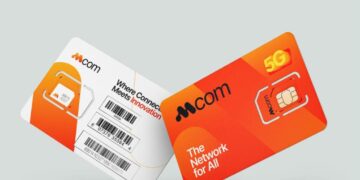
Lebara offers both physical SIM cards and eSIMs. Customers can activate a line through the My Lebara app without visiting a store. The company also partnered with Slot Systems, a major electronics retailer, to distribute SIM cards across its nationwide network of stores.
This digital-first approach appeals to younger Nigerians who are comfortable managing their telecom services through apps. MTN and Airtel both have apps, but their core customer service still relies heavily on physical locations and USSD codes.
Lebara’s app-driven model reduces the friction of switching. A user can download the app, activate an eSIM, and start using the service within minutes. That convenience matters in a market where queuing at a customer service centre is a common frustration.
The Fintech Plan Adds a Second Revenue Stream
Lebara plans to integrate financial services into its offering. These include microloans, device financing, and internet hubs powered by Lebara.
This strategy mirrors what other telecom operators have done globally. Safaricom’s M-Pesa in Kenya became a dominant mobile money platform. If Lebara can successfully bundle telecom services with financial products, it creates stickiness that pure connectivity cannot match.
MTN and Airtel already offer mobile money services in Nigeria, but their adoption has been slower than expected. Lebara’s smaller size and focused approach could allow it to move faster in specific segments like device financing for students or microloans for small business owners.
Dominance Is Unlikely, But Disruption Is Possible
Lebara will not dominate Nigeria’s telecom market in the near term. The numbers simply do not support that outcome. MTN and Airtel have decades of infrastructure investment, millions of subscribers, and deep relationships with regulators and distributors.
However, Lebara does not need to dominate to succeed. The company can build a sustainable business by capturing a small but loyal share of subscribers who prioritise transparent billing, affordable international calls, and digital-first service.
The Nigerian market is nearing saturation on subscriber numbers. Growth now comes from heavier data usage by existing customers rather than new connections. In this environment, an operator that convinces users to switch rather than adding first-time subscribers can still grow.
Lebara’s minutes-based model and transparent data promises give it a clear differentiator. If the company executes well on customer service and keeps its pricing competitive, it can carve out a meaningful presence.
What This Means for MTN and Airtel
The entry of a well-funded international MVNO puts pressure on MTN and Airtel to improve. When a new competitor offers clearer billing and more predictable pricing, the giants cannot ignore the comparison.
MTN’s “Data on Trial” hearing and its new Data Analyser Portal show that the company is already responding to consumer pressure. Airtel has expanded its network to reach more rural communities. These moves benefit all subscribers, whether they switch to Lebara or not.
Lebara’s arrival signals that the Nigerian telecom market is open to new models. The NCC’s decision to license 41 MVNOs under the 2022 framework reflects a policy shift toward more competition. Lebara is one of the first to launch, but others will follow.
For Nigerian subscribers, the most important outcome is not whether Lebara becomes the biggest network. It is whether the company’s presence forces all operators to offer better value, clearer billing, and more reliable service. That competition is already beginning, and subscribers stand to gain regardless of which network they choose.