
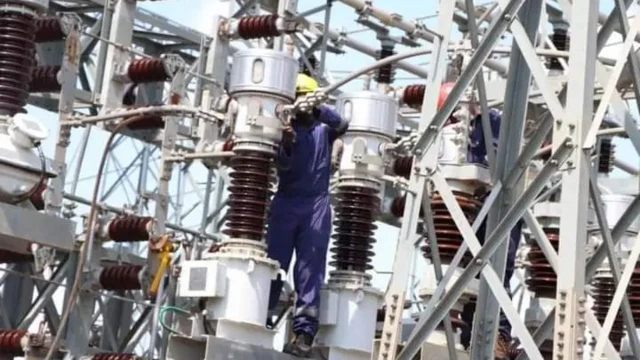
For decades, Nigeria has struggled with unreliable electricity. The national grid routinely collapses, businesses rely heavily on costly diesel generators, and households face unpredictable blackouts. This persistent power problem has quietly become one of the biggest barriers to the country’s economic productivity.
A System That Can’t Meet Demand
Nigeria has an installed electricity generation capacity of over 13,000 megawatts. In reality, less than 4,000 megawatts are consistently available to a population of more than 200 million. Power transmission losses, ageing infrastructure, and gas supply issues keep generation far below capacity.
Frequent grid collapses deepen the crisis. In 2024 alone, the grid went down multiple times, leaving entire regions without power for hours or days. While urban centres have slightly more stability, rural communities face prolonged outages, further widening the development gap.
The Cost to Businesses
The economic impact is profound. Companies spend billions of naira annually to self-generate power. Manufacturing plants, retail outlets, fintech companies, and data centres are forced to install backup generators or solar systems to stay operational.
For small businesses, these costs are crippling. A recent survey by the Manufacturers Association of Nigeria found that power generation accounts for up to 40 percent of production costs in some industries. Many firms operate below capacity or reduce work hours because they cannot afford uninterrupted power.
A Daily Strain on Workers
Power cuts also affect labour productivity. Office workers often endure long hours without air conditioning, internet downtime, and equipment failures. Remote workers face even greater challenges. With poor access to reliable electricity, the promise of a digital economy remains out of reach for many Nigerians.
The education sector is not spared. Schools and universities struggle to provide consistent access to technology. Students preparing for exams or learning online often rely on an irregular power supply, which can impact their learning outcomes.
The Digital Economy Feels the Pressure
Nigeria has ambitions to become a leading digital economy in Africa. But data centres, cloud platforms, and startups depend on stable power to scale. Intermittent electricity raises operational costs and disrupts service delivery. Many companies either relocate critical operations abroad or invest heavily in backup power, a cost disadvantage that slows innovation.
Fintech companies, for example, rely on uninterrupted connectivity. Every outage risks transaction failures, customer dissatisfaction, and revenue loss. For startups trying to attract investors, such operational inefficiencies can make or break growth.
The Broader Economic Consequences
The productivity loss tied to power shortages is estimated in billions of dollars annually. Reduced output, lower competitiveness, and slower innovation limit Nigeria’s ability to attract investment and create jobs. In rural areas, where electrification is lowest, agriculture and small-scale manufacturing struggle to modernise.
Building a Reliable Energy Future
Addressing Nigeria’s power crisis requires both structural and strategic action:
-
Expanding and modernising grid infrastructure to reduce transmission losses.
-
Investing in decentralised renewable energy solutions, particularly solar mini-grids.
-
Creating a transparent and accountable regulatory framework for power generation and distribution.
-
Encouraging private investment through clear pricing and policy stability.
-
Improving gas supply to power stations and accelerating alternative energy adoption.
Nigeria’s power problem is a direct brake on national productivity, economic growth, and digital progress. Without reliable electricity, even the most promising sectors remain constrained. Fixing power will unlock the country’s full economic potential.