

Facebook Marketplace has quietly become one of the biggest shopping destinations on the internet. More than 1.1 billion people use it every month. Over 430 million items get listed monthly. For many younger users, it is the main reason they still open the Facebook app at all.
But until now, selling on Marketplace meant wading through a clunky experience inside a social media app. You had to dig through messages, track sales manually, and hope buyers were real people.
Meta just changed that with two big moves.
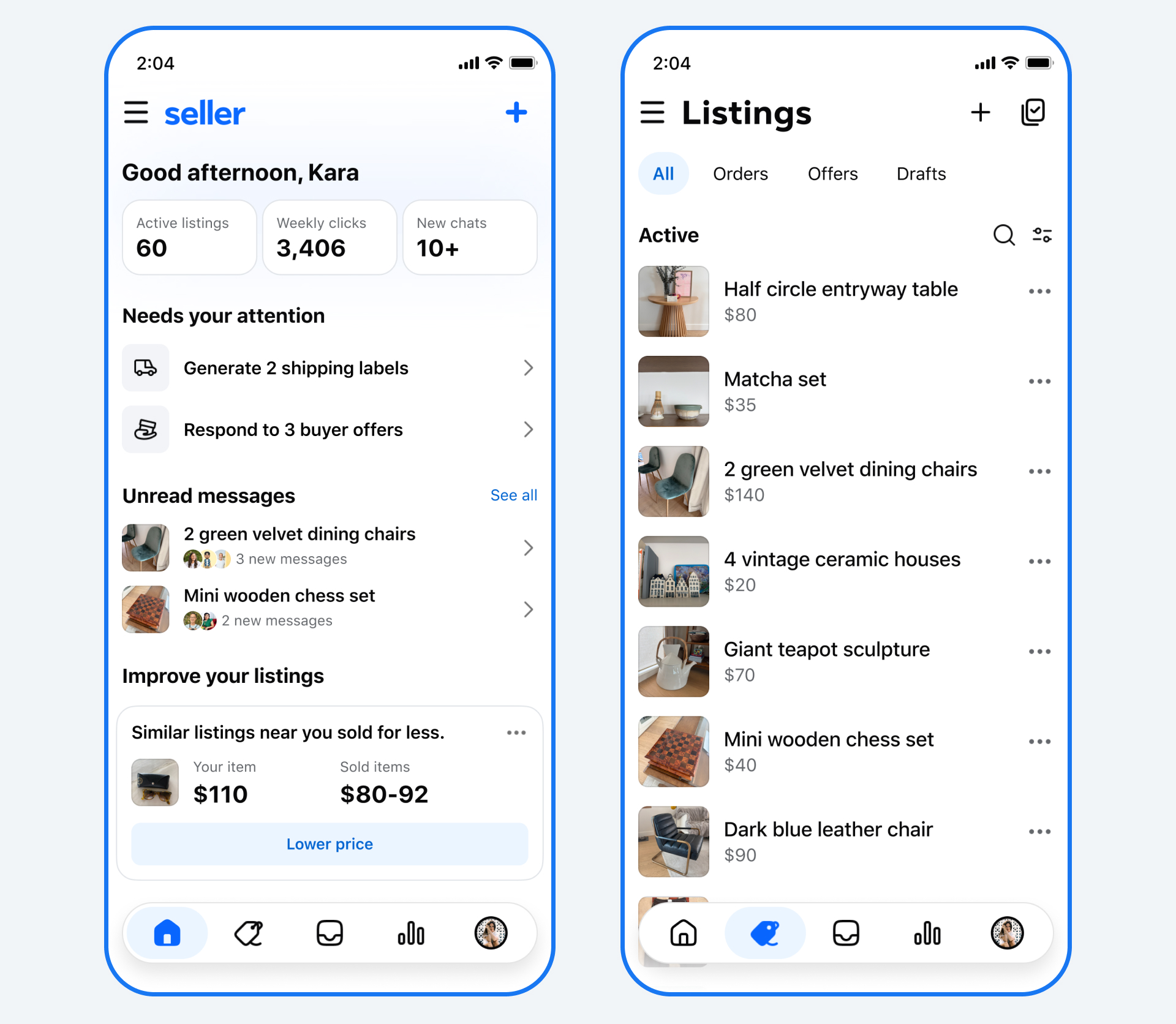
The company launched a standalone app called Seller for Marketplace power users. At the same time, it introduced Facebook Verified, a free verification badge that lets users prove they are real people by recording a short video selfie.
Facebook is no longer treating Marketplace as a side feature. It is building a dedicated commerce ecosystem that could reshape online selling as we know it.

Marketplace Keeps Young People on Facebook
About one in three young adults who use Facebook daily also use Marketplace. It means Marketplace is not just a feature. It is a lifeline for Facebook’s future.
Meta knows this. The company has been investing heavily in Marketplace over the past year. It added AI tools that auto-write listings and suggest prices. It introduced collaborative features that let friends join shopping conversations. Now it is giving sellers their own dedicated workspace.
Meta will do whatever it takes to keep Marketplace thriving because Marketplace keeps Facebook relevant.\
Seller App Turns Casual Sellers into Serious Businesses
The new Seller app is deceptively simple. You log in with your Facebook account. Your existing listings, messages, and sales history sync automatically. From there, you get a clean dashboard with an overview of your activity, task reminders, and data insights.
But the real power lies in what the app enables.
For someone listing one or two items a month, the main Facebook app works fine. For someone listing thirty items a week, the difference is enormous. The Seller app provides a unified inbox, bulk-listing tools, and performance tracking. It turns a chaotic process into an organised workflow.
This matters because it lowers the barrier for casual sellers to become serious resellers. Previously, when sellers outgrew Marketplace’s basic tools, they graduated to platforms like eBay. Now they can stay inside Meta’s ecosystem. They can scale their operation without learning a new platform.
Meta is essentially creating an on-ramp for small businesses. The company does not take a cut of sales. It makes money from advertisements instead. This fee-free model is incredibly attractive for sellers looking to preserve margins.
Free Verification Fixes a Trust Problem
Trust is the currency of online marketplaces. Buyers need to know sellers are real. Sellers need to know buyers are real. Scams and fake profiles undermine everything.
Facebook Verified addresses this problem directly.
The system is simple. You record a short video selfie. Facebook checks it against your existing profile photos to confirm a match. The process takes a few minutes and costs nothing. Once verified, you get a gray badge that appears on your profile, in Marketplace listings, in Groups, and on Dating.
This is different from Meta Verified, the paid subscription that gives you a blue badge. Facebook Verified is free and open to anyone who meets basic trust and safety standards.
AI has made it incredibly easy to generate fake profiles and automated messages. The verification badge gives users a quick visual signal that they are dealing with a real person.
Meta Is Building an App Empire
In May, Meta launched Forum, a standalone app for Facebook Groups that functions like Reddit. The company also released Instants, an app for sharing disappearing photos. It revamped Creator Studio as an AI companion app for content creators.
Beyond standalone apps, Meta is also embedding new AI capabilities directly into its core messaging apps. The company’s new Business Agent for WhatsApp, Instagram, and Messenger is a clear example of this strategy in action. The AI tool handles customer service, product recommendations, and sales inquiries automatically.”
Meta CEO Mark Zuckerberg reportedly told employees the company could build 50 new apps. The goal is to create dedicated experiences for Facebook’s most engaged communities.
The main Facebook app is cluttered. It tries to be everything to everyone. By spinning off popular features into standalone apps, Meta can serve power users better without overwhelming casual users.
The Seller app is a perfect example. Marketplace sellers need different tools than people scrolling their news feed. Giving them a dedicated app improves their experience while keeping the main Facebook app clean.
This Puts Pressure on eBay and Other Rivals
Wall Street noticed that eBay shares fell nearly 4% after Meta announced the Seller app.
The concern is justified. eBay charges sellers around 13% to 15% in final value fees. Facebook charges nothing. That is a massive difference for high-volume sellers.
eBay also requires manual input for item specifics and category filters. Seller uses AI to auto-categorize listings, generate titles, and suggest prices from uploaded photos. The time savings are substantial.
For years, the seller progression was simple. Start on Facebook Marketplace. Graduate to eBay when you need better tools. That progression now breaks. The Seller app gives power sellers the tools they need without the fees they hate.
Meta is not trying to beat eBay at its own game. It is changing the game entirely. It offers a free, AI-powered platform that integrates with the world’s largest social network. That is a compelling package for any seller.
AI Makes Selling Effortless
Underlying all these updates is artificial intelligence.
Seller includes AI features that scan photos and automatically fill out listings. The system writes titles, suggests prices, and categorizes items. Sellers can list products in seconds instead of minutes.
Facebook also plans to add more AI capabilities. The company wants to automate tasks like writing item descriptions and searching groups to answer buyer questions.
The Seller app handles the behind-the-scenes work. The company is also building voice technology that could change how buyers and sellers interact altogether. Meta acquired Play AI last year, a startup that creates ultra-realistic synthetic voices for real-time conversations. That technology now powers features like AI-powered voice translations on Instagram and Facebook, as well as natural voice conversations with Meta AI that you can interrupt or switch languages mid-sentence.
This is not about replacing humans. It is about removing friction. The tedious parts of selling, like writing descriptions and researching prices, become automated. Sellers can focus on what matters, sourcing products and connecting with buyers.
Tom Alison, head of Facebook, put it this way. The goal is to make selling less of a hassle without replacing the human elements that make Marketplace special. People go to Marketplace to connect with other people, not just to buy products.
The Future of Online Selling
Meta is positioning Facebook Marketplace as the default place to sell stuff online.
More than 1.1 billion monthly users dwarfs any competitor. The platform has massive reach. Now it has dedicated tools to match.
The free verification system addresses trust concerns that have long plagued online marketplaces. The Seller app provides professional-grade tools at no cost. AI removes the friction from listing items.
Together, these updates create a powerful ecosystem. Buyers get verification that sellers are real. Sellers get tools to manage their business efficiently. Meta gets data and advertising revenue.
Marketplace already keeps young people on Facebook. Now it could become the backbone of a new commerce empire. The company is not just competing with eBay or Craigslist. It is building the infrastructure for how people will buy and sell in the future.
For sellers, Facebook just made your life easier. For buyers, the message is equally clear. You can trust who you are dealing with. And for Meta, the opportunity is enormous. Marketplace is no longer a feature. It is the future.