

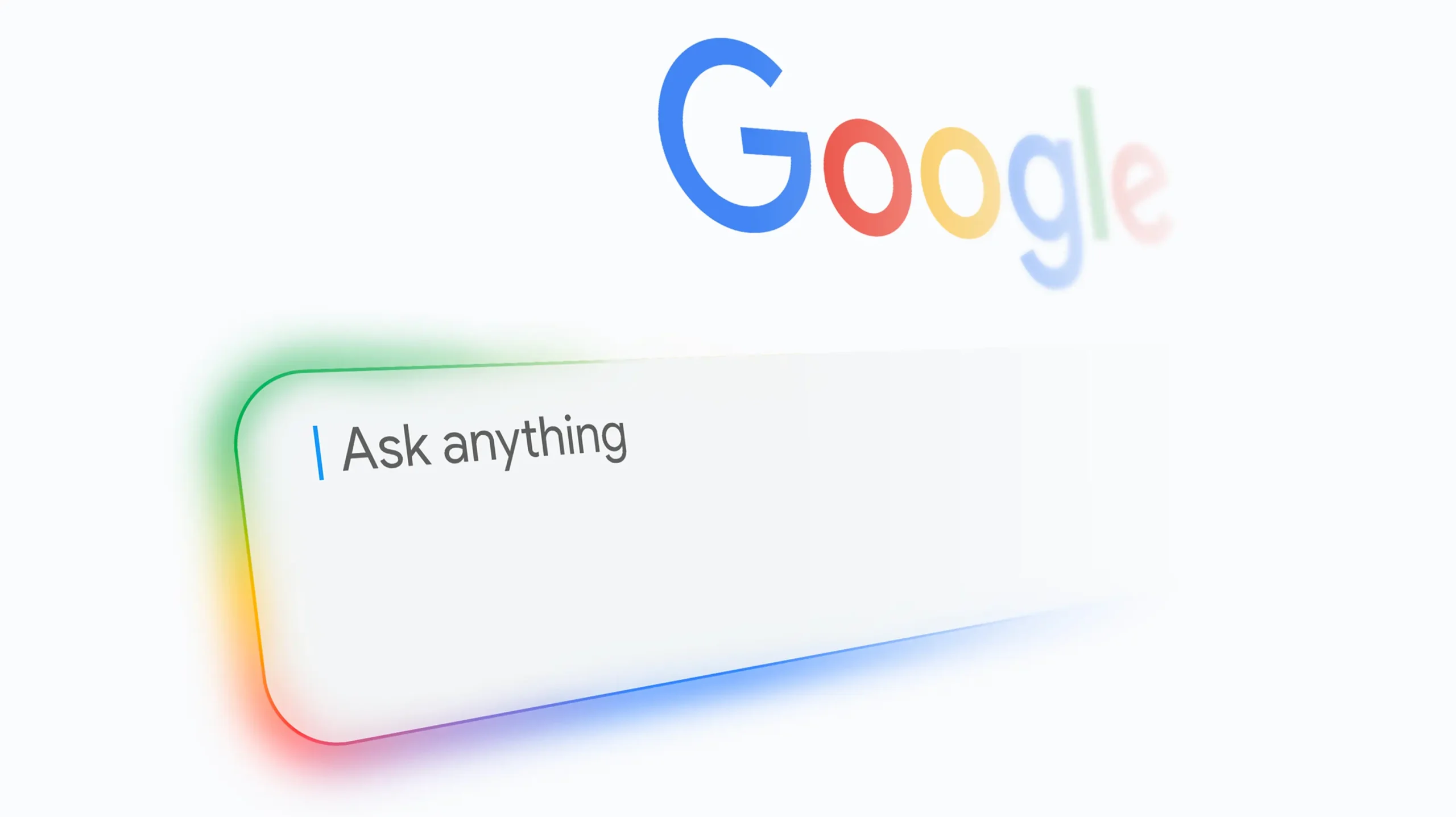
The blank white rectangle with a blinking cursor has been the entry point to the internet for nearly three decades. You type a few keywords. Google returns ten blue links. You click one. That is the deal most of the world has understood since 1998. At its annual I/O developer conference on May 19, 2026, Google officially ended that arrangement.
In its place, Google introduced what it calls the “intelligent search box”, powered by Gemini 3.5 Flash, along with AI agents that monitor the web around the clock, generative interfaces that build interactive tools on the fly, and a persistent background agent called Gemini Spark. Google’s Head of Search, Liz Reid, described the redesign as the biggest upgrade to the search box in over 25 years.
The Search Box You Knew Is Gone
The old search box forced you to compress your thoughts into a few words. The new intelligent search box does the opposite. It expands dynamically to accept long, natural sentences, the same way you would ask a question to another person. You no longer need to guess the right keywords.
Beyond text, the redesigned box now accepts images, uploaded files, videos, and even open Chrome tabs as inputs. An AI-powered suggestion system goes beyond the old autocomplete feature. Instead of just finishing your sentence, it helps you build more precise, complex questions before you even hit search.
The new search box began rolling out on May 20, 2026, in every country and language where AI Mode already exists. Google confirms links still appear in results. However, links now compete with AI-generated summaries, interactive tools, and agent-driven experiences for your attention.
AI Agents That Work While You Sleep
The most significant new feature is what Google calls “information agents.” These are personal AI assistants you create inside Google Search. Once set up, they run continuously in the background, 24 hours a day, seven days a week. They scan blogs, news sites, social posts, financial data, and sports results and alert you the moment something relevant changes.
“You could send an alert to track market movements in a particular sector with very specific parameters, and the agent will map out a monitoring plan for you, including the tools and the data it needs to access — like our real-time finance data. It will then keep track of those changes and let you know when the conditions are met, and provide a synthesized update.”
Liz Reid, Head of Search, Google — Press Briefing, May 19, 2026
This concept builds directly on Google Alerts, the change-detection service Google launched in 2003. The old Alerts system sent you an email when a new web page matched your keyword. The new information agents do something far more capable. They do not just spot changes; they reason about them. They compare information across multiple sources, explain what a change means in context, and surface only the insights that matter to your specific goal.
Search Now Builds Tools Specifically for You
Google also introduced what it calls “generative UI.” When you ask a question, Search does not only return text. It builds a custom interactive experience tailored to that exact query, with dynamic layouts, visual charts, simulations, and widgets that appear directly inside the results page.
Ask about stock performance across a sector, and Search builds a live comparison tool rather than pointing you to five separate websites. Ask about a travel destination, and it assembles a visual itinerary builder. The underlying technology uses Gemini 3.5 Flash and Google’s new agentic development platform, called Antigravity, to generate these experiences on the spot.
Generative UI will be free for all Google users. That is a deliberate choice. Google wants its broad audience to experience the new format immediately, while it reserves the most advanced agentic features, the information agents and mini-app creation tools, for paying subscribers first.
A Better Experience, With Real Trade-offs for the Web
For everyday users, this overhaul delivers genuine benefits. You get faster answers. You get tools built for your exact question. You get agents that track what matters to you without manual effort. Google’s own data shows that when users engage with AI-powered search features, they search more, not less. The platform becomes more useful, which drives more usage.
However, the shift carries a real cost for the broader web ecosystem. Publishers and content creators have already seen referral traffic from Google decline as AI Overviews expanded. The new generative UI, information agents, and mini-app tools accelerate that trend further. If Google’s AI synthesises information and builds interactive tools directly inside Search, fewer users click through to the original websites. The Next Web and TechCrunch both noted this tension in their I/O 2026 coverage, and the European Union is already examining the implications.
Google acknowledged the concern. Sundar Pichai stated the company intends to bring powerful AI to as many people as possible at the lowest possible cost, emphasising efficiency as a core principle behind Gemini 3.5 Flash. The company also confirmed that links remain in results. The web is not disappearing from Search. But the role links play is clearly shrinking relative to AI-generated content.
AI Watermarking Comes to Search and Chrome
Google also announced at I/O 2026 that two content verification tools, SynthID and C2PA Content Credentials, are rolling out to Search and Chrome. SynthID is Google’s digital watermarking system for AI-generated content. It has now stamped over 100 billion images, videos, and audio files. C2PA Content Credentials embed the full origin and edit history directly into a file.
Together, these tools help users identify AI-generated content and verify where it came from. Google noted that OpenAI, Kakao, and ElevenLabs are adopting SynthID watermarks in their own AI-generated material. As AI-generated content becomes more common in search results, these verification tools address a real concern about authenticity at scale.