
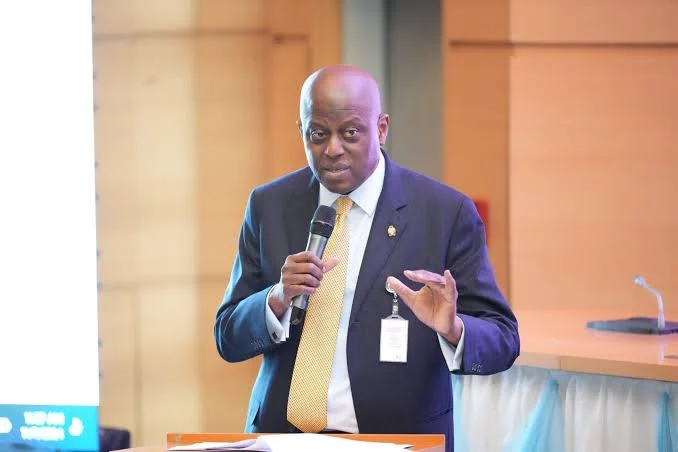
CBN Governor Olayemi Cardoso disclosed the plan following discussions with Pan Gongsheng, governor of the People’s Bank of China, during the 2026 Annual Meetings of the International Monetary Fund (IMF) and World Bank Group in Bangkok, Thailand.
The discussions covered payment settlement systems, financial technology, trade finance and cooperation between financial institutions in both countries.
Cardoso said Nigeria would pursue more practical arrangements during an upcoming visit to Beijing, where officials are expected to build on the discussions.
“We intend to build on these discussions during our forthcoming visit to Beijing, with an emphasis on practical arrangements to facilitate cross-border payments, support trade and investment flows, and strengthen financial intermediation between our two economies,” Cardoso said in his remarks following the meetings.
The CBN has not announced a formal payment agreement, implementation timeline or launch date for any new settlement infrastructure.
Why Nigeria Wants Better Payment Links With China
China is a major source of imported goods for Nigerian businesses, supplying products ranging from electronics and industrial machinery to manufacturing equipment and consumer goods.
However, international payments can involve multiple financial institutions, currency conversions, and intermediary banking arrangements, creating additional costs and delays for businesses.
For Nigerian importers, particularly small and medium-sized enterprises, these challenges can complicate payments to overseas suppliers and increase the cost of doing business.
Stronger payment cooperation between Nigeria and China could help address some of these difficulties by improving settlement channels and coordination between financial institutions.
One possible benefit would be reduced dependence on intermediary payment arrangements, although the CBN has not specified whether the discussions will involve direct naira-yuan settlement or a new currency-clearing mechanism.
The distinction matters because improving cross-border payment infrastructure does not automatically mean that businesses will be able to settle transactions directly in naira and yuan.
Any such arrangement would require further agreements and operational details.
What It Could Mean for Nigerian Fintech Companies
Beyond traditional banking, the negotiations could have implications for Nigeria’s growing financial technology industry.
Cross-border payment companies have increasingly focused on helping African businesses receive international payments, manage foreign currencies and settle transactions with overseas partners.
Improved financial connectivity with China could create opportunities for fintech providers serving importers, exporters and businesses trading between Africa and Asia.
Companies operating in international payments could potentially benefit from more efficient settlement infrastructure, depending on how any future arrangements are structured and whether licensed non-bank providers are allowed to participate.
However, no specific Nigerian fintech company has been named as a participant or beneficiary of the proposed cooperation.
The discussions also come as Nigerian financial institutions explore ways to strengthen international partnerships and improve the country’s access to global payment networks.
CBN Expands Financial Cooperation Across Asia
The planned Beijing discussions form part of a broader effort by the CBN to strengthen Nigeria’s financial relationships with Asian markets.
Earlier in October, the apex bank held discussions with the Monetary Authority of Singapore and signed a memorandum of understanding with the Global Finance & Technology Network to support financial innovation and institutional cooperation.
The CBN also participated in the Nigeria-Asia Financial Connectivity Dialogue alongside JPMorgan, Nigerian Exchange Group and FMDQ Group.
These engagements focused on financial market development, investment opportunities and strengthening connections between Nigeria’s financial system and Asian institutions.
According to BusinessDay’s reporting on Cardoso’s engagements, the CBN is also exploring deeper relationships with Chinese banks to support cross-border transactions and investment.
For Nigeria, the potential significance extends beyond easier payments to Chinese suppliers.
More efficient international settlement systems could support trade, improve access to financial services and strengthen the infrastructure available to businesses operating across borders.
For now, however, the proposed Nigeria-China payment arrangements remain at the discussion stage.
The next major development will be whether Cardoso’s planned Beijing visit produces a formal agreement, a defined settlement framework or a timetable for implementation.