
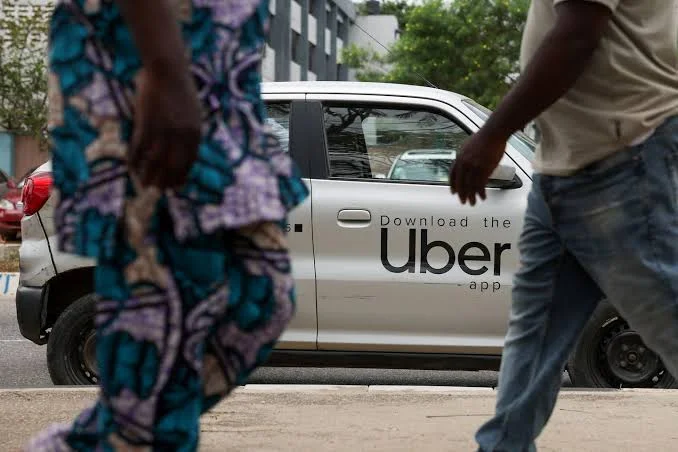
When Uber told Nigerian drivers it was leaving, it promised a one-off goodwill payment but wouldn’t say how much. The figure has now landed in some accounts, and it’s ₦40,000.
That’s about $30, after twelve years in the market. The credit shows up in the app as “Promotion, Goodwill Gesture,” dated 4 September with a payout date of 7 September.
Not Everyone Qualified
The payment came with conditions Uber didn’t announce publicly. Drivers say eligibility required three to six months of recent activity on the platform, which quietly excluded anyone who had drifted to Bolt or inDrive during Uber’s long slide in the Nigerian market.
Amounts also varied. Some drivers received less than ₦40,000, and some received nothing at all, in at least one case because of outstanding debt on the account.
Uber attached a confidentiality condition to the payment, telling drivers not to share the terms. It also specified that the money sits outside normal earnings and doesn’t affect a driver’s status as an independent contractor, which is the kind of clause lawyers write when they’re thinking about what a payment might later be argued to mean.
The Regulator Has Questions
The bigger development is that Nigeria’s Federal Competition and Consumer Protection Commission has opened an investigation into the exit.
The focus is what Uber owes riders rather than drivers. When the app switched off on 2 September, it still held in-app wallet balances, prepaid ride credits and bookings customers had made and never taken. Corporate accounts on Uber for Business lost service the same day. Uber’s Nigerian help centre stays open until 23 September for outstanding account and payment queries, which gives a fairly narrow window for anyone trying to recover money.
Why the Exit Still Stings
Uber launched in Lagos in 2014 and spent twelve years building the category in Nigeria. It gave drivers and riders no notice period. The company said the decision followed a review of its business priorities and investment focus across Africa, and that it was unrelated to the FAAN directive restricting e-hailing at Nigerian airports weeks earlier.
The timing did the company no favours either way. The Nigeria and Uganda shutdown landed as Uber cut roughly 3,300 jobs globally, around 10% of its workforce, and committed more than $10 billion to autonomous vehicle partners including Avride, Lucid, Nuro and Rivian. The day after Nigeria went dark, Uber launched self-driving taxis in London with Wayve.
For a driver in Lagos reading that sequence, ₦40,000 does not read like gratitude. It reads like the cost of closing a file.
Uber now operates in four African markets: Egypt, Ghana, Kenya and South Africa. It left Côte d’Ivoire in 2025 and Tanzania in January 2026, and it discontinued UberX, its cheapest tier, in South Africa on 1 September.