
For four billion years, humans have only ever listened to the universe from underneath Earth’s noisy atmosphere. A volunteer team of African scientists is about to change that by putting a radio telescope on the far side of the Moon.
Meet Africa2Moon
The project, called Africa2Moon, is led by the Foundation for Space Development Africa (FSDA) in partnership with the South African Radio Astronomy Observatory (SARAO) and the South African National Space Agency (SANSA). A team of African scientists, engineers and one economist has set a goal to send a radio telescope to the Moon.

The project comprises two distinct missions, led by Founder and Mission Director Dr Carla Sharpe Mitchell and Dr Adriana Marais, Director and Head of Science. The first will deploy a technology demonstrator with four antennas on the Moon’s south pole region, establishing the first radio astronomy array on the lunar surface. The second, larger mission will place 54 antennas on the far side of the Moon, with each antenna symbolically representing one African nation.
The Spheres With a Playful Name
The antennas at the heart of the mission go by a memorable acronym. Africa2Moon is developing a low-cost, low-mass array of spherical antennas known as BALLS, designed to detect radio frequencies below 10 MHz. The three antennas work together to observe low-frequency radio signals from deep space that simply cannot be picked up on Earth.
Why the Moon, and specifically its far side? The far side never faces Earth and is naturally shielded from radio noise generated by mobile phones, satellites and broadcasting signals, making it one of the quietest places in the solar system for listening to the universe without interference. Mission director Carla Mitchell has explained that the Moon is an ideal place to conduct these studies, since the low-frequency signals to be measured are unobservable from Earth because of interference from the planet’s atmosphere.
A Ride From China, After NASA and Beijing Both Struck Out
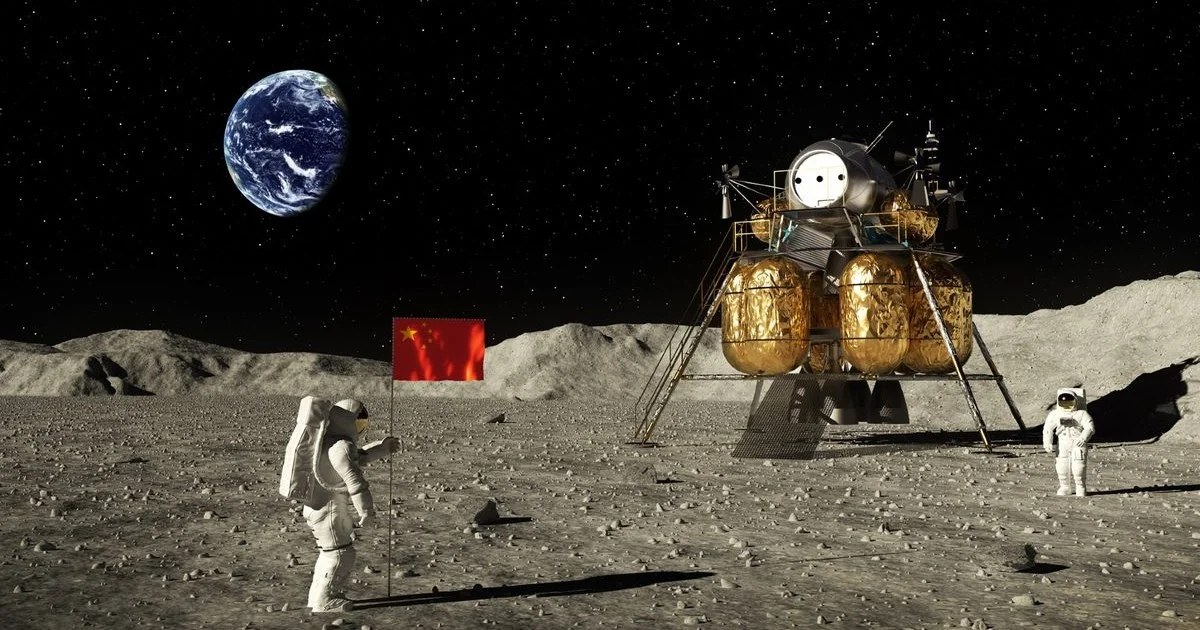
Getting a telescope onto the Moon is notoriously difficult. NASA and China have both previously attempted to put radio telescopes on the Moon, and both attempts failed. Despite that track record, Africa2Moon has secured a launch opportunity through an unlikely partner. The China National Space Administration announced during China Space Day in Shanghai that the Africa2Moon Project had been selected as a payload for China’s Chang’e-8 mission, which is scheduled to land at the lunar south pole.
The mission is expected to launch around 2029, deploying its trio of spherical probes at the lunar south pole as what’s considered the first completely African radio astronomy experiment conducted on another world.
More Than a Science Experiment
Beyond the astronomy itself, the project has been framed as a statement about African capability in frontier science. Project leaders have described the technology demonstrator as not just a technical achievement, but a beacon of what African science and innovation can accomplish. Marais has said the broader ambition is to “inspire the next generation of African innovators and dreamers.”
If the mission succeeds on schedule, Africa2Moon won’t just add a new instrument to humanity’s toolkit for studying the early universe; it will mark the continent’s first mission beyond Earth orbit, built and led entirely by African scientists and engineers, and launched on a Chinese rocket to the loneliest, quietest patch of real estate in the solar system.