



Côte d’Ivoire has approved an eight-year public-private partnership with Zipline to expand its drone logistics network from one distribution centre in Daloa to ten across the country . The Ministry of Health leads the project under Minister Pierre N’Gou Dimba. The US Department of State supports it in part through a $150 million pay-for-performance award .
Once fully deployed, the network will serve more than 2,200 health facilities and over 12 million people. It will carry blood products, vaccines, essential medicines and emergency supplies to communities that road transport reaches slowly or not at all.
The deal shows how a pilot project can become national infrastructure when the results justify the investment.
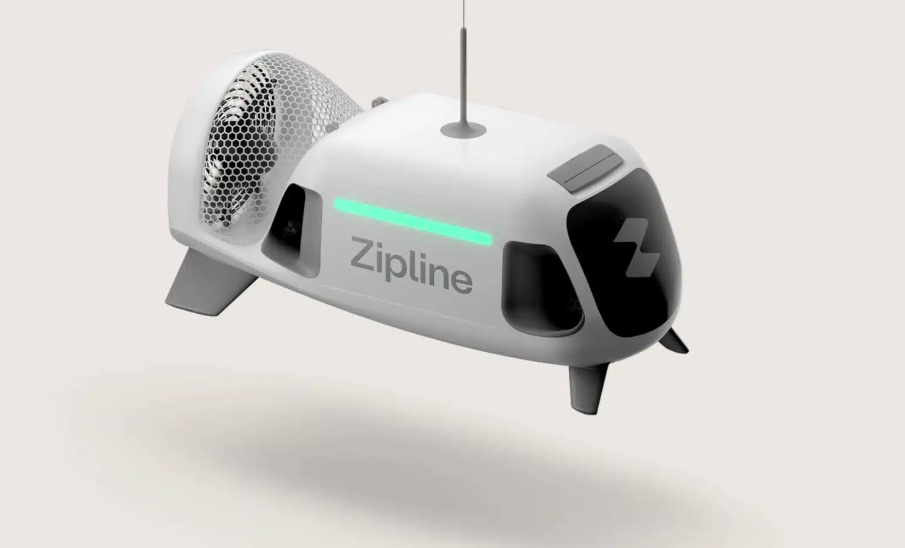
The Daloa Pilot Proved the Model Works
Zipline began operations in Daloa in 2023. Since then, the company has delivered more than 3.55 million medical products to over 220 health facilities across five regions. These deliveries include approximately 2 million vaccine doses and 20,500 units of blood products. Zipline estimates they contributed to about 2,058 equivalent lives saved .
Those numbers shift the debate from potential to performance. The Ivorian government does not need to guess whether drone delivery works. It has three years of data showing that it does.
Minister Dimba described the impact directly. He said health facilities in Daloa saw shorter delivery times, improved availability of vital products and stronger support since Zipline began operating . He added that expanding to 10 distribution centres takes a proven model nationwide and brings essential healthcare directly to communities that need it.
Each distribution centre combines warehousing, cold storage, inventory management, autonomous drone delivery and digital tracking. Health facilities can order products when they need them instead of relying solely on scheduled road deliveries or holding large quantities of stock. The Ministry of Health gains real-time visibility into orders, inventory and deliveries. That visibility helps it anticipate demand, reduce stockouts and expiries, protect the cold chain and respond faster in emergencies.
The Funding Model Reverses How Aid Usually Works
The structure of this deal differs from traditional development financing. The US government provides upfront infrastructure funding to Zipline to enable the scale-up. The government of Côte d’Ivoire commits to paying for ongoing operations.
That split is deliberate. The State Department announced the $150 million award in November 2025. The money goes to Zipline International to reach as many as 15,000 health facilities across Côte d’Ivoire, Ghana, Kenya, Nigeria and Rwanda. Zipline’s own announcement was more specific. Funding would be released only when governments signed expansion contracts and committed to paying for ongoing logistics services. The five countries would pay up to $400 million in fees for using the service.
This model spends American money to create African customers. It replaces the traditional aid approach where donors fund pilots that end when the grant expires. Instead, it builds infrastructure that host governments commit to sustaining with their own budgets.
Caitlin Burton, CEO of Zipline Africa, described the approach as commercial diplomacy in practice.
Other African Countries Are on the Same Path
Côte d’Ivoire is not an isolated case. Zipline operates in five African markets. Rwanda, Ghana, Nigeria, Kenya and Côte d’Ivoire all use its services.
Rwanda signed an expansion agreement in February 2026 under the same $150 million award. That deal made Rwanda the first country in the world with nationwide autonomous logistics coverage. Rwanda will also introduce Zipline’s urban delivery system, Platform 2, in Kigali where about 40 percent of the country’s healthcare demand is concentrated.
Nigeria plans to build 12 additional distribution centres by 2028, growing its network from three operational hubs to 15 facilities nationwide. The expansion aims to connect up to 20,000 health facilities and provide access to healthcare commodities for nearly 100 million Nigerians.
The pattern repeats across all five countries. A government signs an expansion contract. The US releases infrastructure funding. The government commits to paying for ongoing operations. The network scales.
This approach fits the broader shift in how African tech companies move beyond single-market pilots and build systems that work across borders. Zipline’s model shows that government partnerships can provide the stable demand that makes infrastructure investment viable. The company also benefits from a funding environment where investors reward companies with proven unit economics and government-backed revenue.
The Commercial Opportunity Explains the Investor Interest
Zipline is in talks to raise about $1 billion at a valuation of roughly $20 billion, according to Bloomberg. That figure nearly triples the $7.6 billion valuation the company set earlier in 2026.
The investor interest reflects more than the company’s healthcare work. Zipline has expanded commercially. In August 2026, it announced a partnership and investment from Uber to help scale the ride-hailing company’s food delivery business . Its broader push into consumer delivery includes food orders in 30 minutes or less.
The healthcare logistics business provides something that commercial delivery alone cannot. It offers stable, government-backed demand across multiple countries. Governments pay for a service that improves health outcomes. Zipline earns recurring revenue from those contracts. That revenue supports the infrastructure that also serves commercial deliveries.
The healthcare and commercial sides of Zipline’s business reinforce each other. The same distribution centres, the same drones, the same digital tracking systems serve both. The government contracts provide the foundation. The commercial deals provide the upside.
The Expansion Sets a Standard for Health Logistics in Africa
Côte d’Ivoire’s decision to scale from one hub to ten sends a signal to other governments. The Daloa pilot produced measurable results. The government reviewed the data and committed to a national rollout. The US provided the upfront capital to make it possible. The Ivorian government committed to paying for the service over eight years.
The model works because all three parties benefit. The US advances its global health strategy and promotes American innovation. Côte d’Ivoire improves healthcare access for its citizens and advances its Vision 2030 agenda for universal health coverage. Zipline earns revenue and builds infrastructure that supports its commercial expansion.
That alignment explains why the deal happened and why it will likely be repeated. African governments face chronic last-mile delivery gaps for medical supplies. Road transport is slow, unreliable and expensive in rural areas, especially during the rainy season. Drone delivery solves a problem that affects millions of people.
The expansion to 10 hubs will create hundreds of skilled jobs. It will expose tens of thousands of students, health workers and community members to advanced AI and robotics technology. Those are secondary benefits, but they matter for building local capacity.
For other African countries considering similar infrastructure, Côte d’Ivoire offers a template. Start with a pilot. Measure the results. Sign an expansion contract when the data supports it. Use development financing to cover the upfront capital. Commit to paying for operations from your own budget.
That approach treats health logistics as infrastructure, not charity. It builds systems that last beyond the grant cycle.