

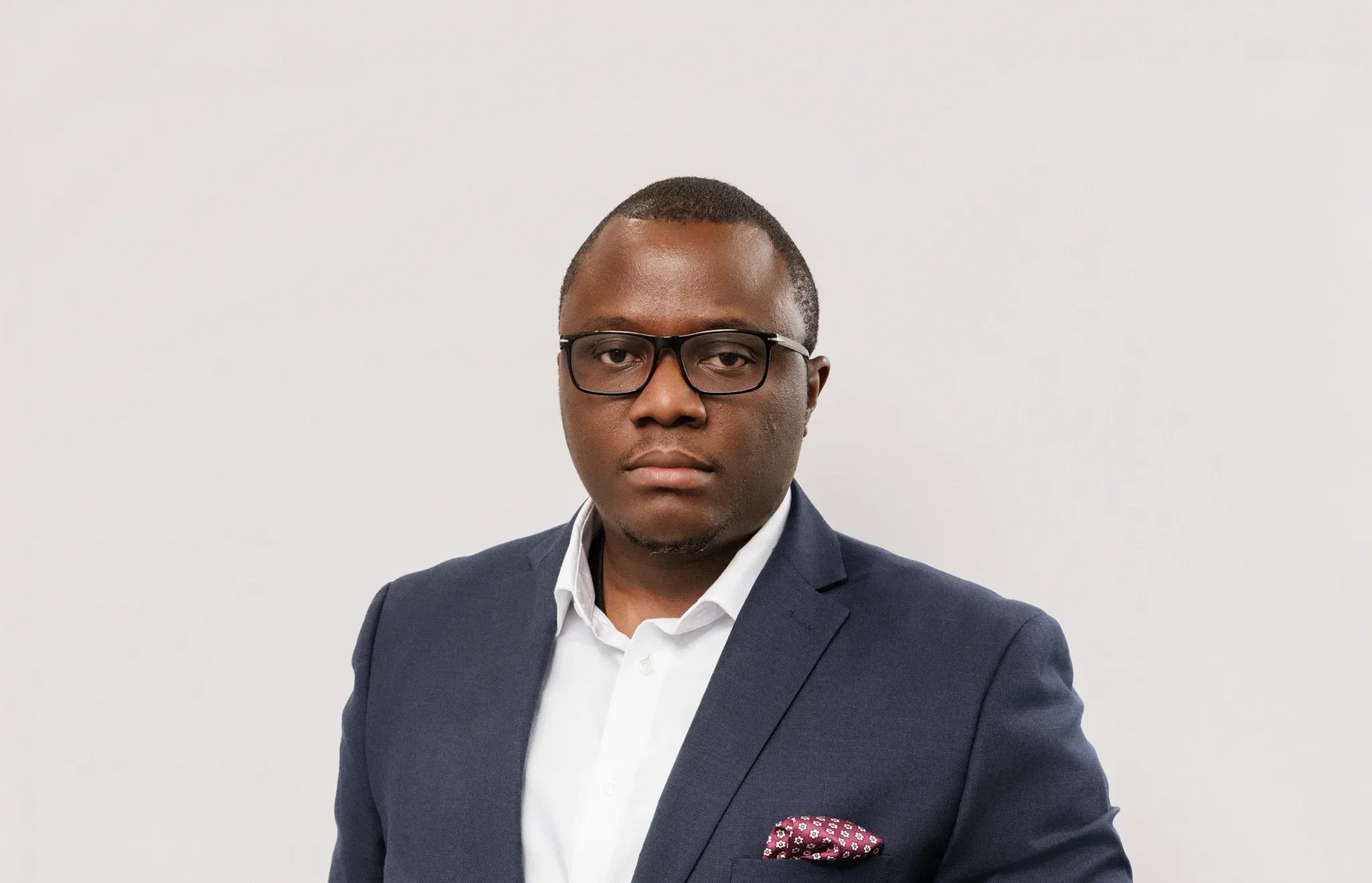
Onyeka Akumah has spent close to two decades building companies inside African markets. His next job runs out of Toronto.
The Nigerian entrepreneur has been appointed Chief Executive Officer of ByteX Financial following the company’s merger with Cenne Financial Inc., announced on 9 September. The combined business is Canadian-headquartered and describes itself as financial infrastructure for trade between North America, India and Africa.

The order of those three regions matters more than it looks. ByteX’s live payment corridors today run Canada to India and the United States to India. Africa is not among them. The company plans to use Cenne’s African and Caribbean business network to open those corridors in 2027, which puts the continental piece of this announcement more than a year away from existing.
That’s not a knock on the plan. It’s just the difference between what the business does now and what it intends to do, and it’s worth holding both in view.
What the Merger Combines
ByteX brings cross-border payments infrastructure. Cenne brings AI-native technology and market expertise, and will carry on as a ByteX product rather than being folded into the parent brand.
The scale is real. ByteX has processed more than CAD $3.6 billion in transactions since 2023 and currently operates at roughly CAD $1.2 billion in annualised transaction volume across its Canadian, American and Indian customer base. That’s a functioning payments business, not a concept, which is a useful thing to establish before anyone starts talking about digital banking ambitions.
Why Akumah
Akumah founded Treepz and expanded it into five countries with more than six million customers. He also founded RentSmallSmall and Farmcrowdy, and earlier held roles at Jumia, Konga, Wakanow and Guaranty Trust Bank.
That’s a career built across mobility, agritech and property in markets where the payments and logistics plumbing usually had to be assembled rather than assumed. It’s a specific kind of operating experience, and it’s what ByteX is buying.
“This is not simply about bringing two businesses together,” Akumah said,
He framed the merger as combining technology, experience and market understanding to help businesses move money and trade across the three regions. Elsewhere, he was blunter about the strategy, describing the target as the corridors global fintech left unbuilt, with the eventual goal of becoming a digital bank for the businesses using them.
He joins two co-founders who stay in place. Charles Sanda, president, has structured over $20 billion in financing across North America and Sub-Saharan Africa, was a managing director at BMO, and spent years in Nigerian banking with Standard Chartered. Sayan Roy, chief operating officer, runs product and technology delivery. Sanda’s read on the logic is that the strongest businesses of the coming decade will be the ones that understand local markets but are built to compete globally.

The Gap Between Now and the Pitch
ByteX runs with a team of 18 across Canada and India. That’s a small base for a company aiming to become a digital bank serving North American businesses trading internationally, and the ambition will need considerably more people and, at some point, banking permissions it does not yet hold.
The more interesting question is whether India volume translates. Moving money between Canada and India is a mature, competitive, well-understood corridor with large diaspora flows behind it. African corridors are fragmented in a different way, with different regulators in every market, different rails, and licensing that doesn’t transfer across borders. Success in one does not automatically predict success in the other, and 2027 is when we find out.
What isn’t in doubt is the pattern the appointment sits inside. Founders who built inside African markets are increasingly taking senior roles at companies headquartered elsewhere, carrying that operating experience into businesses aimed at global trade rather than a single domestic market. Akumah at ByteX is a clear example, and the African leg of the strategy gives him a reason to keep one foot on the continent rather than leaving it behind.