
NITDA has told the Nigerian Army to treat data and artificial intelligence as core strategic assets rather than administrative afterthoughts, arguing that future military effectiveness will hinge on how fast raw information can be turned into action.
The Call for a Data-First Military
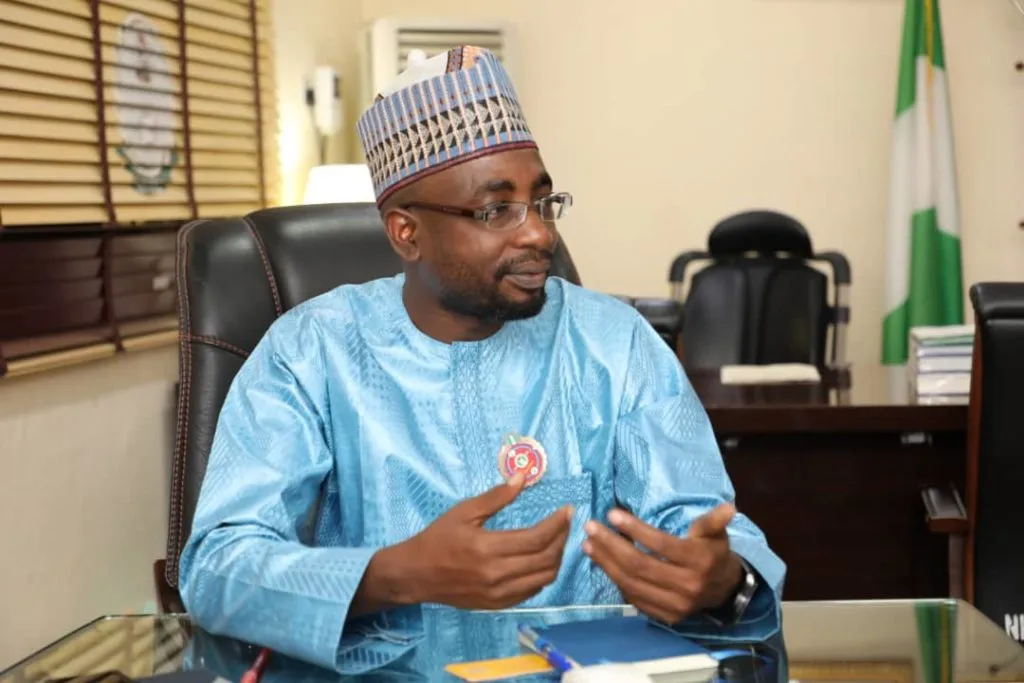
The Director-General of the National Information Technology Development Agency, Kashifu Inuwa Abdullahi, made the appeal while speaking at the Nigerian Army’s 4th Data Management and Record Keeping Seminar in 2026, themed “From Data to Decision Advantage: Digital Transformation, Artificial Intelligence and the Future of Warfare.”
Inuwa urged the Army to move beyond viewing data management as a routine record-keeping function and instead treat it as a tool for gathering intelligence and shaping strategy. He argued that AI could help transform raw data into actionable insight for both tactical and strategic decision-making, and stressed that successful digital transformation depends on aligning people, processes, and the right technology, not just acquiring new tools.
AI as a Complement, Not a Replacement
A recurring theme in Inuwa’s remarks was reassurance alongside urgency. He said AI is not intended to replace military personnel, but warned that institutions and individuals who fail to adopt the technology risk falling behind. Intelligent automation, he noted, can reduce bureaucratic bottlenecks and streamline workflows, freeing officers to focus on higher-level strategic and operational responsibilities.
He framed the shift in stark terms: the future of warfare will not be decided by who holds the most data, but by who can convert that data into insight, insight into decisions, and decisions into action the fastest.
Pushing for Digital Sovereignty
Inuwa also raised concerns about Nigeria’s defence sector depending too heavily on foreign commercial platforms. He called for greater investment in sovereign digital infrastructure, along with stronger military-civilian partnerships to build indigenous technologies suited to Nigeria’s specific security needs. He encouraged the Army to collaborate with other government agencies and the domestic tech innovation ecosystem to develop home-grown defence capabilities rather than relying excessively on external vendors.
NITDA also committed to supporting this shift directly, announcing plans to provide training and capacity-building programmes to equip military personnel with digital skills suited to an increasingly data- and AI-driven security environment.
Part of a Broader Push Toward Tech-Enabled Defence
The appeal lands amid a wider push across Nigeria’s security establishment to integrate emerging technology into operations. The Chief of Army Staff, Lieutenant General Waidi Shaibu, has separately called for greater use of technology in combat operations, noting that terrorists and criminal groups are exploiting emerging tools of their own. He has pointed to a recalibrated military doctrine built around intelligence fusion, inter-agency collaboration and a multi-domain approach to tackling asymmetric threats such as banditry and insurgency.
Nigeria’s Ministry of Defence has also been pursuing AI-enabled surveillance infrastructure, including a multi-year agreement with a foreign technology firm to deploy an AI-powered command-and-control platform integrating radar, thermal imaging and other sensor data into a unified operational picture, alongside plans for a dedicated training centre to build local expertise.
Taken together, these moves suggest a deliberate, if still early-stage, effort to modernise Nigeria’s military decision-making apparatus, with NITDA positioning itself as a technical partner in that transition rather than a bystander.