
Techsoma Africa
Latest Startups FinTech AI Tech Global Apps Opinions African
Policy & Regulations Artificial Intelligence Reports About Contact Advertise African Startup Ecosystem FinTech & Digital Money Artificial Intelligence Technology Global News Apps, Gadgets, Tools & Softwares Opinions & Perspectives African Telecommunications
Techsoma Africa
No Result
View All Result
Techsoma Africa
No Result
View All Result
Techsoma Africa
No Result
View All Result
Home African Telecommunications

Nigeria Secures $200M Loan to Quadruple Fibre Network Under Project BRIDGE

by Kingsley Okeke
April 13, 2026
in African Telecommunications
Reading Time: 4 mins read
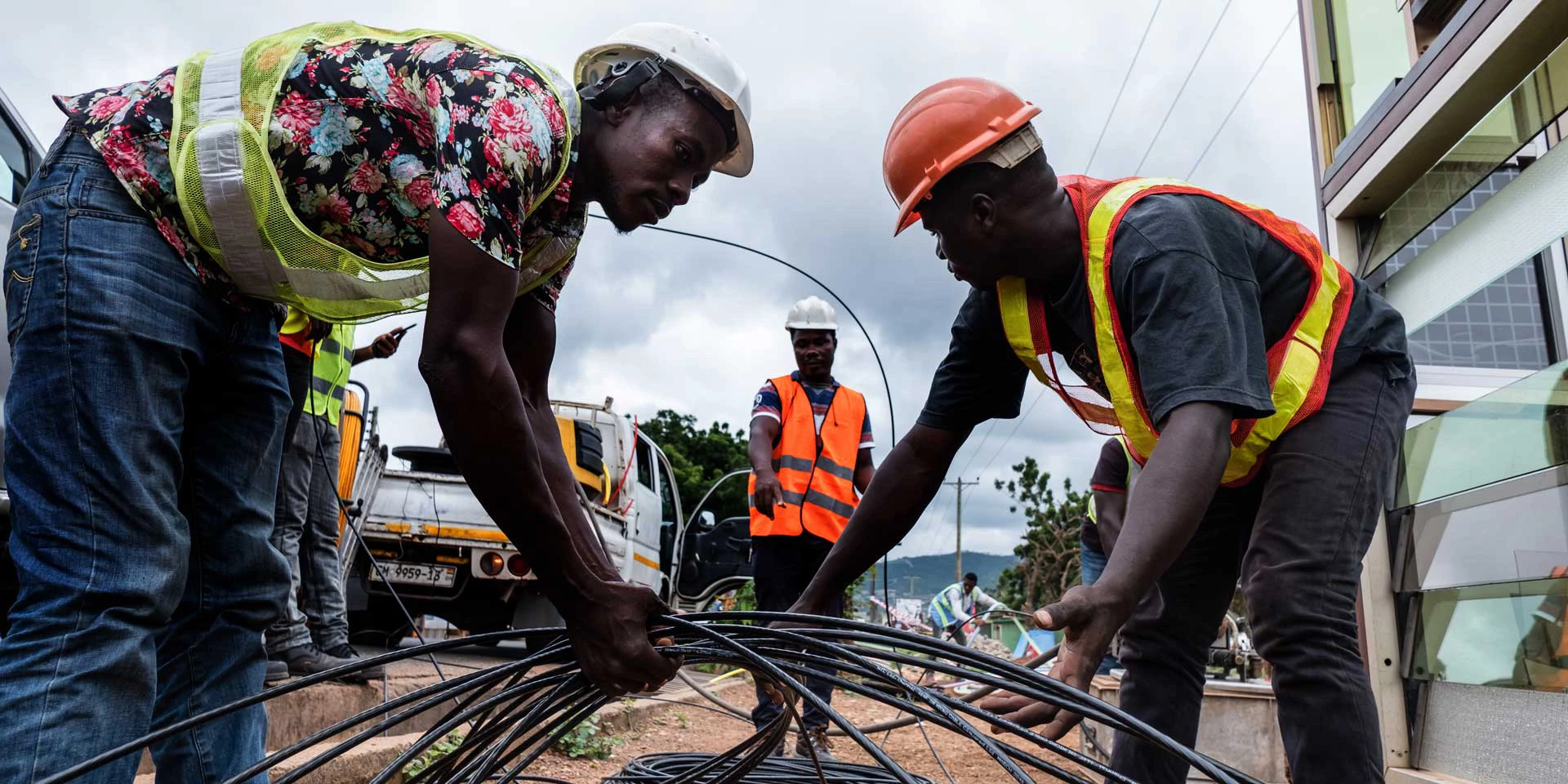
Project Bridge Fibre optic cable

The African Development Bank Group has approved a $200 million loan to Nigeria to accelerate the rollout of a nationwide fibre-optic network, adding a significant funding milestone to one of Africa’s most ambitious digital infrastructure programmes.

The facility forms part of a broader $800 million sovereign financing package backing the Digital Value Chain Infrastructure for Boosting Employment initiative (better known as Project BRIDGE), which targets the deployment of 90,000 kilometres of open-access fibre across the country. The remaining sovereign funding comes from the World Bank ($500 million) and the European Bank for Reconstruction and Development ($100 million). When private sector capital and development grants are factored in, total project financing reaches an estimated $2 billion.

From 30,000 to 120,000 Kilometres

Nigeria’s fibre backbone currently spans roughly 30,000 kilometres, a figure that leaves vast portions of the country, particularly rural areas, without reliable broadband access. Project BRIDGE aims to deploy 90,000 kilometres of new open-access fibre, taking the national network to 120,000 kilometres and connecting all 774 local government areas, from schools and health facilities to agro-industrial zones and commercial hubs. The initiative is also expected to establish cross-border fibre links with Benin, Cameroon, Niger, and Chad, strengthening regional digital integration across West and Central Africa.

A Public-Private Structure Built for Scale

Project BRIDGE is structured as a public-private partnership through a Special Purpose Vehicle, with public ownership capped between 25% and 49% and private sector participation between 51% and 75%. This structure is designed to unlock institutional capital while keeping the government in a minority position, a deliberate choice aimed at insulating the project from the execution constraints that have historically plagued state-led infrastructure programmes in Nigeria, including high construction costs and right-of-way bottlenecks.

The partnership model also signals a broader policy direction from the Tinubu administration: positioning the state as a facilitator of digital infrastructure rather than its primary builder.

Jobs, Skills, and Broadband Penetration

The project is expected to generate up to 2.8 million jobs over its lifecycle and increase Nigeria’s broadband penetration from 45% to approximately 70% by 2030. Those figures, if realised, would mark a meaningful shift in Nigeria’s digital economy.

Beyond laying cable, Project BRIDGE includes demand-side interventions: funding will be channelled towards digital public services and the Three Million Technical Talent programme, aimed at building a pipeline of skilled digital professionals. Affordable device access and cybersecurity capacity are also embedded in the project’s design, along with renewable energy integration to improve network resilience.

Why This Matters

Nigeria’s digital economy has grown substantially over the past decade, but its infrastructure has not kept pace. Fintech, e-commerce, healthtech, and edtech platforms have all scaled in spite of the connectivity environment. A quadrupled fibre backbone changes the underlying conditions for every sector that depends on data.

The project aligns with Nigeria’s Renewed Hope Development Plan (2026–2030) and Vision 2050, and sits within the African Union’s Agenda 2063 framework. Whether the execution matches the ambition will depend heavily on how well the SPV is governed and how quickly right-of-way negotiations are resolved at the state level, historically a major sticking point in Nigerian fibre rollouts.


Related Techsoma coverage

  • Amazon’s $11.6 Billion Globalstar Deal: What Africa Stands to Benefit
  • Airtel Nigeria Adds 2,000 Sites in Three Years as Network Capacity Race with MTN Heats Up
  • NCC Orders Automatic Airtime Compensation for Subscribers Hit by Poor Network Quality
Kingsley Okeke

Kingsley Okeke

I'm a skilled content writer, anatomist, and researcher with a strong academic background in human anatomy. I hold a degree...

Recommended For You

NCC approves data calculators
African Telecommunications

NCC Signs Deal With REA to Cut Telecom Diesel Costs

by Kingsley Okeke
July 27, 2026

The NCC has signed a new agreement aimed at reducing the industry's heavy reliance on diesel generators, one of the biggest drags on operator profitability and network expansion across the...

Read moreDetails
Picture of the Cursor AI Hackathon in Ethiopia

Ethio Telecom Backs Ethiopia’s Largest AI Hackathon at Adwa Museum

July 27, 2026
A Starlink satellite dish, now operating in Côte d'Ivoire under a newly granted provisional licence

Starlink Launches in Côte d’Ivoire, No Ownership Fight

July 22, 2026

Kenyan Banks Undercut M-Pesa With Nearly Free Transfers

July 22, 2026

Kenya Now Requires a Licence to Import Phones and Routers

July 22, 2026
Next Post
Amazon to acquire Globalstar

Amazon's $11.6 Billion Globalstar Deal: What Africa Stands to Benefit

thumbnail 1 WEB 3

Qualcomm's 2026 Make in Africa Cohort: 10 Startups Building Deep Tech on the Continent

Please login to join discussion

Browse by Category

  • African Startup Ecosystem
  • African Telecommunications
  • Apps, Gadgets, Tools & Softwares
  • Artificial Intelligence
  • Business & Markets
  • Creator Economy
  • Cybersecurity
  • Digital Work-Life Series
  • E-Commerce
  • Event Radar Africa
  • Exclusive Interviews
  • Explainers
  • Features/Spotlights
  • FinTech & Digital Money
  • Funding news
  • GenZ Desk!
  • Global News
  • Logistics & Mobility Tech
  • Media & Entertainment
  • News
  • Opinions & Perspectives
  • Opportunities, Careers & Learning
  • Partner
  • Policy & Regulations
  • Reports
  • Reviews
  • Tech Insights for Creators
  • Technology
  • Thought Leadership
  • Uncategorized
  • About Us
  • Advertise on Techsoma
  • Contact
  • Corrections Policy
  • Editorial Standards
  • Ownership and Funding
  • Privacy Policy
  • Publish Your Articles
  • Techsoma Africa
  • Terms of Service

Copyright 2026 Techsoma Africa. All rights reserved.

Welcome Back!

Login to your account below

Forgotten Password?

Retrieve your password

Please enter your username or email address to reset your password.

Log In
Techsoma Africa

© 2026 Techsoma Africa Media.

Company

Policy AI Reports About Contact Advertise

Legal

Terms Privacy RSS

Latest

NCC Signs Deal With REA to Cut Telecom Diesel Costs The NCC has signed a new agreement aimed at reducing the industry's heavy reliance on diesel generators, one... Beyond the Creators: Meet the Founders Building Africa’s Creator Economy The creator economy has become one of Africa's fastest-growing digital movements. Every day, writers, educators, influencers, musicians, comedians,... Nigeria Named Among Africa’s Top AI Economies in New IMF Report   Nigeria has been recognised by the International Monetary Fund (IMF) as one of the leading artificial intelligence...
Techsoma Network Techsoma Network Techsoma Africa Techsoma Middle East Techsoma Canada
Transparency About Editorial Standards Corrections Ownership & Funding Privacy Terms Contact
No Result
View All Result
  • About Us
  • Advertise on Techsoma
  • Contact
  • Corrections Policy
  • Editorial Standards
  • Ownership and Funding
  • Privacy Policy
  • Publish Your Articles
  • Techsoma Africa
  • Terms of Service

Copyright 2026 Techsoma Africa. All rights reserved.