

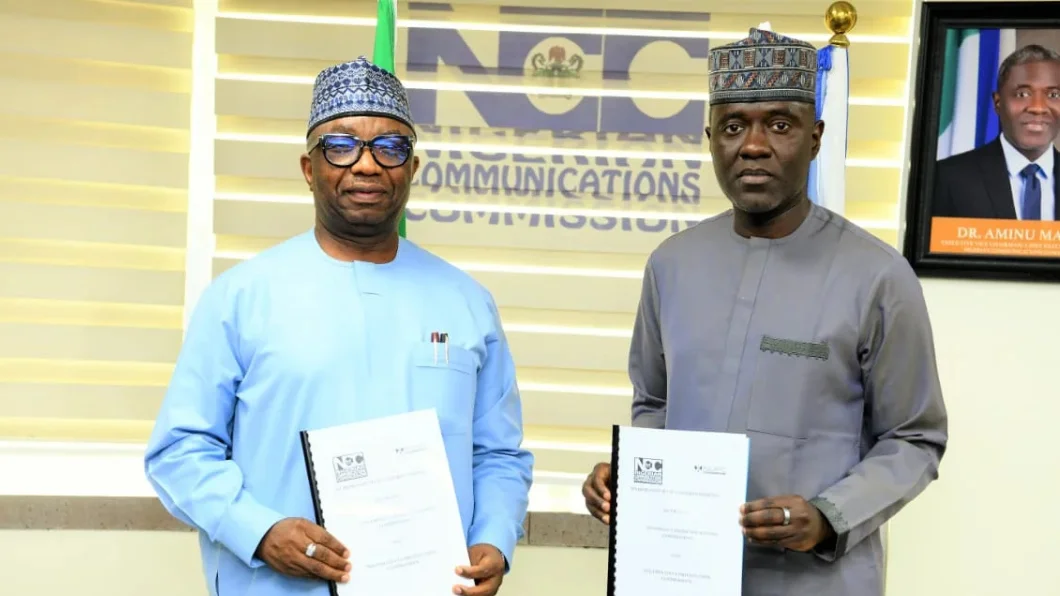
The Nigerian Communications Commission (NCC) and the Nigeria Data Protection Commission (NDPC) have formalised a partnership aimed at strengthening how telecommunications companies handle the personal information of millions of Nigerians. The Memorandum of Understanding represents a significant step toward addressing growing concerns about data security in an increasingly digital nation.
220 Million Subscribers, One Giant Privacy Problem
Nigeria’s telecommunications sector processes enormous volumes of personal data daily, from call records and text messages to location data and payment information. With over 220 million active mobile subscriptions and rapidly expanding internet penetration, the potential for data misuse has never been greater.
Until now, oversight of telecom data practices existed in something of a grey area. The NCC regulated technical aspects of telecommunications while data protection fell under the NDPC’s purview, creating potential gaps where neither agency had complete authority. This MoU clarifies responsibilities and establishes coordinated enforcement mechanisms.
The agreement comes amid rising public awareness about data breaches, identity theft, and unauthorised sharing of subscriber information. Nigerians have increasingly complained about unsolicited marketing calls, SIM swap fraud, and mysterious leaks of personal details. These are all problems that require both telecom expertise and data protection authority to address effectively.
From Separate Silos to Joint Enforcement
The MoU establishes a framework for collaboration between the two commissions on multiple fronts. Joint monitoring and inspection of telecom operators’ data handling practices will become routine, ensuring companies comply with both technical standards and privacy regulations simultaneously.
Information sharing between the agencies represents another crucial element. When the NCC identifies potential data protection violations during its regulatory work, it can now seamlessly refer cases to the NDPC. Similarly, when the NDPC investigates data breaches involving telecom operators, it gains access to the NCC’s technical expertise and industry knowledge.
The partnership also addresses consumer complaints more effectively. Nigerians who report data privacy issues to either commission will have their concerns channelled to the appropriate authority, eliminating the bureaucratic runaround that previously frustrated many complainants.
Capacity building forms part of the agreement as well, with both agencies committing to train staff in overlapping areas of telecom regulation and data protection. This cross-pollination of expertise should produce regulators who understand both the technical complexities of telecommunications and the legal nuances of privacy rights.
Double Trouble for Data Violators
Telecommunications companies operating in Nigeria should expect heightened scrutiny of their data practices. The days of treating subscriber information casually are ending. Operators will need to demonstrate robust data protection measures, from secure storage systems to clear consent mechanisms for data collection.
The joint oversight also means violations could trigger penalties from both commissions simultaneously, potentially doubling the financial and reputational consequences of non-compliance. This creates powerful incentives for telecom companies to invest seriously in data protection infrastructure.
The End of Bureaucratic Ping-Pong
For ordinary Nigerians, the MoU promises better protection against common abuses. Telecom companies will face greater pressure to secure databases against breaches, obtain proper consent before sharing data with third parties, and respond promptly when subscribers request information about how their data is being used.
The agreement also establishes clearer pathways for seeking redress when things go wrong. Instead of bouncing between agencies, victims of data breaches or privacy violations should find more coordinated responses and swifter resolution.
Beyond Paperwork and Press Releases
This partnership reflects Nigeria’s evolving approach to digital governance. As African economies digitalise rapidly, protecting citizen data has become both an economic imperative and a human rights issue. Countries that fail to establish trustworthy data protection frameworks risk losing international business and eroding public confidence in digital services.
The NCC-NDPC collaboration positions Nigeria among African nations taking data protection seriously, potentially attracting technology investment that requires strong privacy guarantees. It also sends a message that regulatory agencies can work together rather than defending bureaucratic turf.