
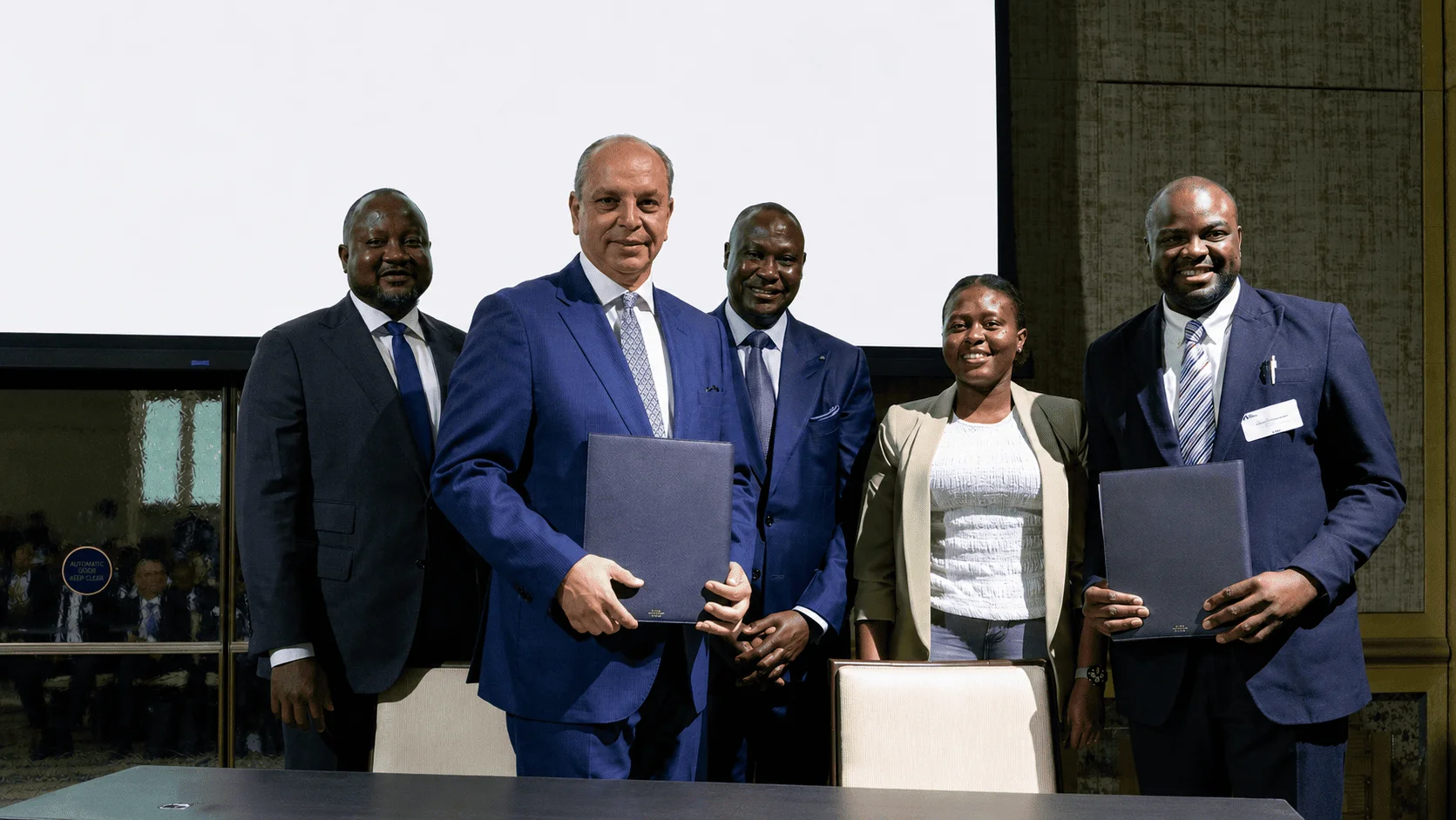
Africa Finance Corporation has approved a $100 million commitment to invest in Africa-focused technology fund managers, marking the pan-African development finance institution’s most deliberate push yet into the continent’s venture capital ecosystem.
The $100 million sits within AFC’s telecommunications and technology department and is structured as a fund-of-funds programme. As part of the initial deployment, AFC has committed $25 million to Lightrock Africa Fund II and $15 million to Future Africa Fund III, with the remaining $60 million to be deployed across additional fund managers currently under review.
A Strategic Departure for AFC
Established in December 2007, AFC built its reputation on infrastructure investment; oil and gas, mining, ports, telecoms, and subsea cables. The commitment marks a sharp departure from that original mandate. While it has had some forays into African tech, they have been limited to late-stage co-investments in already validated large companies.
By entering the fund-of-funds space, AFC is now positioning itself across the full innovation lifecycle rather than waiting for companies to reach minimum viable size before writing a cheque.
Why Now
The timing is a direct response to a contracting LP market. Africa-focused fund managers raised just $107 million across six final closes in 2025 as European venture investors pulled back, falling from 70% of commitments between 2022 and 2024 to just 21% in 2025, according to the African Private Capital Association. DFI participation also fell to 27% of total commitments.
That vacuum is precisely what AFC is stepping into. Africa’s venture capital ecosystem has produced nine unicorns, some fund managers have generated returns of up to 128 times capital originally invested, and African startups raised $3.8 billion in 2025 alone.
The Two Initial Funds
Lightrock Africa Fund II targets growth-stage technology companies and has previously backed Moniepoint, Lula, and M-KOPA. Future Africa Fund III, led by founding partner Iyin Aboyeji, focuses on seed and pre-seed founders building across financial inclusion, digital infrastructure, consumer technology, and education.
Aboyeji framed the investment in terms of infrastructure, not charity: “Young Africans are not waiting for the digital economy to arrive; they are already among its most active participants globally. What they need now are the skills, productive assets and infrastructure to build and scale within it.”
The Bigger Play
AFC’s ambitions extend beyond the initial $100 million. The DFI’s strategy is to use its commitment as the foundation for a parallel programme to raise $300 to $500 million in co-investment from US and European foundations, endowments, and pension funds.
Africa’s digital economy is projected to contribute more than $700 billion to the continent’s GDP by 2050, and AFC’s move signals that African institutional balance sheets (not just foreign development banks) are now willing to bet on that timeline.